

Future Outlook for Reliance Share Price in 2050
📈 Explore the 2050 outlook for Reliance Industries' share price, examining market trends, company growth, economic factors, risks, and opportunities for investors.
Edited By
Henry Wilson
Predicting the AUD to INR exchange rate requires understanding several economic and geopolitical factors that shape currency movements. Traders and investors focus heavily on this currency pair due to growing trade ties and investments between Australia and India.
Key determinants include economic indicators such as interest rate decisions by the Reserve Bank of India (RBI) and the Reserve Bank of Australia (RBA), inflation rates, and GDP growth figures. For example, if the RBA hikes rates while the RBI holds steady, the AUD often strengthens against the INR due to higher returns attracting capital inflows into Australia.
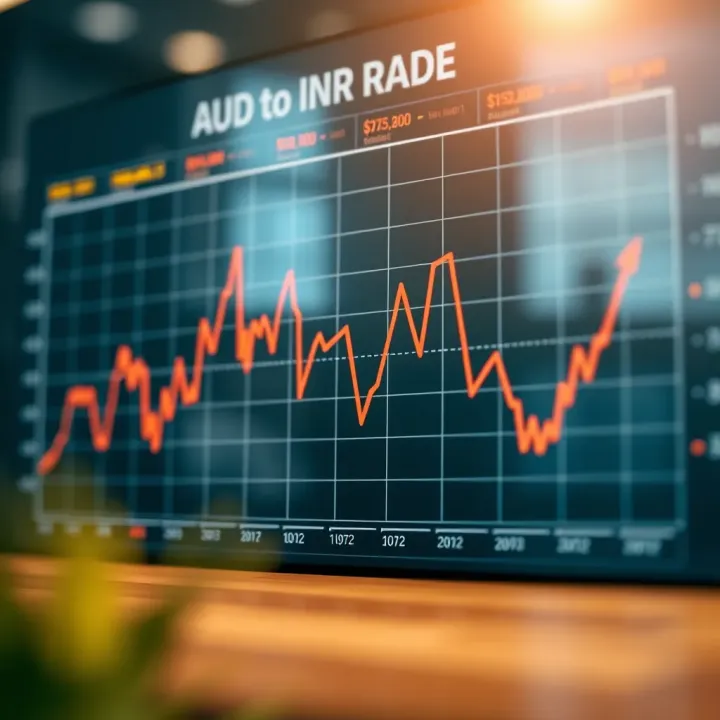
Geopolitical events and global commodity price shifts also sway the AUD/INR rate. Australia exports large quantities of minerals and metals; a surge in commodity prices usually bolsters the AUD. Conversely, India's rupee is sensitive to oil prices since India is a major crude importer, so rising oil costs can weigh on INR.
Market sentiment plays a vital role too. Risk-on sentiments typically benefit the AUD as it behaves like a commodity currency, while the INR may be influenced by domestic policy reforms or foreign investment confidence. For instance, announcements around India's budget reforms or trade agreements can cause fluctuations in the INR.
Forecasting methods vary from fundamental analysis of macroeconomic data to technical analysis using historical price patterns. Machine learning techniques and econometric models are increasingly applied to predict short-term movements. However, due to the volatile nature of forex markets, predictions come with inherent uncertainty.
Practical considerations for businesses dealing with AUD/INR conversions involve hedging strategies to minimise exposure to exchange rate risks. Forward contracts and options help lock in rates, protecting profit margins especially during periods of high volatility.
Understanding these factors equips traders and investors to make better decisions when engaging with the AUD to INR currency pair. Careful monitoring of economic releases, commodity trends, and political developments remains essential for accurate exchange rate prediction.
Understanding the factors behind the AUD to INR exchange rate helps traders and investors make smarter decisions. Movements in this currency pair reflect economic health, trade patterns, and global market mood, all of which affect pricing in forex markets as well as cross-border business costs.
GDP growth in Australia and India shapes the perceptions of each country's economic strength. When Australia's economy expands more rapidly, demand for the AUD usually rises, as investors expect higher returns from assets priced in Australian dollars. For instance, if Australia's quarterly GDP outperforms expectations, it may push the AUD upwards against the INR. On the other hand, slower GDP growth in India can dampen the INR, reflecting worries about economic health.
Interest rate decisions by the Reserve Bank of India (RBI) and the Reserve Bank of Australia (RBA) critically influence the AUD/INR. Higher interest rates in Australia attract foreign capital, strengthening the AUD, while lower rates in India can weaken the INR by reducing the returns on rupee assets. Monetary policy signals, such as hawkish comments hinting at rate hikes, prompt quick forex market reactions. For example, when RBI lowers rates during economic slowdowns, the INR often eases against the AUD.
Inflation impacts purchasing power and influences central bank decisions on interest rates. Rising inflation in India, if unchecked, could depreciate the INR as investors worry about eroding returns. Conversely, moderate inflation aligned with economic growth can support the currency. Australian inflation trends similarly affect the AUD. Traders watch inflation data closely, as persistent inflation pressures may cause the RBA to tighten policy and thereby strengthen the AUD.
Trade links between Australia and India play a practical role in shaping AUD/INR levels. With Australia exporting coal, gold, and wheat to India, higher Indian import demand tends to push the AUD up. Conversely, growing Indian exports increase INR demand. For companies involved in these sectors, tracking trade volumes is essential for currency risk assessment.
Australia’s economy depends heavily on commodities. Price swings in coal, iron ore, and gold directly affect the AUD value. A spike in global commodity prices generally boosts the AUD, thanks to stronger export earnings. For instance, a rally in iron ore prices driven by Chinese demand often lifts the AUD against the INR.
India’s trade deficits and surpluses influence the rupee’s strength. If India imports more Australian commodities at rising prices, it can widen trade deficits and weigh on the INR. Exporters in India must also consider these dynamics, as a weak rupee can inflate production costs for imported raw materials.
Stable governments with clear economic policies inspire investor confidence, strengthening respective currencies. Political uncertainty in either Australia or India can spark volatility in AUD/INR. For example, delays in policy reforms or election-related uncertainties have previously triggered rupee fluctuations.
External shocks such as global recessions or financial crises impact AUD and INR through shifting capital flows. During risk-off scenarios, investors often seek safe haven currencies like the USD, causing both AUD and INR to fall. Conversely, global growth optimism supports commodity currencies like the AUD.

The rupee, as part of emerging market currencies, reacts strongly to global risk appetite. When investors favour riskier assets, INR tends to gain against AUD and others. However, during risk aversion phases, capital flows reverse, depressing the INR. Understanding this behaviour helps in timing trades or hedging strategies.
Traders and investors who keep a close eye on economic indicators, trade flows, geopolitical news, and market sentiment can better anticipate AUD/INR moves and manage currency exposure more effectively.
Predicting the AUD to INR exchange rate involves analysing various data and market signals. Traders, investors, and financial analysts use different methods to anticipate currency movements, enabling better decision-making in Forex trading, investments, and risk management. Understanding these forecasting techniques is essential since it helps you respond swiftly to market changes and safeguards your assets from unexpected swings.
Chart patterns and trendlines are fundamental in technical analysis. These visual tools help traders identify recurring shapes like head-and-shoulders, double tops, or flags on price charts that signal potential reversals or continuations in the AUD/INR rate. Trendlines connect highs or lows to define the direction of the market, showing support and resistance levels where price action may bounce or break through. For instance, if an upward trendline holds in the AUD/INR chart, it suggests the Australian dollar is likely to remain strong against the rupee.
Moving averages smooth out price fluctuations to reveal trends over time. Commonly used types include the simple moving average (SMA) and exponential moving average (EMA). Traders look for crossovers—say, the 50-day SMA crossing above the 200-day SMA—which often indicate bullish momentum for the AUD against the INR. Indicators like the Relative Strength Index (RSI) or Moving Average Convergence Divergence (MACD) provide additional insight by signalling if the currency pair is overbought or oversold, informing entry or exit points.
Technical analysis relies heavily on past price data and assumes history tends to repeat. However, it doesn’t account for unforeseen economic events or geopolitical shocks that can suddenly sway the AUD/INR rate. Market noise or false signals also pose challenges, leading to erroneous trades if relied on blindly. Therefore, technical forecasts work best when combined with other methods for a more rounded view.
Economic indicators like GDP growth, inflation, trade balances, and employment figures from Australia and India influence the currency pair. For example, a stronger-than-expected GDP growth figure from Australia compared to India may bolster the AUD against the INR. Market participants closely watch these releases since they reflect overall economic health and can lead to swift currency adjustments.
Decisions from the Reserve Bank of India (RBI) and the Reserve Bank of Australia (RBA), especially on interest rates and monetary policy, critically affect AUD/INR valuations. A hike in interest rates by the RBA could attract foreign capital, strengthening the AUD. Conversely, RBI rate changes alter the attractiveness of the INR. Announcements signalling future policy directions also move markets, so keeping an eye on central bank speeches and minutes is vital.
Global economic trends, such as commodity price swings or changes in risk appetite, shape AUD/INR movements. Since Australia is a major commodity exporter, rising iron ore or coal prices often support the AUD. At the same time, global uncertainty might trigger investors to favour ‘safer’ assets, impacting emerging market currencies like the INR. Understanding these wider influences helps predict possible currency shifts beyond local data.
Quantitative techniques use statistical methods to find patterns in currency data. Models like autoregressive integrated moving average (ARIMA) analyse historical exchange rates to forecast future values. These tools consider variables such as volatility, seasonality, and correlations with economic data, offering mathematical estimates that traders use to gauge probable AUD/INR levels.
Machine learning methods apply algorithms capable of processing vast datasets, including news feeds, social sentiment, and price action, to predict exchange rates. These AI systems adapt over time, improving accuracy by recognising complex, non-linear relationships missed by traditional approaches. For example, a neural network model may capture subtle shifts in market sentiment that precede AUD/INR moves.
While quantitative and AI methods bring advanced insights, they are sensitive to data quality and completeness. Incomplete or noisy data can mislead models into poor predictions. Moreover, rapid, unpredictable changes in global politics or economies can disrupt model patterns, lowering reliability. Hence, quantitative forecasts should be used alongside human judgement and other analysis methods.
Combining multiple forecasting methods—technical, fundamental, and quantitative—usually provides a deeper understanding of AUD/INR trends, helping traders and investors make informed choices in a volatile market.
Understanding recent trends and the outlook for the AUD to INR conversion is vital for traders and investors aiming to optimise their strategies. Exchange rates fluctuate based on a mix of economic performance, market sentiment, and global events. Staying updated helps anticipate potential gains or losses, especially when dealing with cross-border investments or imports and exports between Australia and India.
Over the past decade, the AUD to INR rate has seen considerable swings. For instance, back in 2013, the exchange rate hovered around ₹55–₹60 per AUD but climbed sharply to nearly ₹60–₹65 in the mid-2010s due to India's economic reforms and increased demand for Australian commodities like coal and iron ore. More recently, global disruptions like the COVID-19 pandemic caused volatile movements, with the rate dipping below ₹50 briefly before recovering as global trade resumed.
These patterns reflect how factors such as commodity prices, India's growth trajectory, and mining sector exports from Australia have historically influenced the pair. For example, a surge in iron ore prices typically strengthens the AUD against the INR because Australia is a major exporter, and this raises the demand for AUD.
Currently, Australia's economic recovery post-pandemic has been supported by rising commodity prices and higher interest rates set by the Reserve Bank of Australia (RBA). Meanwhile, India is navigating inflationary pressures and policy tightening by the Reserve Bank of India (RBI). These divergent monetary policies have pushed the AUD slightly higher against the INR in early 2024.
Additionally, geopolitical tensions in the Asia-Pacific and trade negotiations influence market sentiment. For businesses importing machinery from Australia, this means quoted costs may rise or fall based on these currency shifts. A practical measure undertaken by many importers is to lock in forward contracts to manage payment risks effectively.
Most currency analysts expect a modest appreciation of the AUD against the INR in the medium term due to stronger commodity demand and Australia's stable fiscal outlook. However, experts caution that factors like slower growth in China, a key trade partner for both countries, could limit significant gains.
Some forecasters suggest the rate might trade within a range of ₹55 to ₹62 over the next six to twelve months, reflecting cautious optimism. Exchange rate forecasts by financial institutions often incorporate current macroeconomic data alongside geopolitical developments to suggest such target ranges.
Staying aware of these evolving trends helps traders and investors make timely decisions, whether it’s hedging against currency risk or seizing trading opportunities.
In short, keeping track of historical trends, current conditions, and expert forecasts will give you a solid framework to manage your AUD/INR exposure smartly in the coming months.
Understanding the practical implications of AUD to INR exchange rate fluctuations is vital for businesses and investors dealing in either currency. These variations directly impact profitability, investment returns, and overall financial planning. By managing currency risk effectively and exploring opportunities linked to currency movements, stakeholders can make better-informed decisions and protect their interests.
Businesses involved in cross-border trade often face the risk of losing money when exchange rates move unfavourably. Forward contracts provide a way to lock in an exchange rate today for a transaction that will occur in the future. For example, an Indian importer of Australian coal can enter a forward contract to purchase AUD at a fixed rate for payment due in three months. This shields the importer from unexpected AUD appreciation, which would otherwise raise costs.
Such hedging strategies help businesses budget more accurately and avoid surprises caused by sudden swings in the AUD to INR rate. However, these contracts usually require commitments and may forego opportunities if the market moves favourably. Still, for risk-averse companies, forwards offer a practical solution to currency risk.
Timing plays a crucial role in managing currency exposure. Businesses can plan to make payments or receive funds when exchange rates are more favourable. For instance, an Indian exporter to Australia might delay repatriating AUD earnings when the rupee is weak, waiting for a better rate to convert funds into INR.
Similarly, companies can schedule major payments to suppliers when the AUD is weaker relative to INR, reducing expenses. Effective cash flow management combined with awareness of forex trends helps businesses optimise currency conversions, boosting margins without relying solely on complex hedging tools.
Forex trading of AUD/INR offers investors and traders a chance to profit from currency movements. Since the AUD is often influenced by commodity prices and economic data from both Australia and India, informed traders can analyse these factors to predict rate changes. For example, a spike in iron ore prices may strengthen AUD, enabling traders holding long positions to gain.
This market, though volatile, provides liquidity and frequent trading opportunities. However, retail traders should be cautious, use proper risk management, and stay updated with geopolitical and economic developments affecting both currencies.
Currency trends also affect cross-border investments. Indian investors buying shares or real estate in Australia need to factor in potential AUD/INR movements that can impact returns when converting back to INR. Conversely, Australian investors in Indian markets face similar considerations.
For instance, if the rupee weakens against the AUD after an Indian investor acquires Australian stocks, the effective return in INR terms may improve despite flat stock performance. Strategic investment choices considering currency forecasts can therefore enhance overall portfolio outcomes.
Managing currency risk and identifying opportunities in the AUD to INR exchange market are essential steps for businesses and investors to navigate volatility and maximise value.
📈 Explore the 2050 outlook for Reliance Industries' share price, examining market trends, company growth, economic factors, risks, and opportunities for investors.
📈 Explore Reliance Industries' share price outlook for 2035 with insights on growth factors, risks, market trends, and expert projections for investors.

📈 Explore Reliance Industries' share price forecast for 2030 with insights on past trends, market factors, sector impact, and expert views for smart investing.

📈 Explore RCom's share price journey to 2030, backed by financial insights, market trends, expert forecasts, and potential risks for smart investing.
Based on 9 reviews