

Future Outlook for Reliance Industries: Trends & Insights
Explore future trends of Reliance Industries across tech, retail, energy & telecom 📈. Insights based on current strategies & market outlooks in India 🇮🇳.
Edited By
Emily Clarke
The AUD/USD exchange rate is a key indicator of economic health between Australia and the United States, shaping decisions across trading floors and financial institutions. Given the Australian dollar's close ties to commodity exports and the US dollar's role as a global reserve currency, understanding their interaction helps investors and analysts anticipate market shifts.
Several core elements influence this currency pair's movement. First, the Reserve Bank of Australia's monetary policy closely tracks inflation, employment, and growth rates. For example, interest rate adjustments in Australia can strengthen or weaken the AUD relative to the USD, especially in times of economic uncertainty. On the flip side, the Federal Reserve’s policy changes in the US and its stance on inflation impact the USD’s global value, thereby affecting the pair.
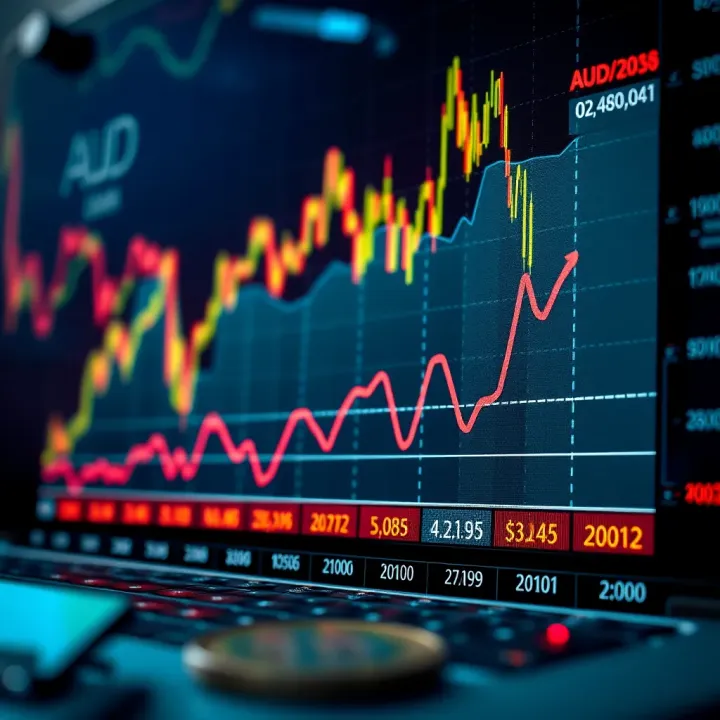
Commodity prices, notably iron ore and coal, play a critical role for AUD. Australia is a major supplier of these, so fluctuations in global demand directly sway the AUD’s strength. If China, Australia’s largest trading partner, slows down infrastructure projects, the AUD tends to weaken due to reduced commodity demand. Meanwhile, geopolitical developments such as US-China trade relations or tensions in the Asia-Pacific region influence investor confidence, leading to volatility in AUD/USD.
Traders should also watch global market sentiment and risk appetite. The AUD often moves in tandem with emerging market currencies, which sell off or rally based on global risk. For instance, during times of heightened uncertainty, investors typically flock to the USD as a safe haven, causing the AUD/USD to drop.
Understanding these factors helps investors plan entry and exit points with more confidence.
In short, tracking economic data releases, central bank announcements, commodity trends, and geopolitical news gives traders a clearer view of potential AUD/USD paths. This insight supports better risk management and more informed speculation within this widely traded forex pair.
Understanding what drives the AUD/USD exchange rate is essential for traders and investors to make informed decisions. Several factors influence the pair’s movement, ranging from economic data and commodity prices to monetary policies and global capital flows. Keeping an eye on these elements can help anticipate currency fluctuations better.
GDP growth rates are a fundamental gauge of economic health in both countries. When Australia's economy grows faster than the US, investors often view the Australian dollar (AUD) favourably, pushing the AUD/USD higher. For instance, in recent quarters, Australia's modest recovery post-pandemic showed stronger GDP growth compared to the US slowdown, resulting in brief AUD strength. Conversely, if US growth outpaces Australia, the greenback tends to appreciate.
Inflation influences central banks’ decisions on interest rates, which in turn affects the exchange rate. For Australia, rising inflation can prompt the Reserve Bank of Australia (RBA) to tighten policies, giving the AUD a boost. On the other hand, if US inflation spikes unexpectedly, the Federal Reserve may react by raising rates aggressively, strengthening the USD against the AUD. Traders monitor inflation reports closely, as small shifts can trigger sizeable currency moves.
Employment numbers and consumer confidence reveal economic momentum and spending power. Strong jobs data in Australia can increase demand for the AUD, signalling a healthier economy. For example, a fall in unemployment or higher wage growth tends to strengthen the AUD. Similarly, positive consumer confidence encourages investment in the local currency. Meanwhile, better US employment figures usually support the USD, presenting a constant tug-of-war in the pair.
Australia is a top exporter of iron ore and coal, so shifts in these commodity prices directly affect the AUD. When iron ore prices rise, it typically signals strong demand for Australian exports, attracting foreign investment and pushing the AUD upwards. For example, a surge in coal prices due to supply disruptions in major markets often results in AUD gains. These commodities act as a natural hedge for the currency's strength.
China remains Australia’s largest trading partner. When Chinese industrial activity strengthens, demand for Australian raw materials increases, bolstering the AUD. If China shows signs of slowing down, the AUD often weakens due to fears over export revenues. Other markets, such as Japan and South Korea, also contribute to demand, but China’s economic health typically has the most impact on AUD/USD dynamics.
The RBA’s decisions on interest rates steer AUD movements significantly. A hawkish stance—raising rates to fight inflation—usually supports the AUD. The RBA’s guidance on future hikes or rate cuts shapes market expectations. For example, in 2023, when the RBA indicated a slower pace of rate hikes amid cooling inflation, the AUD saw some weakness against the USD.
Similarly, the US Federal Reserve’s monetary policy impacts the USD and the AUD/USD pair. A more aggressive Fed tightening cycle widens interest rate differentials, attracting capital to the USD. Traders track Fed meetings and speeches closely to gauge possible rate changes. For instance, a surprise rate hike often sends the USD higher, pressuring the AUD.
Interest rate differences between Australia and the US influence carry trades, where investors borrow in low-yield currencies to invest in higher-yielding assets like AUD. When the RBA’s rates outpace the Fed’s, carry trade inflows support the AUD. Conversely, if the Fed hikes faster, capital flows back to the USD, weakening the AUD. These shifts can prompt sudden swings in AUD/USD, especially in volatile market conditions.
Keeping these drivers in view helps traders and investors anticipate the AUD/USD pair’s direction and manage risks more effectively.
Understanding the current market environment and recent movements in the AUD/USD exchange rate is essential for traders and investors. It sheds light on where the pair stands amid evolving economic conditions, technical signals, and geopolitical shifts. By analysing recent trends, market participants can better time their entries, manage risks, and anticipate future fluctuations.
Support and resistance levels represent price points where the AUD/USD pair tends to stall or reverse its direction. Support is where buying interest is strong enough to prevent prices from falling further, while resistance is where selling pressure keeps prices from rising. For example, if AUD/USD repeatedly bounces near 0.67, that level acts as support, indicating buyers step in there. Identifying these zones helps traders set stop-losses or profit targets effectively.

In practice, spotting these levels early can save investors from entering positions in crowded zones or lacking an exit plan. During volatile sessions, such as after RBA announcements, these levels become more pronounced, serving as guideposts for market behaviour.
Moving averages smooth out price data to highlight the underlying trend. For AUD/USD, common ones include the 50-day and 200-day moving averages. When the price crosses above or below these averages, it often signals a shift in trend direction. For instance, a crossover above the 200-day average could point to bullish momentum, attracting buyers.
Momentum indicators like the Relative Strength Index (RSI) indicate whether the pair is overbought or oversold. An RSI above 70 signals overbought conditions, suggesting a possible pullback, while below 30 hints at oversold levels and potential bounce. Traders use these tools to confirm trend strength and plan entries accordingly.
Volume reveals the intensity behind price movements. Rising AUD/USD volumes during an upward move suggest conviction, while low volume with a price rise may warn of weak momentum. Volatility, measured by indicators like the Average True Range (ATR), reflects price fluctuations. After major events like US inflation data or China’s trade reports, volatility spikes in AUD/USD commonly appear, providing opportunities but also increasing risk.
Understanding volume and volatility helps traders choose the right times to be active or sit out. For example, entering a trade in a low-volume sideways market might lead to stagnation, whereas high volatility periods demand tighter risk control.
Australia’s trade ties with China heavily influence the AUD/USD. When China imports more iron ore or coal, the Australian dollar often strengthens due to increased export profits. Conversely, US-China trade tensions can cause AUD weakness if Chinese demand slows.
At the same time, the US-Australia relationship shapes bilateral flows. Recently, trade agreements and tariffs have added layers of complexity, causing sudden shifts in market sentiment. It’s vital to track policy changes or announcements that can affect these dynamics.
Periods of global uncertainty, such as slowing growth in Europe or geopolitical conflicts, prompt investors to shift towards safe-haven assets like the US dollar. This demand usually weakens AUD/USD, reflecting risk aversion. For instance, during the recent Ukraine conflict escalation, the AUD fell as traders sought USD safety.
These swings underline that broader global moods can overshadow domestic fundamentals, so staying alert to international developments is key.
Political events, including elections or regulatory reforms in Australia or the US, often affect market confidence. A surprise policy shift from the Reserve Bank of Australia (RBA) or unexpected US fiscal measures can trigger volatility in AUD/USD. Even local Australian political noise can influence the pair if it impacts trade or economic outlook.
Traders should monitor political calendars and be prepared for abrupt moves triggered by such events. Investing based solely on economic data may miss these sudden turns driven by sentiment.
Grasping the current technical setup alongside geopolitical context ensures traders and investors approach AUD/USD with a comprehensive view—minimising surprises and managing exposure wisely.
Understanding short-term and medium-term forecasts for the AUD/USD currency pair is vital for traders and investors aiming to navigate this dynamic market. These forecasts help anticipate price movements by analysing economic data, central bank policies, and technical signals, allowing for informed decision-making. For instance, a sudden shift in Australia's employment data or an unexpected rate change by the Reserve Bank of Australia (RBA) can cause notable volatility in the short run.
Moreover, medium-term forecasts provide a broader perspective by integrating trends and policy outlooks over several months. This helps investors plan strategies beyond day trading, such as positioning in carry trades or hedging exposure in portfolios. Ignoring these forecasts may lead to missed opportunities or unmanaged risks.
Australia's key economic releases like GDP growth, employment figures, and inflation rates profoundly influence AUD/USD trends. For example, if retail sales or unemployment data exceed expectations, it typically strengthens the Australian dollar as it signals a robust economy. Traders keep close watch on quarterly GDP growth, which offers insights into economic momentum. Recent spikes in commodity prices, like iron ore, combined with upbeat economic data, tend to support a stronger AUD, reflecting confidence in Australia’s growth prospects.
On the other side, US employment data such as Non-Farm Payrolls and the inflation rate significantly impact the US dollar part of the pair. Strong employment growth often triggers expectations for Federal Reserve (Fed) tightening, boosting the dollar. Conversely, weaker inflation figures may delay rate hikes, limiting dollar gains. For example, if the US Consumer Price Index (CPI) figures come lower than expected, traders might anticipate a more dovish Fed stance, leading to AUD/USD upward moves as the US dollar softens. Keeping an eye on these releases helps traders prepare for short-term swings and medium-term trend shifts.
The Reserve Bank of Australia’s policy approach remains a cornerstone for forecasting AUD movements. The RBA balances controlling inflation with supporting growth in sectors like housing and mining. If inflation trends rise above target levels, the RBA might tighten policy by hiking interest rates, supporting the Australian dollar. Conversely, if global pressures dampen growth or inflation remains low, it may pause or cut rates. For example, the RBA’s recent decision to hold rates steady amid uncertain China demand influenced the AUD’s depreciation. Forecasting these policy moves helps investors adjust positions accordingly.
The Federal Reserve’s actions on interest rates heavily influence the USD, affecting AUD/USD direction. A hawkish Fed—signalling more rate increases—tends to strengthen the dollar, while a dovish stance weakens it. Analysts watch Fed statements and meeting minutes for clues on inflation control and economic health. For instance, unexpected hints at faster tightening sent USD higher recently, squeezing AUD/USD lower. Understanding the Fed’s probable path aids traders in managing carry trade risks and identifying profit windows.
Technical analysis helps decode price patterns and momentum in AUD/USD. Chart patterns like head-and-shoulders or moving average crossovers signal potential reversals or continuations. For instance, if the 50-day moving average crosses above the 200-day, traders might expect an upward trend, prompting buy positions. Monitoring support and resistance levels also guides entry and exit points. These methods provide clear, rule-based signals to complement fundamental views.
Finally, market sentiment shapes AUD/USD routes through investor behaviour. Sentiment indicators such as the Commitment of Traders report show whether speculators are bullish or bearish on AUD. Market psychology often drives sharp moves during geopolitical events or economic surprises. For example, fear over US-China trade tensions has led to increased safe-haven buying of the USD, impacting AUD/USD negatively. Being aware of sentiment fluctuations helps traders anticipate volatility and avoid emotional decision-making.
Short-term and medium-term forecasts blend economic data, policy outlooks, technical signals, and sentiment analysis to offer a comprehensive view of AUD/USD, enabling smarter trading and investment strategies.
Traders and investors dealing with the AUD/USD currency pair must have clear strategies to navigate the ups and downs influenced by economic data, geopolitical shifts, and central bank moves. Effective strategies not only help in capitalising on opportunities but also in mitigating risks that come with market fluctuations. By combining risk management techniques with trading approaches based on sound forecasts, market participants can enhance their potential for consistent returns.
Implementing stop losses is fundamental to controlling potential losses in AUD/USD trading. A stop loss order automatically closes a position once the rate hits a predetermined level, protecting your capital from steep downward moves. For instance, if you buy AUD/USD at 0.70 expecting it to rise but the pair falls to 0.68, a stop loss at 0.68 would limit your loss. Choosing appropriate stop loss levels requires understanding support and resistance zones plus current volatility.
Position sizing complements stop losses by helping manage overall risk exposure. Rather than placing a uniform stake on every trade, adjust your lot size according to your risk tolerance and the stop loss distance. This ensures that even if a trade goes against you, it won’t deplete your account significantly. For example, if you are willing to risk only 1% of your trading capital per trade, position sizing adjusts to keep losses within that limit, providing disciplined risk control.
AUD/USD is often impacted by market volatility due to factors like commodity price swings or policy announcements. Managing volatility exposure means avoiding oversized positions during unpredictable periods. Traders might choose to decrease trade size or stay on the sidelines ahead of major US employment reports or Reserve Bank of Australia (RBA) meetings.
Using tools such as the Average True Range (ATR) indicator can help gauge current volatility levels. When ATR signals high price swings, trimming exposure can prevent sharp losses. Similarly, diversifying by not relying solely on AUD/USD but including currency pairs with different drivers can reduce concentrated risk during volatile phases.
Short-term traders focus on quick moves within daily or weekly timeframes, often using technical analysis combined with economic calendar events. In the AUD/USD pair, short bursts of volatility occur around Australian GDP releases or US inflation data. Traders can exploit these by trading breakouts or reversals once key levels like 0.72 or 0.68 are breached.
For example, a scalper might use moving averages or momentum indicators to enter and exit trades swiftly following economic news. This style demands close attention to market timing and strong discipline to avoid overtrading during choppy conditions.
Long-term investors approach AUD/USD with a broader view based on economic fundamentals and monetary policies. For instance, if the RBA maintains higher interest rates compared to the Federal Reserve, this interest rate differential can support a stronger Australian dollar over months or years.
Investment decisions could also follow commodity price trends, given Australia’s reliance on iron ore and coal exports. If prices are set to rise due to growing demand from China, investors might increase exposure to AUD/USD, anticipating appreciation. This approach requires patience and resilience against short-term fluctuations, focusing instead on gradual capital growth aligned with economic cycles.
Successful trading and investment in AUD/USD hinge on blending risk controls with well-informed forecasts. Both short-term traders and long-term investors benefit from tailoring their strategies to the currency pair’s unique dynamics and economic backdrop.
In all cases, staying updated on policy shifts, economic releases, and global events remains essential to adapt strategies swiftly and make prudent decisions.
Understanding the AUD/USD exchange rate’s future movement requires careful attention to multiple factors. This section rounds up the key drivers, giving traders and investors a clear picture of where the currency pair might head. Analysing these factors together helps in forming practical strategies for trading or investment decisions.
The AUD/USD rate depends heavily on economic indicators from both Australia and the US. For instance, stronger Australian GDP growth or rising commodity prices, such as iron ore, tend to support the Australian dollar. On the flip side, US employment data and inflation trends influence the dollar's strength.
Monetary policies play a significant role too. When the Reserve Bank of Australia (RBA) signals higher interest rates to control inflation, it generally boosts AUD value compared to the US dollar, especially if the Federal Reserve maintains a looser stance. Traders also watch geopolitical developments — for example, trade relations between the US, China, and Australia can spark volatility.
From technical analysis, recent charts indicate key support near 0.67 and resistance around 0.72 levels for the pair. Market sentiment remains cautious, influenced by uncertainties tied to global economic recovery and central bank policies.
Accurate AUD/USD forecasts require integrating economic data, policy outlooks, and geopolitical shifts rather than relying on one indicator alone.
Keeping tabs on upcoming economic releases is vital. Australian trade balance data, inflation figures, and retail sales reports provide early signs of the AUD’s direction. On the US front, payroll numbers, consumer price index figures, and Federal Reserve communications deserve close tracking.
Investors should also monitor commodity trends, especially iron ore prices and China's demand outlook, since these materially affect the Australian economy. Additionally, changes in US-China trade negotiations or geopolitical tensions can swiftly alter market moods.
On the technical side, regularly reviewing support and resistance levels and observing shifts in momentum indicators helps react quickly to market swings. Using stop losses and adjusting position sizes is wise to handle volatility effectively.
In short, a well-rounded approach combining fundamental data, technical signals, and geopolitical awareness offers the best chance to navigate AUD/USD fluctuations. Staying informed and flexible will remain key for all market participants.
Explore future trends of Reliance Industries across tech, retail, energy & telecom 📈. Insights based on current strategies & market outlooks in India 🇮🇳.

📈 Explore the 2050 outlook for Reliance Industries' share price, examining market trends, company growth, economic factors, risks, and opportunities for investors.

📈 Explore the key factors shaping Reliance Industries' future share price, including business segments, financials, market trends, and economic impacts.📊

📈 Explore Reliance Industries' share price outlook for 2035 with insights on growth factors, risks, market trends, and expert projections for investors.
Based on 9 reviews