

ETH vs USDT Price Prediction and Market Trends
📈 Explore detailed ETH vs USDT price trends, expert forecasts, and market influences to help Indian investors spot risks and opportunities in Ethereum trading.
Edited By
Thomas Hughes
Avalanche (AVAX) has quickly carved a niche in the crowded cryptocurrency market thanks to its high-speed blockchain platform and low transaction costs. AVAX aims to address scalability issues that affect older chains like Ethereum, making it attractive for decentralised finance (DeFi) applications, NFTs, and enterprise solutions.
Understanding AVAX’s price prediction requires looking at multiple angles: network adoption, technological upgrades, market sentiment, and regulatory changes. For instance, the Avalanche ecosystem’s growth through partnerships with Indian startups and DeFi protocols has positively influenced its demand and, consequently, price movements.
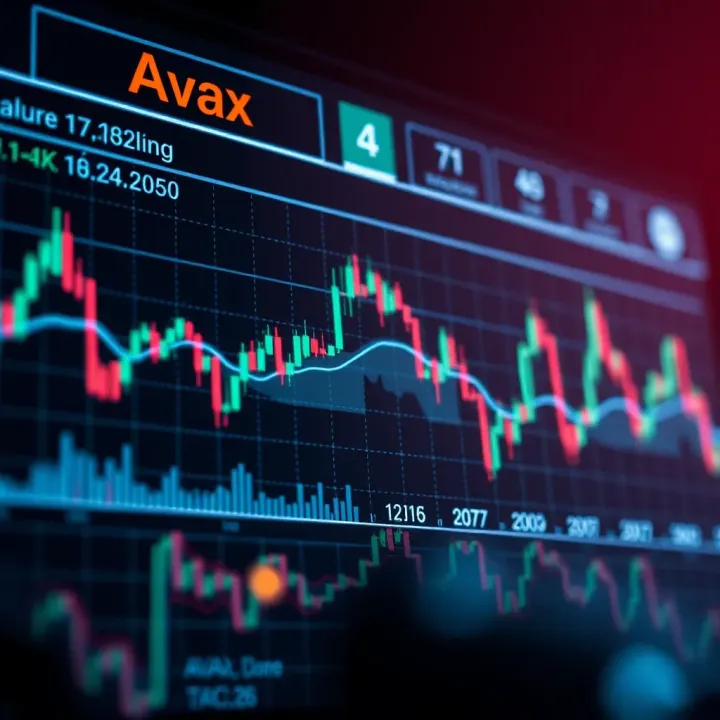
Investors should pay attention to the interactions between Avalanche’s technical development and broader crypto market trends, especially since regulatory shifts in India and globally can either boost confidence or cause volatility.
Key factors shaping AVAX price include:
Blockchain upgrades: Improvements in consensus mechanisms or interoperability features tend to support price appreciation.
Market demand for DeFi and NFTs: Avalanche’s fast confirmations appeal to users, driving token use.
Regulatory environment: RBI’s stance on cryptocurrencies and any governmental regulations in India or foreign markets play a pivotal role.
Technical analysis, such as moving averages and Relative Strength Index (RSI), alongside fundamental analysis (ecosystem activity, partnerships, tokenomics), can offer investors a clearer picture.
In the coming sections, we will examine these influences in detail and weave in expert forecasts from market analysts and crypto researchers. The goal is to equip you with practical insights to navigate AVAX’s dynamic price landscape prudently.
Understanding Avalanche (AVAX) and its position in the cryptocurrency market is key for anyone looking to evaluate its price potential. This section sheds light on the blockchain’s technical features, its practical applications, and current market stance. These elements together impact AVAX's value and offer traders and investors a clearer picture of what to expect.
Avalanche is a blockchain platform that promises high speed and low fees, which helps it stand out in a crowded ecosystem. It uses a consensus mechanism called Avalanche consensus, which allows thousands of transactions per second without compromising security. For example, even during peak usage, Avalanche’s design prevents bottlenecks common on older blockchains like Ethereum before its upgrades. Another notable feature is its support for customised blockchain networks, called subnets, which are especially attractive for enterprises wanting private but interoperable chains. These technical innovations have made Avalanche popular among developers aiming to build decentralised applications (dApps) with efficiency and scalability.
Avalanche’s versatile blockchain supports multiple uses, including finance, gaming, and digital identity management. One practical case is the rise of DeFi (decentralised finance) platforms leveraging Avalanche’s fast transaction speeds for lending and borrowing protocols. Projects like Pangolin and Benqi have seen growing user bases, attracted by quick and cost-effective transactions compared to traditional options. Besides DeFi, Avalanche’s unique subnet feature has seen uptake in supply chain management solutions, where businesses require swift yet secure data tracking. Adoption is further boosted by the platform’s compatibility with Ethereum assets, enabling easy porting of existing projects looking for better scalability.
AVAX has carved a firm spot among top cryptocurrencies by market capitalisation. As of early 2024, it ranks within the top 20 tokens, competing with names like Solana and Cardano. Its market cap often fluctuates around ₹50,000 crore to ₹1,00,000 crore, reflecting growing investor interest and active trading volumes on Indian and global exchanges. However, like other cryptocurrencies, AVAX experiences high volatility, which can offer both opportunities and risks for investors. Monitoring its market performance alongside broader sector trends helps in making informed investment decisions.
A good grasp of Avalanche’s features and its market position equips investors and traders to better interpret price movements and assess future outlooks.
By combining technical efficiency with real-world applications, Avalanche continues to build momentum among blockchain communities and institutional players alike. Knowing this background sets the stage for deeper analysis into what moves AVAX’s price.
Understanding the factors influencing Avalanche (AVAX) price movements is vital for anyone looking to trade or invest in this cryptocurrency. These factors range from technical indicators and fundamental changes to broader market and regulatory dynamics. Keeping an eye on these elements helps traders anticipate price shifts and make smarter decisions, reducing the risk of losses.
Price patterns reveal how AVAX has behaved historically, providing clues about its future direction. For instance, observing recurring trends like bull flags or head and shoulders can signal upcoming rallies or pullbacks. Traders often rely on these patterns to time entries and exits effectively. A recent example is how AVAX showed a consolidation pattern before its sharp upward movement in early 2024, hinting at renewed investor interest.
Trading volume reflects how actively AVAX is being bought and sold. Higher volume usually confirms the strength of a price move, whether up or down. Liquidity, closely linked to volume, ensures that trades can be executed without large price swings. In the Indian context, big exchanges like WazirX and CoinDCX seeing increased AVAX volumes suggest robust market health, offering traders confidence to enter or exit positions without major slippage.
Support and resistance act as price floors and ceilings respectively. These levels often represent psychological or technical barriers where buying or selling pressure accumulates. For example, if AVAX repeatedly bounces off ₹1,500, that becomes a key support level to watch. Breaking above resistance, say ₹2,200, could signal a strong bullish phase. Understanding these levels helps traders set stop-losses and targets efficiently.
AVAX’s price responds significantly to upgrades like protocol improvements or scalability enhancements. When Avalanche recently introduced its ‘Rush’ upgrade, aiming to boost throughput and lower fees, it renewed investor optimism and pushed prices higher. Such technical progress indicates the platform’s commitment to growth, which often reflects positively in market valuation.
Strategic alliances with well-known projects or firms tend to boost AVAX’s credibility and usage. For instance, partnerships with DeFi platforms or NFT marketplaces expand its ecosystem, driving demand for the token. When Avalanche announced collaboration with Chainlink for oracles, the move stirred positive sentiment, hinting at integration with real-world data and opening new use cases.
The more developers and users build on Avalanche, the stronger the network effect. Rising numbers of dApps, active wallets, and transactions typically attract investor interest. Shows like the growth of Pangolin, a leading DEX on Avalanche, indicate healthy ecosystem activity. This grassroots-level expansion usually supports sustained AVAX price growth over time.

AVAX price closely follows the broader crypto market mood. Bull markets driven by Bitcoin rallies often lift altcoins including AVAX. Conversely, market-wide corrections cause AVAX to dip even if no specific bad news hits Avalanche. Traders must monitor overall market health, using indices like the Nifty’s crypto alternatives or Bitcoin price moves as a rough guide.
Government rules weigh heavily on AVAX’s price. In India, regulatory uncertainty around cryptocurrencies keeps investors cautious, sometimes suppressing volumes and prices. International moves too matter—like tighter US SEC scrutiny or favourable European crypto laws. For Indian traders, staying updated on SEBI and RBI comments is essential to avoid surprises affecting AVAX holdings.
Broader economic conditions, including inflation, interest rates, and currency strength, also impact AVAX. For example, rising inflation and weakening rupee sometimes push Indians towards crypto as a hedge. But tightening monetary policies can reduce risk appetite across markets, pulling down AVAX along with equities and commodities.
Keeping track of these technical, fundamental, and external factors together provides the clearest picture of what is likely to move AVAX prices next. This balanced perspective helps you navigate the volatility effectively and spot promising opportunities early.
Understanding the price prediction models and analysis for Avalanche (AVAX) helps investors make informed decisions. These models combine technical signals and fundamental data to estimate future price movements, balancing short-term trends with long-term value drivers. For traders and analysts, such tools offer clarity amidst the cryptocurrency market’s notorious volatility.
Moving averages (MA) simplify price data by averaging AVAX’s past prices over specific periods, such as 50-day or 200-day MAs. They highlight trends—whether bullish or bearish—and help identify potential entry or exit points. For example, when the short-term MA crosses above the long-term MA, traders interpret this as a buying signal.
The Relative Strength Index (RSI) measures momentum by showing whether AVAX is overbought or oversold on a scale from 0 to 100. An RSI above 70 often signals that AVAX might be overvalued and due for a correction, while below 30 suggests undervaluation and potential buying opportunities. Combining MA and RSI allows investors to time their moves better by spotting trend strength and reversals.
Fibonacci retracement involves mapping key horizontal support and resistance levels based on ratios derived from the Fibonacci sequence. Traders use these levels to predict potential price pullbacks or reversals during uptrends or downtrends. For AVAX, spotting these retracements can help estimate where price corrections might halt.
Practically, if AVAX rallies sharply from ₹1,000 to ₹2,000, Fibonacci levels at 23.6%, 38.2%, and 61.8% retracement mark points between ₹1,236, ₹1,382, and ₹1,618 respectively. These act as psychological price zones where buying or selling pressure could intensify.
Chart patterns like head and shoulders, double tops, or triangles indicate market sentiment shifts and potential trend changes for AVAX. For instance, a breakout from a symmetrical triangle often signals price acceleration in the breakout direction.
Indicators such as Bollinger Bands, MACD (Moving Average Convergence Divergence), and volume trends provide additional insights. Bollinger Bands highlight volatility, while MACD tracks momentum changes. When volume increases alongside a breakout, it confirms the strength of the move, guiding traders on confidence levels.
On-chain metrics assess AVAX’s network health by analysing blockchain data directly. Metrics like active addresses, transaction volume, and staking activity reveal user engagement and network usage trends. A rising number of daily active addresses indicates growing adoption, which can positively influence AVAX’s price.
Monitoring node counts and staking rates also shows the network’s decentralisation and security, boosting investor confidence. For example, a surge in AVAX tokens staked represents trust in the network's long-term prospects.
The level of developer participation signals AVAX’s innovation pace and ecosystem vitality. A high number of code commits, updates, and new project launches point to ongoing improvements and competitiveness against rivals.
Platforms like GitHub track this activity, where a steady rise suggests a robust developer community committed to enhancing Avalanche’s protocol. Investors consider this a strong fundamental because active development often precedes network upgrades that attract users and boost valuations.
Community sentiment reflects how investors, users, and influencers perceive AVAX. Social media chatter, forum discussions, and news sentiment analysis gauge optimism or scepticism around the token.
Positive sentiment, such as excitement over a partnership or a successful network upgrade, often precedes price upticks. Conversely, negative news or regulatory concerns can dampen enthusiasm, causing bearish trends. Sentiment analysis tools help capture these subtleties to anticipate price movements.
Expert forecasts rely on a mix of historical data, market conditions, and technical/fundamental analysis. Analysts often publish range-bound price targets or scenario-based outlooks for AVAX, considering factors such as technological advancements or macroeconomic pressures.
These predictions serve as reference points for traders, enabling risk management and expectation setting. For instance, some experts foresee AVAX reaching ₹5,000 within a certain timeframe, while cautioning about volatility risks.
Analysing AVAX alongside competitors like Ethereum, Solana, or Polkadot provides perspective on relative potential. Factors such as transaction speeds, fees, ecosystem size, and development progress shape these comparisons.
Indian investors often weigh AVAX’s lower gas fees and fast finality against Ethereum’s wider adoption. Such comparisons influence portfolio decisions, especially when balancing high-risk, high-reward assets against established networks.
India’s growing cryptocurrency community shows keen interest in AVAX due to its scalability and use cases in DeFi and NFTs. Platforms like WazirX and CoinDCX record increasing AVAX trading volumes, reflecting local market sentiment.
Indian investors often consider regulatory developments and tax policies alongside global trends. Positive government signals or clarity on crypto frameworks tend to boost confidence in AVAX’s outlook here. Monitoring sentiment within this demographic helps predict demand shifts driven by local factors.
A well-rounded price prediction approach for AVAX blends technical charts, fundamental blockchain data, and expert insights, enabling investors to navigate market uncertainties intelligently.
Understanding the risks and challenges that can affect Avalanche (AVAX) price is vital for traders and investors. These elements shape market behaviour and influence how AVAX performs over time. Considering these aspects helps in building realistic expectations and managing investment risks effectively.
Cryptocurrency markets, including AVAX, are inherently volatile due to their relatively small market size and speculative trading. Price swings of 10-20% in a day are not uncommon, often driven by market sentiment rather than underlying fundamentals. For example, sudden hype or fear around a news event can trigger rapid buying or selling. This volatility appeals to traders looking for short-term gains but can pose significant risks for long-term investors, especially when market speculation distorts true value.
Regulatory clarity remains a major challenge for AVAX and the broader crypto ecosystem in India and globally. Uncertain policies from the Reserve Bank of India (RBI) or Securities and Exchange Board of India (SEBI) can lead to abrupt market reactions. For instance, rumours of stringent KYC (Know Your Customer) norms or restrictions on crypto exchanges have previously caused price drops. Internationally, changing stances on crypto taxation or bans in countries like China also affect AVAX's global demand. Investors must monitor regulatory updates closely, as legal hurdles can impact liquidity and adoption.
AVAX’s blockchain technology is sophisticated but not immune to technical challenges. Network security risks such as potential smart contract bugs or vulnerabilities can undermine user confidence and affect price. For example, any major exploit or downtime could spark sell-offs. Moreover, competing blockchains that innovate faster may take away market share unless Avalanche keeps pace with upgrading its platform. Keeping an eye on developer activity and platform security helps evaluate this risk.
Risk assessment is not about avoiding investments but about recognising potential pitfalls early to make informed decisions.
Overall, awareness of these risks enables investors and analysts to approach AVAX with a balanced perspective, weighing both its near-term uncertainties and long-term potential.
Investing in Avalanche (AVAX) requires a clear understanding of your financial goals, risk tolerance, and the broader crypto market environment. This section guides you through practical steps to approach AVAX investment effectively, helping you avoid common pitfalls and better manage your portfolio.
Before diving into AVAX, clarify why you want to invest. Are you seeking short-term gains through trading or long-term growth by holding? Each approach demands different strategies. For example, a trader might focus on chart patterns and price volatility, while a long-term investor would prioritise the platform's fundamentals, like network adoption and technological upgrades.
Your risk appetite plays a big role. AVAX, like most cryptocurrencies, tends to swing sharply. If you cannot handle sudden drops in value without panic selling, your investment allocation should be conservative. On the other hand, those comfortable with higher volatility can choose a larger exposure. To gauge your tolerance, try reflecting on past investment experiences or simulate hypothetical portfolio changes.
Putting all your funds into AVAX alone can be risky. Diversifying helps spread risk across different assets, balancing gains and losses. For instance, pairing AVAX with stablecoins, blue-chip cryptocurrencies like Bitcoin or Ethereum, and possibly some well-regarded Indian fintech stocks can provide stability.
Regularly rebalancing your portfolio to maintain your desired asset mix is key. If AVAX rises sharply and starts dominating your holdings, selling a part to regain balance can lock in profits. Also, keep track of market trends and AVAX-specific developments, adjusting your investment accordingly.
Selecting reputable Indian crypto exchanges such as WazirX, CoinDCX, or ZebPay ensures smoother transactions and regulatory compliance. These platforms offer easy integration with Indian bank accounts for depositing and withdrawing funds in rupees. Moreover, local exchanges provide customer support aligned with Indian regulations, reducing risks related to KYC (Know Your Customer) and Anti-Money Laundering (AML) policies.
Crypto gains in India currently attract a flat 30% tax on profits under the Income Tax Act. Additionally, a 1% Tax Deducted at Source (TDS) applies on transactions over ₹10,000 starting FY 2022-23. Keeping accurate records of trades, including dates, quantities, and prices, is vital for correct tax filing. Failing to declare could lead to penalties or scrutiny from tax authorities.
Cryptocurrency regulations in India remain fluid, with possible new rules under discussion. Staying informed through official RBI announcements, guidelines from the Securities and Exchange Board of India (SEBI), and latest news helps you stay compliant and avoid surprises. Subscribing to newsletters from credible financial news platforms or joining investor groups focusing on Indian crypto markets can keep you ahead.
Investing in AVAX without a firm grasp of your goals, risk control, and compliance can lead to avoidable losses. Taking a structured approach ensures you make sound decisions fitting your financial context.
Proper research, diversification, and adherence to regulations form the backbone of a thoughtful AVAX investment strategy in India.
📈 Explore detailed ETH vs USDT price trends, expert forecasts, and market influences to help Indian investors spot risks and opportunities in Ethereum trading.
Explore Cardano's price outlook 📈, analysing market trends, blockchain tech, adoption potential, and expert insights to guide investors in India and globally. 🌏

🔍 Explore Ecash price prediction with insights on value drivers, past trends, expert opinions & risks. A guide for Indian investors seeking clarity on future potential.

📊 Explore Bome Coin price trends, market factors, expert views, and risk insights to help you plan investments wisely in India’s growing crypto space.
Based on 5 reviews