
Ripple XRP Price Predictions: Trends and Insights
📈 Explore Ripple XRP price predictions with insights on market trends, expert forecasts, and risks to make informed decisions in India & beyond.
Edited By
Emma Caldwell
Bitcoin (BTC) remains one of the most volatile and closely watched digital assets against the US Dollar (USD). Traders and investors constantly seek to understand its price movements, as these shifts can impact investment decisions significantly. The BTC to USD price depends on several evolving factors, ranging from global economic conditions to network-specific developments.
Predicting Bitcoin's price is not straightforward. Unlike traditional assets, BTC's value is influenced by unique elements such as blockchain adoption rates, regulatory changes worldwide, and market sentiment shaped by social media and news. For instance, announcements by major companies accepting BTC or government statements tightening crypto regulations often cause swift price reactions.
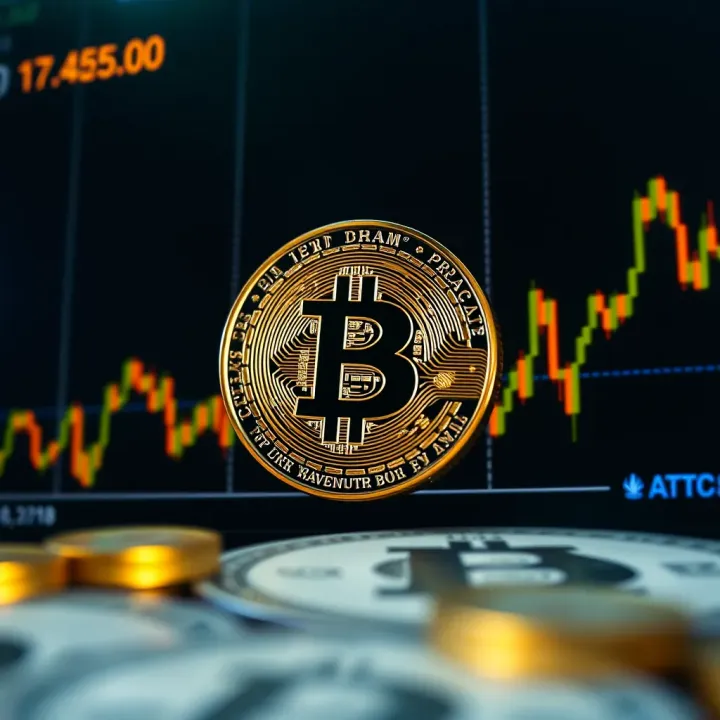
Historical price trends show Bitcoin has experienced sharp rises and steep falls. Understanding these patterns helps investors gauge potential future moves. Analysing trading volumes, support and resistance levels on exchanges like Binance or WazirX, and tracking global events gives deeper insights into BTC price trends.
Market sentiment and technical indicators remain key in short-term BTC predictions, whereas long-term outlook often depends on broader adoption and regulatory clarity.
Key factors affecting BTC prices include:
Macroeconomic indicators: Inflation rates, interest rates, and geopolitical tensions can drive BTC demand as a store of value.
Technological upgrades: Improvements like network scaling solutions or fork events impact investor confidence.
Regulatory environment: Policies from RBI, SEC, and other regulators influence market access and trust.
Market liquidity: Exchange trading volumes and institutional investment inflows or outflows affect price stability.
Grasping these dimensions allows investors and advisors to anticipate shifts, manage risks, and identify opportunities effectively. This article explores these aspects, aiding informed investment choices amid cryptocurrency's inherent unpredictability.
Understanding Bitcoin's price movements is essential for anyone involved in crypto trading or investment. It gives a foundation to analyse current trends, anticipate shifts, and make better-informed decisions. For instance, knowing the pattern of past bull runs or dips helps traders spot potential entry or exit points.
Early fluctuations and initial growth: Bitcoin's initial price swings were wild due to limited adoption and unclear use cases. In its early years, BTC was priced almost worthless, but rapid spikes occurred when new users or platforms accepted it. This phase shows how novelty and speculation can drastically impact prices, reminding traders to be cautious during the early stages of any new asset.
Major bull runs and corrections: Over the last decade, Bitcoin has experienced several significant bull runs, often followed by sharp corrections. The 2017 surge to nearly $20,000 was followed by a drastic fall below $4,000, illustrating high volatility and market exuberance. These cycles are valuable to understand since they reflect investor psychology and market maturity, helping assess when a correction might be due.
Recent performance and volatility: Recently, Bitcoin has seen swings from ₹30 lakh to ₹50 lakh levels, influenced by macroeconomic factors such as inflation and interest rates. Volume surges during periods of hype or fear cause noticeable volatility. Traders should monitor these shifts closely since abrupt changes can affect both risk and opportunity.
Recent price behaviour: Bitcoin's price has shown consolidating behaviour lately, fluctuating within defined ranges. This indicates a market waiting for new triggers, like regulatory announcements or institutional moves. Identifying such sideways patterns can signal potential breakouts, aiding tactical trading decisions.
Market sentiment and trading volumes: Sentiment remains mixed, with retail enthusiasm bolstered by festive season gains balanced by institutional caution amid regulatory uncertainty. Trading volumes reflect this, with spikes during news-driven events. Understanding sentiment can help anticipate momentum shifts, as bullish moods often attract fresh buyers, while bearish moods might prompt sell-offs.
Comparison with other cryptocurrencies: Bitcoin still dominates in market cap and liquidity compared to altcoins like Ethereum or Solana. However, others may outperform BTC in short bursts due to specific technological developments or hype. Comparing BTC with peers helps investors diversify and weigh risk–reward more effectively.
Tracking Bitcoin's price history and current trends is key to navigating its unpredictable market. It equips you with context to distinguish between short-term noise and meaningful movements.
Understanding the key factors that influence Bitcoin's price is essential for anyone trading or investing in BTC. These forces shape market behaviour and help predict potential price changes. This section breaks down macroeconomic influences and crypto-specific market dynamics that matter when assessing Bitcoin's value against the US Dollar.
Global inflation and interest rates directly impact Bitcoin's appeal as an asset. When traditional currencies face inflationary pressure, investors often look for alternatives like Bitcoin, seen as a hedge against money losing value. For example, in years when US inflation surged above 5%, interest rates rose as the Reserve Bank of India (RBI) and the US Federal Reserve took steps to tighten monetary policy. Rising interest rates tend to increase the opportunity cost of holding non-yielding assets like Bitcoin, sometimes pushing prices down temporarily.
Geopolitical developments also affect Bitcoin's price volatility. Tensions such as trade wars, sanctions, or conflicts lead to risk-off sentiment in markets, making some investors flock towards cryptocurrencies as alternatives to traditional assets. India’s own geopolitical stance, such as border tensions or diplomatic shifts, can influence Indian investors' willingness to park money in BTC. Notably, events like the Russia-Ukraine conflict created turbulence that rippled into crypto markets worldwide, affecting BTC prices.

Changes in the US Dollar's strength further influence BTC pricing since Bitcoin is mostly traded against the USD. A stronger dollar can reduce purchasing power for foreign investors, often causing downward pressure on Bitcoin's price in other currencies. Conversely, a weaker USD might drive demand for BTC as an alternative store of value. For example, when the dollar index rose during certain periods in 2023, Bitcoin struggled to maintain gains as investor interest shifted back to the fiat currency.
Supply and demand are fundamental to Bitcoin’s price movement. Limited supply—capped at 21 million BTC—and halving events that reduce new Bitcoin creation typically support upward price pressure. Demand spikes, whether from institutional inflows or retail interest during festive sales, push prices further. Consider India's growing crypto adoption; every festive season sees more new investors entering this space, increasing demand locally.
Regulatory announcements have immediate and lasting impacts on Bitcoin markets. For instance, SEBI and RBI's changing stance on crypto regulations influences investor confidence and liquidity. News about stricter compliance or taxation can cause sharp price dips. On the other hand, clearer regulations encouraging legal crypto trading tend to boost market participation and stability, often supporting price rises.
Technological upgrades and network activity also shape Bitcoin’s value. Improvements like Taproot or increased transaction volume signal a healthy and evolving ecosystem. Higher network security and usability increase trust, attracting investment. For traders, monitoring mining activity and changes in hash rate offers insights into network stability, often correlating with price trends.
Keeping an eye on both macroeconomic and crypto-specific factors helps traders and investors anticipate Bitcoin price moves, making informed decisions possible in a volatile market.
Predicting Bitcoin's price movement requires a mix of technical and fundamental approaches. Traders and investors benefit from these techniques by gaining clearer signals to time their entries and exits. Practical understanding of these tools helps navigate the volatile BTC to USD market more confidently.
Chart patterns and indicators help identify trends and reversals by analysing past price movements. For example, a ‘head and shoulders’ pattern often signals a possible price drop, while a ‘double bottom’ might indicate a trend reversal upwards. These patterns are easier to spot on charting software used by traders and serve as visual cues.
Indicators such as Bollinger Bands or MACD give clues about market momentum and volatility, helping investors spot entry points or overbought/oversold conditions. For instance, if BTC price consistently breaks the upper Bollinger Band, it may suggest a temporary peak followed by correction.
Moving averages and RSI signals smooth out price data to reveal underlying trends. The common 50-day and 200-day moving averages show how BTC has been performing over short and longer terms. Many traders watch for the ‘golden cross’—when the 50-day average crosses above the 200-day average—as a sign of bullish momentum.
The Relative Strength Index (RSI) indicates overbought or oversold conditions, typically with a threshold of 70 for overbought and 30 for oversold. If BTC’s RSI moves above 70, it suggests price may soon correct, while below 30 indicates potential buying opportunities.
Volume analysis evaluates the strength behind price moves. Rising prices with high trading volumes confirm investor enthusiasm and genuine price trends. Conversely, price moves on low volumes might be unreliable and prone to reversal.
For example, if BTC spikes to ₹30 lakh but the volume is thin, the move may lack conviction and correct soon. High volumes during an upward rally help confirm a sustained trend.
Adoption rates and transaction volumes reflect Bitcoin’s real-world usage and acceptance. Increasing ATM installations in India or businesses accepting BTC payments suggest growing demand. Rising daily transaction counts on the blockchain typically support price appreciation as network usage expands.
Network security and development activity measure Bitcoin’s technical robustness. Continuous upgrades, bug fixes, and active developer participation strengthen confidence. A secure network reduces risks of hacks, enhancing investor trust. For instance, the adoption of the Taproot upgrade improved privacy and efficiency, boosting positive sentiment.
Macro environment and investor behaviour capture external influences such as inflation, monetary policy, and investor attitudes. Indian investors, for instance, may turn to BTC as a hedge during rising inflation or rupee depreciation. At the same time, sharp regulatory changes or negative news can trigger sudden sell-offs.
Combining these technical and fundamental insights allows traders and investors to make balanced decisions rather than relying solely on guesswork or hype.
Expert views and forecasts serve as a valuable compass for traders and investors trying to navigate the unpredictable waters of Bitcoin (BTC) pricing against the US Dollar (USD). These insights provide a reality check beyond purely technical data, drawing on analysts’ experience and market knowledge. They help anticipate potential price movements by factoring in diverse variables from market behaviour to geopolitical shifts.
Analysts focus on immediate trends to advise investors on possible price swings within days to weeks. This outlook matters for active traders who rely on quick moves to capitalise on volatility. For instance, after a significant regulatory announcement or a major network upgrade, BTC prices may spike or dip sharply, creating short windows to buy or sell. Paying attention to short-term predictions enables timely decision-making for maximising profits or limiting losses.
These predictions look beyond the daily noise, projecting how BTC might perform over months or years. Long-term forecasts consider broader themes like mainstream adoption, institutional investment, and technological improvements. For example, some experts predict BTC reaching well above ₹50 lakh in the next few years based on increasing use in payment ecosystems and scarcity due to capped supply. This outlook guides investors focused on wealth building through patient holding and strategic entries.
The BTC market often sees conflicting expert opinions, reflecting its complex nature and fast-evolving environment. Some analysts emphasise Bitcoin’s potential as digital gold, expecting steady growth, while others warn of regulatory crackdowns or competition from altcoins that may suppress prices. Understanding this spectrum helps investors avoid overreliance on a single narrative and encourages balanced risk assessment.
Indian crypto regulations have remained in flux, influencing investor confidence and market behaviour strongly. Measures like the proposed crypto tax framework and RBI’s cautious stance affect liquidity and trading volumes. Awareness of these regulatory changes is vital for Indian investors as any sudden policy shifts can cause abrupt price adjustments, either limiting gains or opening opportunities during downturns.
The rise of retail investors through platforms like WazirX and CoinDCX, alongside institutions slowly embracing crypto, signals a maturing Indian market. ₹10,000 crore worth investments by local funds in crypto startups indicate growing acceptance, which often drives prices upwards due to increased demand. Such trends reflect greater market depth, reducing extreme volatility over time.
Indian investors usually watch global trends but also react strongly to home-grown developments such as tax rules and payment integration. Sentiment shifts can be swift; for example, many investors became cautious during the crypto ban talk in 2021 but showed renewed interest after clarifications on regulation. Keeping track of investor mood provides clues on likely short-term price pressures, useful for timing entries and exits.
Expert views form an essential part of informed trading strategies, combining data with market context, especially in a complex and evolving market like Bitcoin, where global and local factors interplay.
Predicting Bitcoin's price is inherently tricky due to several risks and challenges. These factors significantly affect forecasting accuracy and investment decisions. Understanding these challenges helps traders and investors better navigate the unpredictable crypto space.
Bitcoin experiences rapid price swings, often without clear triggers. These shifts stem from speculative trading, sudden demand spikes, or market sentiment shifts. For example, BTC might jump or drop by ₹1 lakh within hours, catching many investors off guard. Such volatility demands cautious trading strategies and continuous monitoring rather than relying solely on historical trends.
External shocks also influence Bitcoin’s value abruptly. Political upheavals, sudden changes in global economic indicators, or announcements like new regulations can cause price shocks. Remember the sudden dip in BTC prices during the 2022 global inflation surge? It showed how external factors outside crypto markets directly impact Bitcoin’s USD value. Traders must keep an eye on global news alongside technical charts to manage these uncertainties effectively.
Changing crypto regulations both in India and abroad add complexity to Bitcoin price predictions. India’s evolving stand on cryptocurrency, including periodic talks about banning or regulating exchanges, causes investor hesitation. Globally, some countries embrace crypto, while others clamp down hard, creating an uneven regulatory landscape. This patchy enforcement often results in sudden market reactions, making long-term price forecasts less reliable.
Security breaches and fraud risks remain a major concern for investors. Hacks at prominent exchanges or wallets lead to loss of funds and erode confidence, impacting prices sharply. For instance, the 2021 hacking incidents at certain global exchanges led to noticeable BTC sell-offs. Investors must prioritise using secure platforms and keep their digital assets safe, as a single security lapse can trigger significant price disruptions.
Navigating Bitcoin’s price needs attention not only to charts but also to these unpredictable factors. Awareness of volatility, external shocks, evolving laws, and security pitfalls helps in making smarter investment choices.
Rapid and sudden price changes due to speculative trading
Unpredictable shocks from economic or political events
Shifting regulations causing market hesitations
Security incidents shaking investor confidence
By keeping these challenges in view, analysts and investors can better prepare for the twists and turns in BTC’s price movements. Understanding these elements forms the backbone of realistic Bitcoin price prediction.
📈 Explore Ripple XRP price predictions with insights on market trends, expert forecasts, and risks to make informed decisions in India & beyond.
📈 Explore Reliance Industries Ltd's share price outlook for 2025. Get insights on financials, key sectors, market trends & expert views to guide your investments.
📊 Explore detailed Ripple (XRP) price predictions with insights into market trends, regulatory updates, and expert analysis to guide Indian crypto investors. 💡

📈 Explore the 2050 outlook for Reliance Industries' share price, examining market trends, company growth, economic factors, risks, and opportunities for investors.
Based on 12 reviews