
Understanding Forex Contests for Indian Traders
Explore how forex contests let Indian traders test skills, compete for prizes ₹, manage risks wisely, and boost earnings with expert tips and types 📈💰
Edited By
Ethan Hughes
Understanding forex gold rates is essential for Indian traders who deal with gold in international markets. Unlike domestic gold prices quoted in rupees per gram in India, forex gold rates represent gold's value in foreign currencies, most commonly the US dollar. These rates reflect not only the physical gold price but also the currency exchange fluctuations impacting the rupee-dollar conversion.
Forex gold rates show how much one ounce or gram of gold costs in a foreign currency on global exchanges, such as the COMEX or London Bullion Market. Indian traders watching these rates get insights on global demand, geopolitical tensions, and economic policies influencing gold’s international value.
Domestic gold prices factor in import duties, GST, making charges, and local supply-demand dynamics. In contrast, forex gold rates purely reflect international prices converted into local currency rates. For example, if global gold prices stay steady but the rupee weakens against the dollar, forex gold rates for India may rise even if domestic demand hasn’t changed significantly.
Forex gold rates act as a bellwether for global price trends, while domestic prices adjust for India's unique costs and taxes.
US Dollar Movement: Gold prices often move inversely to the dollar. A weaker USD typically pushes gold rates up.
Global Economic Events: Inflation data, central bank policies—especially from the US Federal Reserve—impact investor demand for gold.
Geopolitical Risks: Conflicts or tensions increase gold’s appeal as a safe asset, driving rates higher.
Interest Rates: Rising interest rates can lower gold attractiveness, pulling rates down.
Indian traders should also watch RBI's currency policy and import norms as these affect rupee valuation and thus domestic cost of gold when converted from forex rates.
Reliable data comes from financial platforms providing real-time gold prices in USD and INR. Monitoring forex gold rates alongside rupee performance informs better trading decisions. Tools like NSE India's commodity section and global gold indices can help traders spot trends early.
By understanding these aspects, Indian traders gain a clearer view of gold’s price movements beyond just local markets, enabling timely and informed investment or trading decisions.
Understanding forex gold rates is vital for traders and investors who actively watch both international and Indian gold markets. Forex gold rate refers to the price of gold quoted in foreign exchange markets, typically in US dollars per ounce or gram. This rate fluctuates constantly based on global supply-demand, currency movements, and international economic events. For an Indian trader, knowing the forex gold rate helps anticipate price changes before they reflect in the domestic market.
Forex gold rate is the internationally accepted price of gold determined on global trading platforms like the London Bullion Market or COMEX. It expresses gold's value in foreign currency, primarily US dollars. Unlike the physical gold price available in India, forex gold rates react immediately to external factors like dollar strength, geopolitical tensions, or decisions by major central banks. Traders tracking forex gold rates can gain insights into future domestic price movements and plan their buy or sell actions accordingly.
One main factor distinguishing forex gold rates from Indian gold prices is currency fluctuation. Since forex gold rates are denominated in US dollars, a weakening Indian rupee against the dollar generally makes gold costlier in rupee terms. For example, if the dollar strengthens from ₹75 to ₹77, even if the forex gold rate remains stable at $1,900 per ounce, Indian buyers will pay more rupees for the same quantity of gold. This affects price trends in the domestic market ahead of actual changes in international gold rates.
India imposes import duties, GST, and other levies on gold imports. These charges add a considerable premium on domestic gold prices compared to forex gold rates. For instance, customs duty on gold imports to India currently stands at 7.5%, plus 3% GST and other cesses. This makes Indian physical gold prices higher than the base forex rates by roughly 10-15%, depending on applicable taxes. Traders and investors should factor these extra costs when comparing international forex gold rates with local prices before making decisions.
Indian gold prices reflect more than just international valuation; currency shifts and government levies play a big role in final costs.
In summary, forex gold rate shows the international market's perception of gold's worth, while domestic prices consider currency value and government-imposed costs. Being aware of these differences helps Indian traders assess when the market might be undervaluing or overvaluing gold locally in relation to global trends.
Understanding global factors is key for traders and investors watching forex gold rates. Since gold is globally priced in US dollars, international economic events and currency movements heavily influence its rate. For Indian traders who often deal with currency conversion and import duties, keeping an eye on global signals helps make better investment or trading decisions.
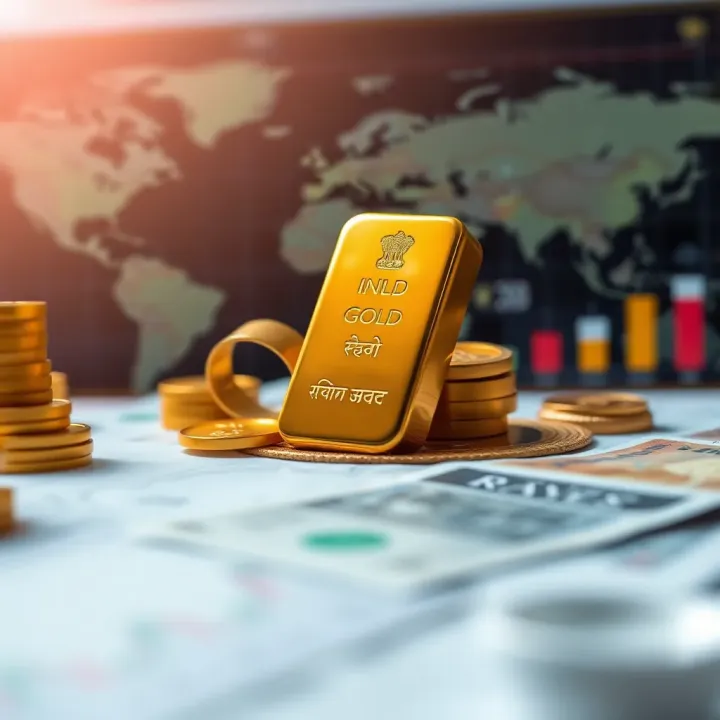
Gold prices usually have an inverse relationship with the US dollar. When the dollar strengthens against other currencies, gold often becomes more expensive in those currencies, leading to reduced demand and lower prices. For instance, when the US Federal Reserve hikes interest rates, the dollar tends to gain strength. This can push gold prices down in global markets.
Indian traders should note that since they pay for gold in rupees, fluctuations in the USD–INR exchange rate also affect the effective cost. Even if global gold prices remain steady in dollars, a weakening rupee can increase forex gold rates in the Indian market. Hence, understanding dollar movements helps anticipate gold price trends more precisely.
Central banks around the world, especially the US Federal Reserve, play a big part in gold price movements. When central banks adopt a tighter monetary policy by raising interest rates or reducing asset purchases, it usually triggers a fall in gold prices as fixed-income assets become more attractive. On the flip side, easier monetary policies can boost demand for gold as a safe haven.
Take, for example, the Federal Reserve's decisions on repo rate adjustments. These announcements cause immediate market reactions, leading to volatility in gold prices. Indian investors watching these signals can better time their trades or investments in gold ETFs and futures.
Tensions such as conflicts, trade wars, or political instability increase uncertainty in global markets. Gold is seen as a safe haven during such times. For example, during the US-China trade war phases, gold prices surged as investors sought refuge from volatile equities and currencies. Similarly, war or unrest in oil-rich regions can lead to price spikes due to supply concerns.
For Indian traders, monitoring geopolitical developments helps anticipate sudden gold price swings. Tightening geopolitical situations often push forex gold rates upward, presenting opportunities for short-term trading but also increased risk.
Rising inflation tends to erode purchasing power, encouraging investors to buy gold as a hedge. When inflation rises faster than interest rates, real yields turn negative, making gold more attractive since it yields no interest but preserves value.
Conversely, higher nominal interest rates can reduce gold demand since fixed returns from bonds become more rewarding than non-yielding gold. Indian investors should track global inflation data alongside RBI's monetary stance as differences between global and domestic rates can affect forex gold pricing and potential returns.
Keeping a close watch on these global factors—dollar strength, central bank policy decisions, geopolitical events, and inflation trends—can provide Indian traders useful clues to navigate the often volatile forex gold market with better insight and timing.
India’s gold prices are shaped by several domestic factors that traders and investors must watch closely. These elements directly affect costs, supply, and investor sentiment, making them crucial for anyone dealing in forex gold rates or physical gold.
The value of the Indian Rupee against the US Dollar plays a major role in determining gold prices here. Since India imports around 80% of its gold, a weak rupee pushes up import costs. For instance, if the rupee drops from ₹75 per dollar to ₹77 per dollar, importers pay more rupees for the same quantity of gold priced in dollars. This cost eventually transfers to consumers, raising domestic gold prices.
This rupee-dollar dynamic is often volatile, especially during global economic changes or RBI’s policy shifts. Traders who track forex gold rates need to factor in the current and expected rupee trends because they directly influence the premium paid over international gold rates.
India levies customs duties on gold imports that significantly impact the final price. Currently, the customs duty stands at around 7.5%, including basic customs duty and social welfare surcharge. This duty ensures the government earns revenue and can influence demand by making imported gold costlier.
For example, an increase in customs duty during inflationary times can discourage gold imports temporarily, tightening supply and pushing domestic gold prices higher. Traders and investors monitoring forex gold must watch government announcements closely, as changes here affect both imported and domestic prices.
The Reserve Bank of India’s (RBI) monetary decisions also shape gold prices indirectly. When the RBI adjusts interest rates or alters liquidity, it impacts the strength of the rupee and inflation expectations — both tied closely to gold demand.
Higher interest rates make fixed-income investments more attractive, reducing gold’s appeal as a non-yielding asset. Conversely, rate cuts to boost economic growth often weaken the rupee, making gold imports expensive and pushing up gold prices domestically. Keeping an eye on RBI’s policy helps traders anticipate shifts in gold pricing trends.
Gold Exchange-Traded Funds (ETFs) offer a convenient way to invest in gold without physical holding. The Securities and Exchange Board of India (SEBI) regulates these ETFs to protect investors and ensure market transparency.
Recent SEBI norms have focused on enhancing disclosure standards and restricting speculative activities in gold ETFs. For example, limits on leverage usage or stricter entry criteria prevent excessive volatility. These rules affect trading volumes, liquidity, and pricing of ETFs, indirectly influencing how gold prices behave in the forex market.
Understanding these domestic drivers — rupee fluctuations, import duties, monetary policies, and SEBI regulations — is essential. They provide the foundation for analysing how forex gold rates translate into the Indian market, helping traders make informed decisions.
Understanding how to track and analyse forex gold rates is key for traders and investors aiming to make informed decisions. These rates fluctuate constantly due to global and domestic economic factors, so timely information can mean the difference between profit and loss. Tracking real-time data helps anticipate market movements, while analysing trends provides insight into when to enter or exit trades.
Forex trading platforms like Zerodha, Angel One, and Upstox offer direct access to live forex gold rates. These platforms provide charts, price alerts, and order execution capabilities designed for active traders. For instance, using Zerodha’s Kite platform, traders can watch gold price changes in real-time, set stop losses, and view depth of market to gauge liquidity instantly. This immediacy is vital when gold prices swing rapidly amid geopolitical developments or currency movements.
Financial news portals such as Economic Times Markets, Bloomberg Quint, and Moneycontrol provide continuous updates and expert commentary on gold trends globally. These portals also cover related forex news, RBI announcements, and global economic events affecting gold. This wider context lets traders understand why gold prices are moving, not just how. For example, when the US Federal Reserve changes interest rates, these news sites analyse the impact on dollar strength and consequently on forex gold rates, helping investors prepare their strategy.
RBI and NSE data offer authoritative and official sources for forex and commodity pricing. The Reserve Bank of India publishes exchange rates that influence gold import costs, while the National Stock Exchange (NSE) provides data on gold ETFs and futures contracts. Tracking NSE gold futures prices alongside forex rates helps investors spot arbitrage opportunities and understand how domestic markets react to global price shifts. This data is reliable for long-term analysis and institutional investors who depend on official figures.
Understanding candlestick charts is essential for reading price action clearly. Candlesticks display open, high, low, and close prices within a time frame, highlighting market sentiment and potential reversals. For example, a series of long green candlesticks on a 1-hour chart suggests strong buying momentum, likely driven by weakening rupee or rising US inflation data. Traders use these patterns to time entries precisely and set stop losses effectively.
Correlation with forex indicators like USD/INR exchange rate, volatility indices, and commodity price indexes helps decode price drivers. Gold prices often move inversely with the US dollar, so if USD/INR falls, gold could rise. Likewise, the India VIX (Volatility Index) can signal market uncertainty when it spikes, typically pushing investors towards gold as a safe haven. Combining forex indicators with price charts enables traders to build a more confident view of upcoming gold price trends.
Keeping a close eye on both reliable data sources and effective chart interpretation techniques empowers Indian traders to respond smartly to market shifts and make better investment decisions in the forex gold market.
Understanding trading and investment strategies centred on forex gold rates is vital for Indian traders. These strategies enable you to navigate the volatility inherent in gold as a forex asset and to align your approach according to your risk appetite and investment horizon. By grasping short-term trading tactics and long-term investment perspectives, you can better capitalise on price movements and protect your portfolio from fluctuations.
Volatility and risk management: Forex gold rates are often highly volatile, influenced by currency swings, geopolitical events, and global economic data. For short-term traders, this volatility offers opportunities but also exposes them to sudden losses. Effective risk management techniques—such as using stop-loss orders to cut losses and position sizing to limit exposure—are essential. For instance, if the US dollar unexpectedly strengthens, gold prices might dip quickly, and a stop loss can protect your capital from bigger drawdowns.
Active monitoring is necessary, especially when markets react to news on inflation numbers or RBI policy decisions. Keeping an eye on global cues such as changes in the Federal Reserve’s interest rate stance helps you anticipate price swings. Without proper risk controls, the high leverage common in forex gold trading can amplify losses.
Use of leverage: Leverage lets traders control a larger gold position with a smaller amount of capital. While this can magnify profits, it also increases the risk of larger losses. For Indian traders, it’s important to assess your risk appetite carefully before employing leverage. For example, trading on 10x leverage means a 1% adverse move in price could wipe out 10% of your invested capital.
Breaching margin calls is a real risk, especially during volatile sessions. As a practical step, many traders prefer using moderate leverage and diversify trades across different time frames or asset types. Platforms regulated by SEBI often set limits on leverage to prevent excessive risk-taking, so do check those regulations before you start.
Systematic Investment Plans (SIP) in gold: SIP allows you to invest fixed sums regularly in gold assets like sovereign gold bonds or gold ETFs (Exchange Traded Funds). This method reduces the risk of timing the market incorrectly, as you buy more when prices drop and less when prices rise. Over years, SIPs help in averaging the purchase cost and easing the impact of forex rate fluctuations.
For example, investing ₹10,000 monthly in a gold ETF over five years can build a sizeable corpus, cushioning against short-term forex volatility. Indian investors often prefer SIP in gold ETFs for ease of investment and transparency compared to physical gold.
Hedging against inflation: Gold traditionally acts as a hedge against inflation, preserving purchasing power when currency value declines. Long-term investors use forex gold rates to decide when to increase gold exposure during rising inflation periods globally or domestically.
Rupee depreciation often coincides with inflationary phases in India. During such times, investing in gold via forex markets can help protect wealth. For example, if inflation in India spikes due to rising petrol prices and monsoon failures, gold demand typically rises as investors seek stability. Allocating 5–10% of your portfolio in gold-based assets can provide this hedge effectively.
Successful strategies depend on matching your approach with your goals and understanding market dynamics. Whether short-term trading or long-term investment, knowledge of forex gold rates helps you make informed decisions.
In summary, trading forex gold requires careful risk management and a clear grasp of leverage's double-edged nature. Long-term investing through SIPs and recognising gold's role as an inflation hedge rounds out a well-considered strategy for Indian traders.
Explore how forex contests let Indian traders test skills, compete for prizes ₹, manage risks wisely, and boost earnings with expert tips and types 📈💰
Learn how forex demo accounts let Indian traders practise currency trading risk-free 💹. Discover benefits, selection tips, and strategies suited to India’s market.
🚀 Comparing Exness & OctaFX for Indian traders: regulation, accounts, platforms, fees, support & fund safety to help you choose the best forex broker in India.

📊 Discover how to identify RBI-authorized forex brokers, understand key regulations, and navigate the Indian forex market safely. Stay informed and trade smart! 🇮🇳
Based on 7 reviews