
Asian Forex Session Timing in India Explained
Explore the Asian forex session timings in India 🇮🇳 with IST conversions, major active markets, volatility trends, and top trading strategies for Indian traders 📈
Edited By
Clara Hughes
The New York forex session is a key period in the global trading day, running roughly from 8:00 am to 5:00 pm Eastern Standard Time (EST). It follows the London session and overlaps partially with the end of London's and the start of Tokyo's trading hours. This overlap creates heightened liquidity and volatility, making the New York session particularly influential.
For traders and investors, understanding this timing helps optimise entry and exit points. The session kicks into gear as the US financial markets open, meaning major economic releases and corporate news often come out during this window, impacting currency pairs.
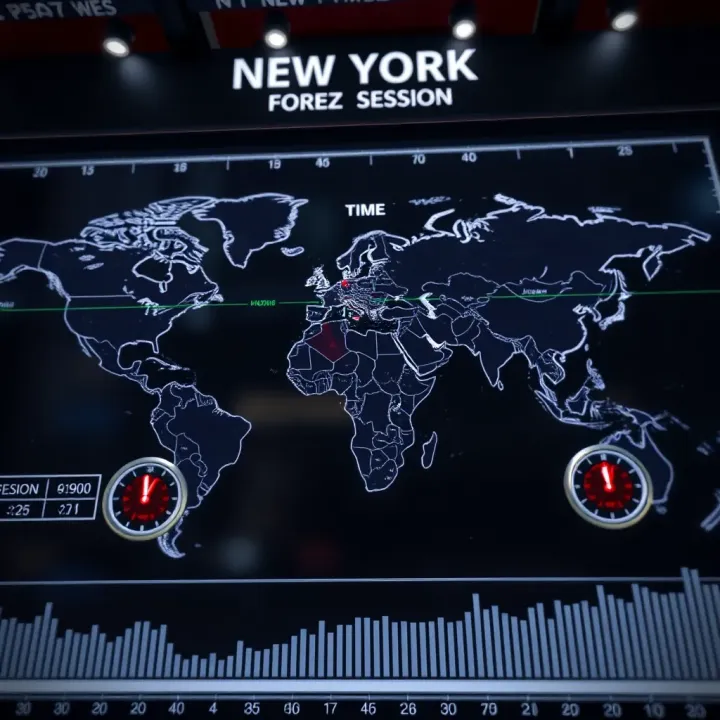
The New York session typically captures around 16-20% of daily forex market turnover, making it a high-volume period for active trading.
Currency pairs involving the US dollar (USD) are most active during this session. Pairs like EUR/USD, USD/JPY, GBP/USD, and USD/CAD tend to show notable price movements. For example, news about the Federal Reserve's interest rate decisions or US non-farm payroll data can trigger rapid volatility in these pairs.
The session’s overlap with the London market from 8:00 am to 12:00 pm EST is crucial. This is the time when both US and European traders operate simultaneously, leading to thicker market depth and smoother price action. After 12:00 pm, liquidity may reduce as European markets close, but US trading remains active until 5:00 pm.
To make the most of the New York session, traders should:
Monitor US economic indicators released during this period
Focus on USD-related currency pairs
Prepare for possible sharp price swings around major news
Use technical strategies that fit high volatility, like breakout trading or momentum indicators
Simply put, the New York forex session offers both opportunity and risk. Keeping track of its timing and overlap dynamics helps traders plan better and improve their trading outcomes over the day.
Understanding the New York Forex session is key for anyone involved in currency trading. This session stands out because it captures the heart of the US market activity, significantly influencing forex price movements daily. Traders who grasp the session's timing and dynamics can plan their entries and exits more effectively, avoiding low-liquidity traps or unexpected volatility.
Forex trading sessions divide the 24-hour forex market into specific time blocks, corresponding to the major financial centres worldwide. These sessions include Tokyo (Asian), London (European), and New York (American) sessions, reflecting when these markets are most active. Knowing these sessions helps traders pinpoint when liquidity peaks and volatility is likely to amplify.
The forex market works as a continuous international network connecting banks, financial institutions, brokers, and individual traders. Since trading happens across time zones, different sessions smoothly hand over activity as the day progresses. This shifting focus allows forex to operate round the clock, but also means price behaviour varies sharply between sessions due to changing market participants and news flows.
Timing is critical in forex because currency prices respond intensely to market hours, especially when two sessions overlap, like London and New York. These periods bring about higher volume and sharper price action — useful for day traders but risky for the unprepared. For example, a trader aware that high volatility occurs around the New York session's open can avoid entering large positions just before or after.
The New York session officially runs from 8:00 am to 5:00 pm Eastern Time (ET), overlapping slightly with London’s closing hours. This window is when US banks, hedge funds, and corporations actively trade currencies, reflecting their domestic business hours. Adjusting to local Indian time, this corresponds roughly to 6:30 pm to 3:30 am IST, meaning it covers evening to early morning hours in India.
The New York session follows the Tokyo and London sessions and overlaps with the latter for about four hours daily. This overlap is often the most liquid and volatile phase in the forex market, offering more trading opportunities. Compared to the quieter Asian session, the New York period brings greater price swings — an important consideration for strategies and risk management.
Key market players during the New York session include major banks, institutional investors, mutual funds, and corporate forex desks, all reacting to US economic news and data releases. The US dollar's dominance makes this session particularly significant for USD pairs. Retail traders from the US and elsewhere also actively participate, drawn by the session's liquidity and news-driven moves.
Recognising when the New York session starts and ends lets traders time their trades around market peaks and avoid periods of thin liquidity, reducing slippage and improving execution.
Understanding these aspects equips traders with a practical advantage, especially those in India, where the New York session’s timing aligns with late evening to early morning hours. Planning trades with session characteristics in mind can greatly influence profitability and risk control.
The New York forex session officially starts at 8:00 am and closes at 5:00 pm local time. India is generally ahead of New York by 9 hours and 30 minutes when New York observes standard time (Eastern Standard Time, EST). This means the New York session runs from 5:30 pm to 2:30 am Indian Standard Time (IST).
However, during daylight saving time (Eastern Daylight Time, EDT), which usually starts in March and ends in November, the time difference reduces by an hour to 8 hours and 30 minutes. So, the session timing shifts to 6:30 pm to 3:30 am IST. For Indian traders, keeping track of this change is critical as it affects when markets open and close, which in turn influences trading activity and strategy.
The New York session coincides with evening and late-night hours in India, which can be challenging for full-time traders. Since this session often shows high volatility and liquidity, missing it could mean missing key market movements, especially for US dollar pairs. Traders based in India must plan their schedules accordingly to catch the most active trading hours or rely on automated systems to manage trades overnight.
The most active hours for Indian traders fall in the early part of the New York session, from around 5:30 pm to 9:30 pm IST. During this window, market volatility and liquidity are usually higher due to overlapping hours with the London session ending. Indian traders can benefit by timing their trades to this overlap, increasing the chances of better spreads and more price movement.
Since the New York session extends into the early hours of the morning in India, managing overnight positions can be tricky. Traders need to monitor their open positions carefully or use stop-loss orders to limit risks when they cannot actively watch the market. Some brokers offer alerts or mobile app notifications to assist in managing trades remotely, which helps Indian traders sleep without worry.
Part-time traders who cannot trade during late hours might find it difficult to engage fully in the New York session. For them, strategies that focus on the initial one to two hours of the session, or using trading signals and bots, can help participate in market moves without staying up all night. Choosing brokers with reliable execution and favourable spreads during these hours also supports part-time trading effectively.
Indian traders should always adjust their trading plans around the session timings, especially considering daylight saving changes, to maximise potential and reduce risks.
These timing insights allow Indian traders to align their strategies with the New York session, taking advantage of the currency pairs active during this high-volume period and managing the inherent challenges of its timing relative to Indian Standard Time.
The New York Forex session stands out due to its distinctive market behaviour and key features that directly impact trading outcomes. Understanding these elements is vital for traders who want to time their trades effectively and manage risks. This session is closely watched worldwide since it often sets the tone for the rest of the trading day, especially for currencies involving the US dollar.
Liquidity peaks during the New York session, especially when it overlaps with the London session. Traders will notice sharp price swings early on and around major economic data releases from the US. For instance, volatility typically surges between 8:30 am and 10:00 am IST, coinciding with US market openings and economic reports. This increase offers both opportunities and risks: tighter spreads may widen rapidly, and stop-loss orders could be triggered in quick succession.
Economic announcements such as the US Non-Farm Payroll (NFP), Federal Reserve interest rate decisions, and Consumer Price Index (CPI) data heavily influence price movements during this session. Traders who position themselves just before these releases can either profit from spikes or suffer losses without proper risk management. For example, a surprise hike in Fed rates often strengthens the US dollar sharply, affecting USD pairs instantly.
During high liquidity hours in New York, order executions tend to be faster, and spreads narrower, benefiting scalpers and intraday traders. However, volatility spikes caused by news can momentarily widen spreads or cause slippage. It’s wise for traders to use limit orders during these times and avoid market orders to reduce execution risks. Brokers popular with Indian traders, such as Zerodha or Upstox, generally offer competitive spreads on major forex pairs during this session.
Pairs like USD/INR, USD/EUR, and USD/JPY see the busiest trading volumes during the New York hours. Since the US dollar is the world's primary reserve currency, New York's open markets heavily influence these pairs. For example, the USD/INR often reacts sharply to US economic data, impacting Indian exporters, importers, and investors. This makes it the go-to pair for traders focusing on market moves during this session.
Though the Euro and British Pound originate from Europe, these crosses remain active in the New York session due to overlap with London trading hours. Pairs like EUR/USD and GBP/USD experience substantial price action, especially in the early New York session. Traders interested in exploiting trends or breakouts frequently monitor these pairs for volatility and clear trading setups.
Emerging market currencies such as the Indian Rupee (INR), South African Rand (ZAR), and Brazilian Real (BRL) can show notable activity during this session due to the USD’s influence. Currency movements here often reflect global risk sentiment; hence, during periods of global uncertainty, these currencies tend to weaken against the US dollar. Traders can watch this session for shifts in capital flows impacting their portfolios and position accordingly.
The New York Forex session offers a unique environment where liquidity, volatility, and currency pair activity converge, creating both challenges and opportunities for traders who understand its traits well.
The New York forex session plays a significant role in the global currency market, but it does not operate in isolation. Understanding how it interacts with other major sessions, particularly London and Asian, offers traders valuable insight into liquidity, volatility, and trading opportunities. These interactions can influence price action and help traders time their strategies more effectively.
The New York and London forex sessions overlap roughly between 7:30 pm and 10:30 pm Indian Standard Time (IST), corresponding to 8:30 am–11:30 am Eastern Time during standard time. This 3-hour window is one of the most active periods in the global forex market. The simultaneous participation of major financial centres means volumes rise significantly. For Indian traders, this often falls into convenient evening hours, making it a prime time to engage in trading.
When London and New York sessions coincide, liquidity surges as traders from these centres execute high-volume transactions. This liquidity generally tightens spreads, lowering transaction costs. However, volatility also tends to spike during this overlap due to overlapping economic news releases from both zones, unpredictable market reactions, and institutional trading activities. Such volatility presents both risk and reward — unexpected price swings can lead to sharp gains but also sharper losses.
The overlap provides ideal conditions for various trading strategies. Trend-following traders benefit from extended price movements due to active participation, while scalpers enjoy quick price fluctuations and tight spreads. For instance, currency pairs like EUR/USD and GBP/USD are especially lively, offering multiple entries and exits within a short span. This period is also suitable for news traders who track American and European economic updates.
The New York-London session overlap is often considered the "sweet spot" by forex traders seeking both liquidity and volatility, offering clear setups for active trading.
The Asian forex session, covering markets like Tokyo, Singapore, and Sydney, is comparatively quieter with lower liquidity and volatility. Price movements are gentler, influenced mainly by regional data and smaller institutional flows. Conversely, the New York session reflects broader global economic sentiment with heavier involvement from major banks and funds, leading to stronger trends and sharper moves.
Asian session suits traders who prefer range-bound or low-impact trading, such as swing and position traders, due to its low volatility. In contrast, the New York session is more appropriate for day traders and scalpers who thrive on higher volatility and volume. An Indian trader with limited time might monitor the Asian session for setting entry levels and plan active trades during the New York session.
The shift from the Asian to New York session usually sees an increase in market momentum. For example, price consolidations during the Asian hours may give way to breakouts once New York traders enter. Recognising this transition helps traders anticipate increased activity and position accordingly. This phase is also when key market news from the US becomes influential, often causing directional shifts in currency pairs.
Understanding these session interactions lets traders optimise their approach by aligning their activities with periods of maximum opportunity and manageable risk.
Trading during the New York session demands strategies that capitalise on its unique characteristics, including high liquidity and frequent volatility caused by US economic data releases. Applying effective approaches can help traders respond to rapid price movements and leverage opportunities that arise during this active period. Here, we explore practical strategies suited to this session, focusing on trend following, news-based trading, and tips tailored for Indian traders.
Breakouts signal potential shifts in market momentum and often occur when prices move beyond well-established support or resistance levels. During the New York session, such breakouts can be more pronounced due to increased market participation. For example, if the USD/INR pair breaks above a recent high during heavy New York trading hours, it may suggest a strong buying opportunity. Traders can track key price levels on charts and monitor volume spikes to spot these breakout moments.
Indicators like Moving Averages, Relative Strength Index (RSI), and Bollinger Bands help to confirm breakout signals or identify trend directions. Moving averages smooth price action, making it easier to see when a trend establishes itself. RSI can reveal overbought or oversold conditions, guiding entry and exit decisions. In volatile periods of the New York session, combining these tools adds confidence, helping traders avoid false breakouts and pick proper entry points.
Managing risk is critical during the New York session when sudden spikes can trigger unexpected losses. Traders often use stop-loss orders to limit downside if the market reverses. Position sizing must be adjusted considering volatility levels—smaller sizes help contain potential losses. For instance, when a major US economic release is due, tightening stop-loss limits and reducing exposure can protect capital from sharp swings.
US data like Non-Farm Payrolls, Consumer Price Index, and Federal Reserve announcements happen during the New York session and sharply influence forex prices. Paying attention to these releases allows traders to anticipate market moves. For example, stronger-than-expected employment data can boost USD pairs, creating quick profit chances if traders position accordingly.
News releases often cause sharp spikes and spreads widening. Traders need to prepare for sudden market jumps which may trigger stop-loss orders. Many choose to trade smaller lot sizes or stay on the sidelines around bulletin times to avoid being caught in unpredictable moves. Using limit orders instead of market orders can also help control entry prices amid volatile conditions.
Real-time news feeds, economic calendars, and broker alerts are essential for effective news-based trading. Platforms like Bloomberg or Reuters provide timely updates, while apps offering push notifications ensure traders don’t miss critical data. Staying updated helps you react quickly and adjust strategies based on fresh information.
The New York session runs from evening to early morning IST, requiring Indian traders to balance their activity with healthy rest. Those unable to trade live can use limit orders or automated trading through expert advisors to capture opportunities without sacrificing sleep. Planning trading windows during overlap hours with London session can also reduce odd-hour strain.
Selecting a broker with low spreads during the New York session and reliable execution is vital. Platforms offering advanced charting and news integration help traders make informed decisions. Indian traders should also verify regulatory compliance and the availability of customer support in Indian Standard Time.
Demo accounts allow traders to test strategies without risking real money, especially important given the New York session’s volatility. Practising breakout and news-driven trades on demo platforms builds confidence and refines timing before going live. It also lets traders explore different instruments, such as USD pairs crucial during this session, without financial pressure.
Effective trading during the New York session comes from adapting strategies to its distinct market dynamics and timing. Combining technical setups with strong risk management and adjusting for the Indian trading environment helps improve results significantly.
Explore the Asian forex session timings in India 🇮🇳 with IST conversions, major active markets, volatility trends, and top trading strategies for Indian traders 📈
📈 Know key forex trading session times in IST 🇮🇳, how session overlaps boost volatility, and the best hours Indian traders should focus on for better profits.

Explore the best times for forex trading in India 🇮🇳 with practical tips on market session overlaps, timing strategies, and risk management in Indian Standard Time.

Learn how a forex demo account lets you practise trading without risk, test strategies, understand market behaviour, and choose the best platform for your needs 📈💰
Based on 11 reviews