
Understanding Quotex for Indian Traders
Explore Quotex trading platform🌐 made simple for Indian users🇮🇳. Learn features, setup, risks & benefits to trade smartly online📈💡
Edited By
Sophie Richardson
The DAX index stands as Germany’s primary stock market indicator, reflecting the performance of 40 of the largest and most liquid German companies listed on the Frankfurt Stock Exchange. For Indian investors looking beyond domestic markets, understanding the DAX offers a strategic window into Europe's economic fabric and global trade dynamics.
Unlike the Sensex or Nifty in India, which capture leading Indian companies, the DAX spans multinational corporations like Siemens, Deutsche Bank, and Volkswagen. These firms influence not only local but international markets, meaning any movement in the DAX often echoes worldwide.
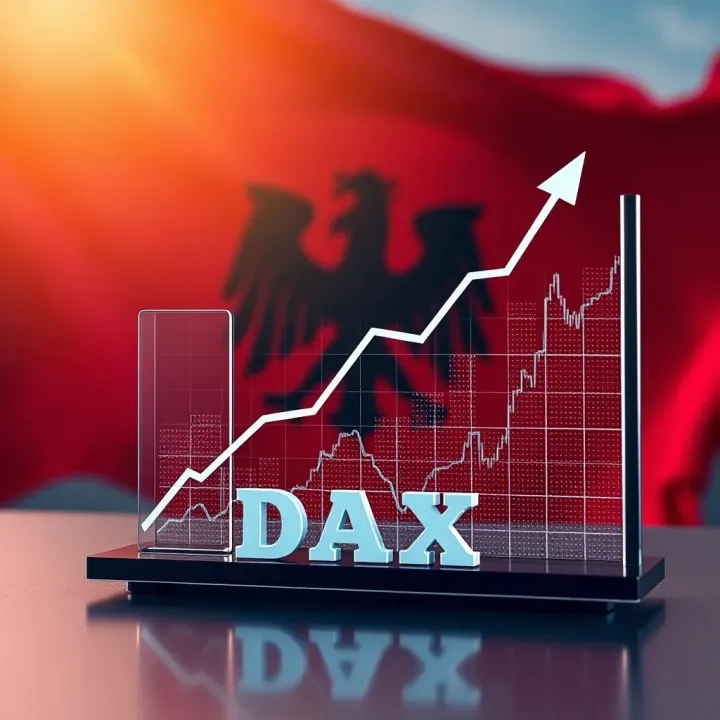
The index works as a total return index, which means it factors in dividends paid by its component companies along with price changes. This feature provides a fuller picture of returns compared to price-only indices. For example, an investor tracking the DAX will see the combined effect of share price appreciation and dividend income, something that can be quite advantageous when analysing long-term investments.
For Indian traders, the DAX presents both diversified opportunity and challenges -- especially when dealing with currency fluctuations and geopolitical risks that differ from Indian market conditions.
Understanding the DAX also involves grasping terms like market capitalisation weighting – where firms with bigger market value influence index movements more. This means a sudden dip in a heavyweight stock like SAP can sway the entire index downward, regardless of how smaller companies perform.
Here are key elements Indian investors should keep in mind:
Trading Hours and Time Zones: The DAX trades during European hours (around 9 am to 5:30 pm Central European Time), requiring Indian investors to plan trading times accordingly, often late afternoon to midnight IST.
Currency Risk: Trades are in euros, so INR-EUR fluctuations can impact the eventual returns.
Regulatory Environment: German market regulations and EU directives differ from Indian market rules, so compliance and risk management strategies must adjust accordingly.
Access Mechanisms: Indian investors can access DAX shares via international brokerage accounts, ETFs tracking the DAX, or mutual funds with European equity exposure.
Familiarity with these aspects can help Indian investors weigh the DAX’s appeal amid a globalising portfolio strategy, minimizing surprises and maximising informed decision-making.
The DAX share market holds a significant place in global finance, representing Germany’s economic health through its stock index. For Indian investors, understanding the DAX is practical because it links to many multinational firms whose performance impacts global markets. Moreover, Germany’s position as Europe’s largest economy means that the DAX serves as a barometer for economic trends not just in Europe but worldwide. This section focuses on what the DAX index truly represents, the sectors it covers, and the key companies it comprises.
The DAX index is a stock market index comprising 40 major German blue-chip companies traded on the Frankfurt Stock Exchange. It reflects these companies’ market capitalisation and trading volume, offering a pulse on Germany's economic vitality. Since Germany exports a significant share of its goods, fluctuations in the DAX often signal larger economic shifts globally. For instance, a drop in automotive sector stocks within the DAX might indicate troubles in international supply chains or changing demand patterns.
When compared with global benchmarks like the FTSE 100 in London or the S&P 500 in the US, the DAX exhibits a unique composition, heavily weighted towards industrial and manufacturing sectors. Unlike the tech-heavy Nasdaq, the DAX offers exposure to established industries such as automotive, chemicals, and financial services. For Indian investors looking for diversification, understanding this difference helps in balancing portfolios with potentially lower correlation to domestic markets.
The DAX covers a wide range of sectors, with dominant representation from automobiles, chemicals, technology, and finance. This sector mix gives investors exposure to industries driving Germany's export-led economy. For example, the automotive sector alone influences a large chunk of the DAX’s overall movement, with giants contributing significantly to trade volume and index stability.
Notable companies in the DAX include Volkswagen, Siemens, Bayer, and Deutsche Bank. Volkswagen’s global reach makes it a key player whose share performance reflects not just German but international auto industry trends. Siemens, a leader in industrial automation and engineering technology, provides exposure to manufacturing and infrastructure growth. Firms like Bayer add pharmaceutical diversity, offering Indian investors a glimpse into Europe’s healthcare innovation landscape. Understanding these companies helps investors gauge how shifts in the DAX relate to broader economic and sectoral trends.
The DAX index is not just a list of companies; it captures the sectors that drive Germany’s economic engine, providing Indian investors with a vital tool for assessing European market dynamics and portfolio diversification opportunities.
By grasping the structure and components of the DAX, Indian investors can better navigate foreign market investments and monitor how global economic movements might impact their portfolios.
Understanding how the DAX share market operates is key for investors, especially those in India looking to expand their portfolios internationally. This knowledge helps in timing trades, assessing market behaviour, and comprehending the factors that drive share prices. With this insight, investors can make better decisions and manage risks effectively.
The DAX index trades on the Frankfurt Stock Exchange, with regular trading hours from 9:00 am to 5:30 pm Central European Time (CET). For Indian investors, this means trading happens from 12:30 pm to 9:00 pm IST, fitting well with post-lunch market analysis after Indian equity markets close. There is a pre-opening session and closing auction, but the main trading session is where liquidity and price discovery primarily occur.
The timing of trades can influence price volatility. For example, the opening minutes often show strong price movements as markets react to overnight global developments. The closing half-hour tends to be busy as traders adjust positions before the market shuts. Knowing these patterns aids investors and traders in planning entry and exit points more strategically.
The Frankfurt Stock Exchange itself plays a central role in operating the DAX share market. It is Germany's largest securities trading venue and offers an advanced electronic trading platform called Xetra. This platform ensures quick order execution and transparency, which are crucial for a large index like the DAX. For Indian investors, access through brokers linked to global exchanges or through ETFs relies heavily on the efficiency of this exchange.

Economic indicators significantly impact the DAX index. Key statistics such as Germany's GDP growth, inflation rates, and unemployment figures often cause noticeable shifts in market sentiment. For instance, a surprising rise in Germany’s industrial production could push the DAX higher as investors expect increased corporate earnings. Conversely, inflation spikes might make the market nervous due to potential interest rate hikes.
Global events and policy changes also play an important role in influencing the DAX. Germany being a major exporter, any changes in trade policies or geopolitical tensions can affect companies listed on the DAX. For example, US-China trade disputes or Brexit-related developments can disrupt supply chains and investor confidence. Moreover, European Central Bank monetary policies and geopolitical stability in the Eurozone add layers of complexity that investors must track closely.
The DAX market does not operate in isolation; it's sensitive to both local economic data and international happenings. This dual influence means Indian investors must keep a close watch on global news that could impact their investments.
In sum, understanding the timing of trades, the role of the Frankfurt Stock Exchange, and the economic and geopolitical factors behind price movements can help Indian investors approach the DAX market with greater confidence and strategic insight.
Understanding the trends and recent movements in the DAX share market gives investors important clues about Germany’s economic pulse and broader European market sentiments. For Indian investors, tracking these changes helps reward informed decisions, especially when timing entry into this foreign market or managing existing portfolios connected to international equities.
In 2023, the DAX exhibited notable volatility, with sharp rises following strong corporate earnings and economic recovery signals from Germany. For example, automotive and tech companies such as Volkswagen and SAP boosted the index during early-year rallies due to increased global demand. However, downturns occurred amid inflation fears and supply chain challenges, reflecting how external economic shocks can swiftly shift investor sentiment.
These fluctuations show the DAX’s sensitivity to sector performance and economic cycles. Indian investors watching such patterns can spot potential entry points or warning signals, rather than reacting blindly to daily market noise.
European politics often influences the DAX significantly. The geopolitical tensions around energy supply during the Russia-Ukraine conflict caused sharp dips in energy-dependent sectors, affecting the index overall. Decisions on EU sanctions and Germany’s policies on gas imports reverberated through DAX-listed utilities and industrial companies.
For Indian investors, understanding these geopolitical drivers is vital. Such events may cause temporary share price collapses creating buying opportunities or signal prolonged risk periods, advising caution.
Share price declines in the DAX often stem from macroeconomic factors such as rising interest rates, inflation pressures, or external shocks like trade disputes. Company-specific issues—weak earnings, management changes, or regulatory fines—also cause individual shares to dip. For instance, when Siemens faced regulatory scrutiny over environmental compliance, its shares took a hit impacting the index.
Recognising these causes helps investors analyse whether a Bajar signals a short-term hiccup or a long-term problem deserving portfolio adjustment.
The DAX saw dramatic corrections during the 2008 financial crisis and the 2020 Covid-19 outbreak. In 2008, the index dropped over 40% as global credit markets froze. Similarly, the sharp crash in March 2020 reflected panic selling when uncertainty about the pandemic's economic impact spiked.
These episodes remind investors to stay prepared for sudden downturns and have risk management strategies ready. History proves that markets recover but timing the bounce backs requires patience and analysis.
Monitoring DAX trends and corrections equips Indian investors with practical insights into the market’s behaviour, helping them avoid knee-jerk reactions and make calculated moves.
The DAX index reflects the health of Germany's top 40 companies, which often serve as bellwethers for the European and global economy. For Indian investors, shifts in the DAX can offer clues about international market trends, affecting their broader portfolio strategy. Paying attention to DAX movements enables investors to hedge risks, spot investment opportunities, and understand how global events ripple into domestic markets.
Indian investors primarily access the DAX through mutual funds and Exchange-Traded Funds (ETFs) that track this German index. These financial products bundle shares of the top DAX-listed companies, making it easier to invest without buying foreign stocks directly. For example, some Indian mutual funds offer international equity options with exposure to European markets including the DAX. ETFs like the iShares DAX ETF or Lyxor DAX are popular globally and can be bought via international brokerage accounts. This route simplifies currency handling, tax compliance, and regulatory issues compared to direct investment.
Directly investing in the DAX requires access to foreign stock exchanges, usually through an international brokerage that supports trading on the Frankfurt Stock Exchange or Deutsche Börse. This route offers more control over individual stocks but comes with higher costs, such as currency conversion fees and international transaction charges. Moreover, Indian regulations require investors to adhere to the Liberalised Remittance Scheme (LRS) limit of US$250,000 per financial year for overseas investments. Besides, investors must be mindful of tax implications both in India and Germany, making direct investment suitable mainly for experienced traders comfortable navigating cross-border rules.
One major challenge when investing in foreign indices like the DAX is currency risk. Changes in the euro-rupee exchange rate can impact returns independent of the share market performance. For instance, if the euro weakens against the rupee while the DAX remains flat, Indian investors could book losses when converting profits back to rupees. To lessen this risk, some funds hedge currency exposure, but this can reduce overall returns. Understanding how currency fluctuations interact with investment returns is essential before committing significant capital to overseas indices.
Despite risks, adding the DAX to an Indian investor’s portfolio improves diversification. Indian markets often move independently from European markets due to different economic drivers and political climates. Holding DAX-linked assets reduces concentration risk and helps smooth out portfolio volatility during local market downturns. Furthermore, sectors prominent in the DAX, such as automotive, chemicals, and industrials, can bolster exposure beyond the tech-heavy Indian market. This diversification potentially enhances long-term returns while lowering overall risk.
Investing in the DAX requires balancing currency risk against the portfolio benefits of global exposure, so informed decisions are key for Indian investors.
Keeping a close watch on DAX share fluctuations is vital for investors, especially those based in India who deal with cross-border factors like currency changes and time zone differences. Timely and accurate information helps you respond effectively to market movements, protect your investments, and capitalise on opportunities. Below, we discuss practical tips to track DAX shares and manage volatility wisely.
Accurate data is the backbone of share market decisions. For monitoring the DAX, well-known platforms like the Frankfurt Stock Exchange website, Bloomberg, and Reuters provide real-time price updates and detailed market statistics. For Indian investors, platforms such as Moneycontrol and Economic Times also offer DAX index tracking along with the Indian context, including currency impact analysis.
These sources eliminate guesswork by updating information frequently during trading hours (9 am to 5:30 pm CET, which is 1:30 pm to 8 pm IST). Using apps with alert features can notify you instantly about sharp price changes or significant news affecting DAX stocks.
Beyond price figures, reading index reports and financial news helps you grasp why the DAX moves up or down. Regularly analysing economic data releases from Germany and Europe gives clues about the index’s direction. For example, European Central Bank interest rate decisions or German manufacturing data often move key shares.
Financial news outlets detail corporate announcements, mergers, or geopolitical issues impacting the DAX. This contextual knowledge allows you to differentiate between short-term noise and long-term trends, guiding better buy or sell decisions.
Investors should pick a strategy fitting their goals and risk appetite. A long-term approach, like holding a basket of DAX ETF units for years, can smooth out short-term turmoil and benefit from overall economic growth. For example, many Indian mutual funds include foreign equity funds tracking DAX as part of a diversified plan to capture steady growth.
In contrast, short-term traders seek to profit from daily or weekly price swings using technical analysis. This approach demands constant monitoring and quicker decision-making. Both have merits, but it is crucial not to confuse the two or chase short-term gains without a clear plan.
To manage risk during market ups and downs, setting stop-loss orders can limit potential losses. For instance, if you buy a DAX stock at €100, putting a stop-loss at €90 ensures automatic sale if the price falls below that. This prevents heavy losses during sudden downturns.
Similarly, setting profit targets helps lock in gains. If a share rises to €120 and your target was 15%, selling prevents losing profits if the price drops later. Indian investors using international brokerage accounts or platforms need to understand how these orders work across time zones and exchange rules.
Keeping a careful eye on market data and deploying clear strategies protects your investments and allows you to act confidently amidst DAX’s share market fluctuations.
By combining reliable information sources with disciplined trading or investing techniques, you can navigate the DAX market’s ups and downs more effectively from India.
Explore Quotex trading platform🌐 made simple for Indian users🇮🇳. Learn features, setup, risks & benefits to trade smartly online📈💡
📊 Learn QX trading basics, strategies, risks, and regulations tailored for Indian investors. Get practical tips to trade safely and effectively today!
Explore Quptex's features, market role, and practical uses. Understand its technology and security aspects for a clear market insight. 📊🔒
Explore Qutoex📚: Understand its origins, uses, challenges, and impact today. Get a detailed, practical guide to Qutoex for every context.
Based on 13 reviews