

Demo Accounts for Stock Trading in India
📈 Learn how demo accounts in India let you practise stock trading with virtual money risk-free, understand their benefits, open one easily, and trade smartly.
Edited By
Charlotte Dawson
Starting with a demo trading account offers a risk-free way to learn how markets work before investing real money. These accounts let you practise buying and selling stocks, commodities, currencies, or indices using virtual funds. It’s like having ₹10 lakh credited to your account but without any real financial risk.
For Indian traders, especially freshers or those testing a new strategy, demo accounts provide the chance to understand market dynamics, test order execution, and get acquainted with trading platforms. For instance, a trader using Zerodha’s Kite platform can simulate a trade in Nifty futures without worrying about losses.

Demo trading accounts act as a rehearsal space, sharpening skills without the pressure of real losses.
Several brokers offer demo accounts catering to equity, forex, and commodity segments, with features that closely mirror live trading. This means you get real-time price updates, charting tools, and technical indicators exactly as you would in actual trading.
Key advantages of demo accounts include:
Practising order placement, including market, limit, and stop-loss orders
Experiencing volatility and market swings without financial risk
Learning to read charts and use technical analysis effectively
Improving decision-making speed and emotional control
However, these accounts don't capture the emotional impact of risking real money. Traders often behave differently when actual capital is involved. Moreover, demo platforms may not always experience the same latency or slippage as live accounts.
To sum up, demo trading accounts serve as a practical training ground for Indian traders to build confidence and refine strategies. They work best when treated seriously and combined with ongoing market study, rather than just clicking through randomly.
Understanding how to maximise these accounts can save newcomers costly mistakes and smoothen the transition towards live trading in markets like NSE or MCX.
A demo trading account allows traders to practise buying and selling financial instruments without risking actual money. This tool is vital for beginners learning the ropes and for experienced traders testing new strategies. For example, a newbie trader can simulate buying shares of Reliance Industries to understand price movements before investing ₹10,000 for real.
Demo accounts provide a risk-free environment where users trade with virtual funds. These accounts imitate live market conditions but use fake money, enabling learning without financial loss. Their main purpose is to help traders develop skills, familiarise themselves with a platform's features, and gain confidence, especially before starting live trading.
Though demo accounts use virtual cash, they mirror real market prices and movements closely. Data feeds update in real time, reflecting the actual fluctuations of the Sensex, Nifty, or commodities like gold and crude oil. Execution speed and order placement mimic live trading, though sometimes with slight delays or no slippage. This close simulation allows testing trade timing and strategy effectiveness in a controlled setting.
However, traders must remember that emotional pressure differs; demo trading rarely captures the stress or hesitation felt in live markets.
Most demo platforms offer a variety of instruments matching their live trading options. Typical examples include equity shares, commodities (like silver and natural gas), currency pairs (USD/INR, EUR/INR), and derivatives such as futures and options. Some also allow practising with mutual funds or exchange-traded funds (ETFs). This variety lets traders experiment with different asset classes to understand their behaviour under changing market conditions.
By grasping what a demo account is and how it operates, traders can use it effectively to sharpen their skills. They get hands-on exposure to market dynamics without risking real capital, making it a practical stepping stone to actual trading success.
Demo trading accounts offer several practical benefits that are invaluable, especially for beginners stepping into the financial market. These accounts provide a safe place to build skills, test strategies, and understand platform nuances without risking actual capital.
One of the main advantages of a demo account is that it lets you practise trading without the fear of losing money. For instance, imagine a new trader who wants to learn how to place orders on the National Stock Exchange (NSE) platform but feels unsure about the process. Using a demo account, they can explore buying and selling stocks like Reliance Industries or TCS, seeing how orders execute under various market conditions. This hands-on experience is crucial for grasping concepts like bid-ask spread, leverage, and margin requirements. Since no real money is involved, mistakes don’t lead to financial losses, encouraging experimentation and faster learning.
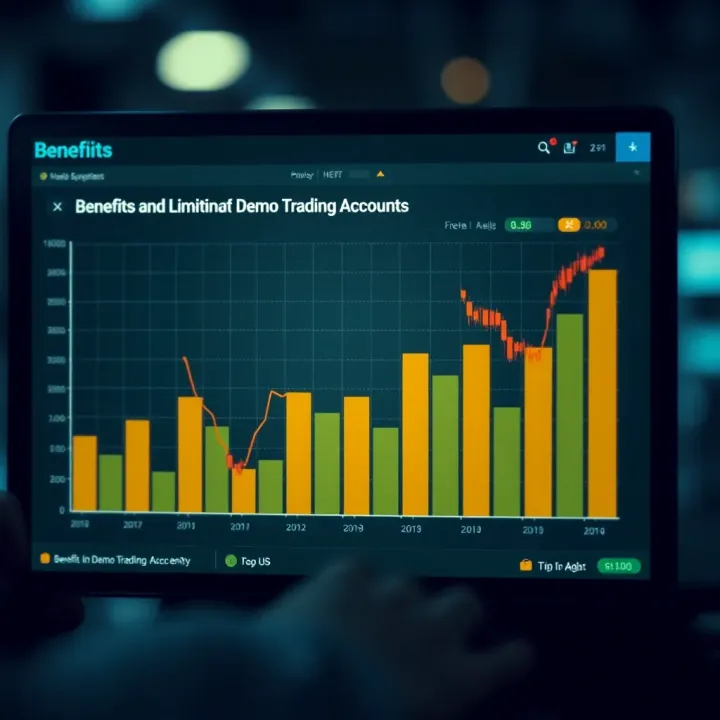
Demo accounts allow traders to try out different approaches and understand what works best for them. Say you have devised a momentum trading strategy or a swing strategy but aren't confident enough to commit your own money yet. Executing trades on a demo platform helps in seeing how these strategies perform in live market conditions. For example, if you’re testing an intraday approach using NSE’s nifty 50 stocks, you can observe how stop-loss orders or target exits behave without worrying about actual losses. This way, traders can fine-tune their strategies, identify weaknesses, and gain confidence before moving to live markets.
Becoming familiar with trading platforms is essential, and demo accounts help immensely here. Different brokers offer features like limit orders, market orders, stop-loss, and bracket orders. Using a demo account, a trader can get a clear idea of how each order type functions. For example, a trader may want to practise placing a bracket order on an intraday trade with Zerodha or Upstox before applying it in live trading. Moreover, demos help explore charts, indicators, and risk management tools without pressure. This practical exposure reduces the learning curve and prevents costly errors once real money is at stake.
A demo trading account acts like a flight simulator for traders—it prepares you before you actually take off in the real market.
In summary, demo accounts provide a risk-free environment to build skills, a testing ground for strategies, and a playground to learn platform tools. For Indian traders looking to enter stock or commodity markets, these advantages save both time and money.
Demo trading accounts offer a safe space to practise, but traders must understand their limitations. Relying too heavily on demo accounts without recognising these pitfalls can give a false sense of readiness for live markets. This section highlights the key differences to keep in mind.
Demo trading replicates market conditions, but the execution doesn't always mirror live trading. Often, demo platforms provide instant order fills at displayed prices, while live markets face slippage, latency, and partial fills. For instance, a trader testing a high-frequency scalping strategy on a demo account might see flawless execution, but real markets often cause delays or cancellations due to liquidity issues or network lag. This gap can mislead traders about the actual ease and speed of trades in live environments.
One major drawback of demo accounts is the absence of real money risk, so emotional responses like fear, greed, or hesitation rarely appear. Consider a trader who closes positions confidently in demo mode but freezes or impulsively exits when facing real losses with their own capital at stake. Emotional discipline and psychological resilience play a big role in live trading, and these factors don't fully develop in risk-free environments. This absence can result in overconfidence or unexpected stress when transitioning.
Some traders get stuck in demo mode, assuming they need more practice before entering live markets. While thorough preparation is good, too much dependence delays real trading experience, which itself teaches crucial lessons. Demo accounts cannot simulate market impact from one's own trades or sudden global economic news events that affect markets instantaneously. Stalling transition also risks missing timely opportunities, especially in fast-moving Indian markets. It is wise to treat demo trading as a foundation but set a timeline to move to live trading with manageable capital.
Demo accounts serve as an excellent training ground but knowing their limits helps avoid pitfalls and ensures a smoother step into live trading. Recognise they are a tool—not a substitute—for real market exposure and emotional growth.
In summary, be aware that execution differences, missing emotional stakes, and prolonged demo usage can hamper your readiness. Balancing demo practice with planned live experience builds both skill and temperament necessary for consistent trading success.
Selecting the right demo trading account is vital because it sets the stage for how effectively you can hone your skills before committing real money. With many brokers offering diverse demo platforms, some may simulate market conditions more accurately than others or provide more comprehensive tools, which directly affects your learning and confidence.
A good demo account must offer market data that closely mirrors live trading. Some platforms, especially those targeting beginners, may show delayed price feeds or simplified order execution. For instance, if you’re practising intraday trading on Nifty futures, delays or stale quotes will mislead your understanding of entry and exit points. Fast execution speed is equally crucial because it helps simulate how orders fill during volatile market hours. Choosing a demo where trades execute instantly without slippage won’t teach you how to handle real market delays and costs.
Your chosen demo account should offer the same range of instruments you intend to trade live—be it equities, commodities, currency pairs, or derivatives like options and futures. For example, if you plan to trade cryptocurrency futures on an exchange like WazirX, practising on a platform without crypto instruments won’t be very helpful. Additionally, check if the platform provides technical indicators, charting options, and order types like stop-loss, limit, and bracket orders, enabling you to test diverse strategies comprehensively.
A clean, intuitive user interface speeds up your learning curve and trading execution. Platforms like Zerodha’s Kite have simple layouts that cater well to beginners, whereas cluttered screens on lesser-known apps can cause unnecessary confusion. Also, reliable customer support is key if you face technical issues or have questions about platform features. Look for brokers that offer timely support through multiple channels like chat, phone, or email. This helps you resolve problems quickly, ensuring smooth practice and transition to live trades.
Choosing carefully not only improves your demo trading experience but also builds a realistic foundation to handle the live markets confidently.
By focusing on these factors, you can pick a demo trading account that suits your trading style, helps manage expectations, and prepares you effectively for the risks and realities of real trading.
Using a demo trading account without a clear plan often leads to wasted time and little progress. To get the best from this risk-free practice ground, you need practical steps that sharpen your skills and prepare you for live trading. This section covers key ways to specialise your learning approach while using demo accounts.
Start by defining realistic goals for your demo trading journey. For example, aim to understand how a particular strategy works instead of expecting to earn virtual profits immediately. Create a trading plan detailing entry and exit points, profit targets, and stop loss levels, just like you would when trading with real money. This discipline helps build habits that carry over to live markets. Treat your trades as real commitments: if you plan to risk 1% of your demo capital per trade, stick to that consistently during practice. This way, you internalise risk management without the emotional blind spots that demo trading often hides.
Keeping detailed records of your trades is vital. Log not only the technical details — like price, volume, and timing — but also your thought process behind every decision. For instance, if you exited early due to fear, note it. Reviewing your log weekly helps identify patterns in your behaviour and strategy effectiveness. It reveals strengths to build on and weaknesses to fix. A trader using this method noticed consistent losses in volatile mornings, prompting the adjustment to avoid trading during the first 30 minutes. Such self-feedback loops lead to smarter decisions.
Demo accounts offer a safe space to try out risk management tools like stop losses, trailing stops, and position sizing. Don’t rush to test all at once; introduce these in stages. Start by practising with simple stop loss orders to limit potential losses. Once comfortable, experiment with more advanced tools like trailing stops that protect profits while allowing room for growth. This gradual introduction helps you understand the nuances without feeling overwhelmed. For example, an Indian trader might begin by limiting losses to 0.5% of their demo capital per trade, then move on to adjusting stop loss distance based on market volatility tracked through ATR (Average True Range).
Using demo trading accounts effectively means simulating real market discipline, not just making random trades. Setting clear plans, maintaining trade records, and careful use of risk management together build a strong foundation for successful live trading.
Implementing these tips transforms demo trading from mere practice into a valuable learning process that boosts confidence and sharpens skills under no financial pressure.
Moving from a demo trading account to live trading is a critical step every trader faces. While practising on a demo account helps you understand the platform and refine strategies, trading with real money brings fresh challenges. This section explains how to recognise your readiness to trade live, why starting small matters, and how to control emotions and expectations.
Knowing when to switch to live trading means assessing your consistency and comfort with your demo account results. If you find that you have replicated profits, followed your trading plan strictly, and adapted successfully to market conditions over a few weeks or months, it could be time to trade with real capital. For example, if you've practised trading nifty futures on a demo account and achieved stable returns using risk management for over two months, you might be ready to invest real money in small amounts.
It's also important to understand that demo success doesn’t guarantee instant real-market profits. Instead, focus on discipline and readiness to handle uncertainties. If you still feel unsure about your strategies or emotions, spend additional time practising or seek mentorship.
Starting live trading doesn’t mean you must commit large sums. In fact, beginning with small investments helps minimise potential losses while you adapt to live conditions. For instance, if your capital is ₹1 lakh, initially trade with ₹5,000–₹10,000 positions. This approach allows you to gauge the emotional impact of real losses and gains without risking much.
Gradually increasing your exposure as you grow more confident and understand your reaction to market swings is wise. Many experienced traders advise using a small portion of your total capital for initial trades to prevent the temptation to deviate from your strategy when under duress.
The live market triggers emotional stress rarely felt on a demo account. Real money intensifies feelings like fear, greed, and impatience. Managing these emotions is essential to avoid rash decisions such as overtrading or abandoning stop-loss limits.
Setting clear goals and realistic expectations helps. For example, expect some losses and view them as part of learning rather than failures. Also, regular breaks from screens and practising mindfulness can reduce stress.
Transitioning to live trading requires patience, discipline, and self-awareness. While demo accounts teach technical skills, live markets test your emotional strength.
To sum up, shifting to live trading is a gradual process. Recognise your readiness by steady demo performance, start with small stakes to build real-world skill, and prepare to manage emotions sensibly. Taking these steps seriously improves your chances of long-term trading success.
📈 Learn how demo accounts in India let you practise stock trading with virtual money risk-free, understand their benefits, open one easily, and trade smartly.
Learn how forex demo accounts let Indian traders practise currency trading risk-free 💹. Discover benefits, selection tips, and strategies suited to India’s market.

Explore Qutoex📚: Understand its origins, uses, challenges, and impact today. Get a detailed, practical guide to Qutoex for every context.
Explore Qutex's key features, uses, and future potential in India’s tech scene. Gain insights into its benefits, limits, and role in modern innovation 💡📱.
Based on 12 reviews