
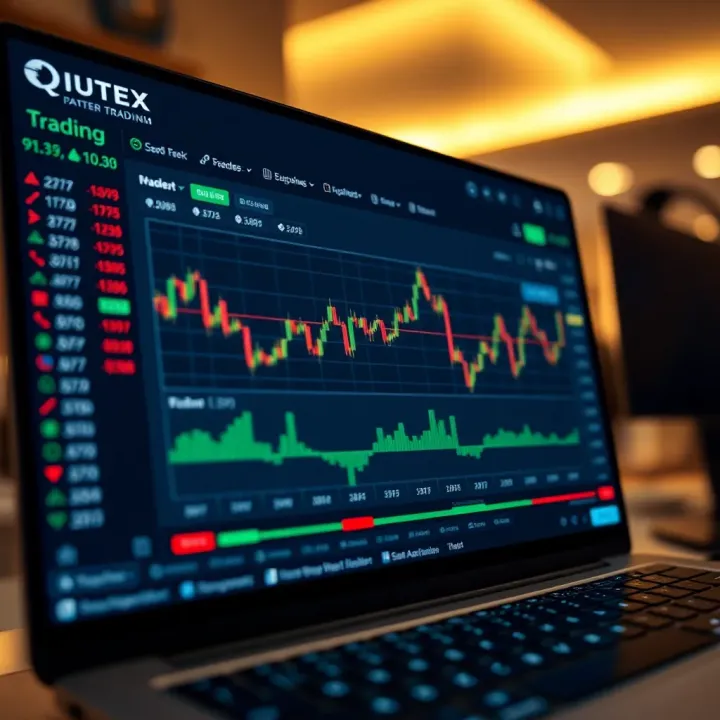
Understanding Qutex Trading: Key Insights for Indian Traders
Explore Qutex Trading platform features, fees, and security 🔒 to help Indian traders make informed choices 🇮🇳. Compare brokers and get tips for success.
Edited By
Clara Hughes
The EUR/USD currency pair stands out as the most traded forex pair worldwide, representing the exchange value between the euro and the US dollar. While many assume forex revolves mainly around formal exchanges, a significant portion of trading occurs in the over-the-counter (OTC) market. This OTC segment operates outside central exchanges, allowing participants to negotiate trades directly, often tailoring terms to suit specific needs.
The EUR/USD OTC market is vast and liquid, reflecting the economic and political interplay between the Eurozone and the United States. Indian traders, fintech firms, and investors engage actively here, benefitting from the pair’s tight spreads and continuous trading across global time zones. Unlike traditional exchange platforms, OTC transactions offer more flexibility in size, settlement terms, and counterparties.

Forex OTC markets allow direct dealings between banks, financial institutions, corporates, and investors without a central clearinghouse, which makes understanding their structure vital for managing risks and optimising strategies.
Key features of the EUR/USD OTC market include:
Decentralised trades: No centralised exchange dictates trading hours or rules, resulting in a 24-hour market.
Diverse participants: From large banks and hedge funds to corporate treasuries and high-net-worth individuals.
Customized contracts: Trades can be arranged for varying amounts, maturities, and payment conditions.
For Indian traders especially, awareness of how OTC pricing forms and how counterparty risks function is crucial. This knowledge helps in better decision-making, whether trading via a bank, a broker, or through fintech platforms specialising in cross-border forex.
Recognising the nuances of the EUR/USD OTC market can enhance trading insights, allowing participants to navigate price movements, manage exposures effectively, and comply with relevant regulations.
The EUR/USD currency pair represents the exchange rate between the euro and the US dollar, two of the world's most influential currencies. Understanding its dynamics is vital for anyone involved in forex trading, international business, or financial analysis. In OTC (over-the-counter) markets, this pair is traded beyond formal exchanges, offering unique opportunities and challenges. This section sets the foundation for grasping why the EUR/USD pair is central to global finance and how OTC trading provides a flexible yet complex environment for market participants.
The EUR/USD pair measures how many US dollars one euro can buy. It is the most traded currency pair globally, accounting for nearly 25% of daily forex volume. For Indian traders and investors, this pair is crucial as many import, export, and investment decisions link directly to its movements. For example, Indian IT firms earning revenue in dollars but incurring costs in rupees watch this rate closely to protect their margins.
EUR/USD acts as a benchmark for global currency markets. Central banks like the European Central Bank (ECB) and the US Federal Reserve influence this pair through monetary policy decisions, impacting inflation and employment data. Its price movements often signal broader economic trends, making it a favourite among Indian portfolio managers when forecasting currency risk. The pair also serves as a reference for pricing other currency pairs, influencing regional and emerging market currencies.
OTC trading occurs directly between parties without a central exchange, unlike exchange-traded markets where trades happen on organised platforms like the NSE or BSE. In the OTC EUR/USD market, banks, corporates, and institutional investors negotiate deals tailored to their specific needs, often involving large volumes or customised terms. This flexibility contrasts with standardised contracts on exchanges and permits trading outside usual market hours.
The main advantage of OTC trading is customisation. Traders can structure contracts to match precise requirements, such as forward contracts to hedge currency risk over specific durations. Additionally, OTC markets typically offer deeper liquidity for major pairs like EUR/USD, aiding execution without significant price impact.
However, OTC trading involves higher counterparty risk since deals depend on creditworthiness without the guarantee of an exchange. Settlement can also be slower and more complex. For Indian traders, due diligence on counterparties and understanding regulatory requirements from bodies like the Securities and Exchange Board of India (SEBI) and Reserve Bank of India (RBI) is essential to navigate these challenges.
Understanding the basics of the EUR/USD pair alongside OTC market characteristics equips traders with the context to explore detailed trading strategies and risk management in subsequent sections.
Understanding the operations behind the EUR/USD over-the-counter (OTC) market is key to grasping how this currency pair moves and trades beyond formal exchanges. The OTC market allows participants to trade large volumes directly, with flexibility in terms and timing, shaping price dynamics that often differ from the exchange-regulated platforms.
Banks are the backbone of the EUR/USD OTC market. They act as dealers, quoting prices for the euro-dollar pair and matching buyers with sellers. For instance, global banks like JPMorgan Chase or Deutsche Bank routinely facilitate trades worth billions of US dollars daily. Institutional investors such as mutual funds and hedge funds participate to hedge currency risks or take speculative positions. Corporates engage in OTC trading mainly to hedge foreign exchange exposure—say, an Indian company importing machinery from Europe may enter swaps or forwards to lock in costs.

Though retail traders usually access forex via brokerages linked to exchanges or ECNs, some also access the OTC market through their brokers. Retail participation is smaller but growing, especially with fintech platforms offering better spreads and faster execution. This access benefits individual traders seeking currency diversification or speculative opportunities without the limitations of formal exchange hours.
Market makers supply liquidity by continuously offering bid and ask prices, ensuring the market stays active. Firms like Citadel Securities or Jane Street act as liquidity providers, filling orders swiftly. Their presence reduces price slippage and allows even large trades to execute without drastically affecting EUR/USD rates. In OTC trading, having reliable market makers is crucial as it minimises transaction costs and supports pricing consistency.
ECNs are digital platforms connecting buyers and sellers directly, enabling real-time, transparent trading of the EUR/USD pair. These networks bypass traditional intermediaries, reducing spreads and offering faster execution. For example, platforms like EBS or Reuters Matching dominate the OTC forex ECN space, crucial for Indian institutional participants seeking direct market access.
In direct dealing, two counterparties negotiate and execute trades themselves, often preferred by large banks or corporates to tailor contract terms. Broker-mediated trades add an intermediary who facilitates matching opposite orders and may provide anonymity or better pricing through aggregating multiple liquidity sources. Retail traders mostly rely on brokers, while institutions choose based on trade size, immediacy requirements, and counterparty trust.
Settlement in the EUR/USD OTC market typically follows the standard T+2 (trade date plus two business days) system, where the actual exchange of currencies occurs. Clearinghouses may be involved to reduce counterparty risk, especially in larger trades. Efficient settlement is vital to avoid failures that can cause liquidity crunches. Participants often use payment systems like SWIFT for secure fund transfers, and when trading in India, RBI regulations provide oversight to ensure smooth settlement.
The way the EUR/USD OTC market operates directly affects liquidity, pricing efficiency, and risk management capabilities. For traders and investors in India and abroad, understanding these operational details is essential to navigate the forex market effectively.
The EUR/USD pair's price in the over-the-counter (OTC) market depends heavily on a mix of economic data, central bank policies, and prevailing market sentiment. Understanding these factors helps traders and investors anticipate movements and manage risks effectively. Let’s break down the critical drivers.
The European Central Bank (ECB) and the United States Federal Reserve (Fed) have a major say in setting EUR/USD prices. When they adjust interest rates or signal policy shifts, the market reacts quickly. For instance, if the Fed raises rates while the ECB holds steady, the dollar often gains against the euro since higher US interest rates attract investors chasing better yields. Conversely, loosening monetary policy by the ECB can weaken the euro, pushing the pair lower.
Traders in the OTC market watch central bank meetings closely, especially statements from policymakers. The tone and hints about future moves can drive volatility even without immediate action. For example, a hawkish Fed tone in January 2024 contributed to a stronger dollar, affecting OTC liquidity as participants adjusted hedges.
Key economic indicators such as inflation rates, job numbers, and gross domestic product (GDP) growth shape expectations around currency strength. If European inflation rises unexpectedly, the ECB may consider tightening policy, supporting the euro. Similarly, strong US employment figures can boost the dollar by suggesting robust economic health.
In OTC trading, these data releases trigger swift adjustments. For example, the US Non-Farm Payrolls report often causes sharp EUR/USD movements shortly after release. OTC traders need to factor in the timing and likely market response to such releases, balancing opportunities against the risk of sudden swings.
News events and geopolitical tensions affect risk appetite, which directly impacts EUR/USD prices. Political instability in the EU or trade tensions between the US and EU often add volatility to the OTC market. For instance, heightened uncertainty during Brexit negotiations in the past led to significant euro fluctuations.
Likewise, safe-haven flows into the dollar typically rise during global crises, pushing EUR/USD lower. This dynamic means OTC traders must keep an eye on news flow and geopolitical developments to respond swiftly.
Unlike formal exchanges, OTC markets often have less transparency and rely heavily on counterparty interactions. This environment means trader behaviour—such as risk tolerance and positioning—can sway prices strongly.
For example, after a major ECB meeting, some institutional participants might adjust large blocks of trades privately, causing subtle but important price shifts. Retail OTC traders should be aware of such behaviour patterns, which differ from exchange-traded markets where order books are visible.
Staying informed about economic releases, central bank moves, and global events gives OTC traders an edge in managing risks and capturing opportunities in the EUR/USD market.
Trading the EUR/USD pair in the over-the-counter (OTC) market carries specific risks that traders need to understand well. These risks affect how participants manage their positions and capital, especially given the lack of a central exchange overseeing all transactions. Understanding these risks helps in devising effective strategies and safeguards.
Credit risk in the OTC EUR/USD market arises because trades occur directly between parties without a central clearinghouse. This means each participant relies on the other to meet their financial obligations. For instance, if a bank enters into a large EUR/USD swap with a corporate client, there's a risk the client might default if the market moves against them or due to operational failures.
This risk becomes especially significant during volatile periods when one party’s financial health might deteriorate suddenly. If a counterparty fails to honour the contract, the other party faces potential losses, sometimes running into several crore rupees depending on trade size.
To reduce this risk, market participants often use collateral agreements. Margin calls require the party facing losses to provide security, like cash or government securities, which cushions against default. Many OTC traders also rely on credit support annexes (CSAs) in their contracts to formalise collateral terms.
Regular monitoring of counterparties’ creditworthiness is common practice, particularly for smaller players without the backing of large financial institutions. This due diligence helps traders avoid exposure to entities that may not withstand sudden market shocks.
The EUR/USD pair is among the most liquid in forex markets, but price volatility remains a key concern. Sharp movements caused by events like central bank announcements or geopolitical tensions can rapidly widen bid-ask spreads. For example, a surprise decision by the European Central Bank (ECB) to change interest rates can cause the EUR/USD rate to swing drastically within minutes.
For OTC traders, such volatility means execution prices can move unfavourably in a blink, increasing costs beyond initial expectations. Hence, risk management tools such as stop-loss orders and position limits are critical.
Liquidity risk becomes evident during crises when fewer counterparties are willing to trade. During the 2008 financial crisis, many OTC markets saw a collapse in liquidity, which forced traders to close positions at significantly worse prices. Reduced liquidity means holding or unwinding large trades is tougher without moving the market substantially.
In the current environment, liquidity can thin out during major global events such as Brexit referendums or US government shutdowns, disproportionately impacting smaller market players. Traders need to plan for these scenarios by keeping positions manageable and maintaining diversified counterparties.
Successful OTC EUR/USD trading hinges on recognising and actively managing both credit and liquidity risks, especially given the market’s decentralised and flexible nature.
By acknowledging these risks and applying proper controls, traders can better navigate challenges and protect their investments in the EUR/USD OTC space.
Regulation and compliance form the backbone of a trustworthy and efficient over-the-counter (OTC) EUR/USD market. Because OTC trading happens outside formal exchanges, standardised supervision ensures fair dealing, reduces systemic risks, and protects participants from fraud or default. For traders and investors, understanding regulatory frameworks offers clarity on the rules they must follow and the safeguards in place.
The Securities and Exchange Board of India (SEBI) and the Reserve Bank of India (RBI) oversee OTC currency trading from an Indian standpoint. While RBI regulates foreign exchange dealings to maintain market stability and controls cross-border currency flows, SEBI monitors derivatives and securities linked to forex to ensure transparency for investors. On the international front, bodies such as the Bank for International Settlements (BIS) and International Organisation of Securities Commissions (IOSCO) set global standards that national regulators, including Indian ones, align with to keep trading practices consistent and safe.
This means Indian OTC traders must navigate rules that blend domestic controls with international norms. For example, RBI limits on outward foreign exchange remittances affect how much Indian corporates or investors can operate in the EUR/USD OTC market, while global transparency initiatives require reporting trades to trade repositories to avoid market abuse.
Transparency and reporting standards have become more stringent post-2008 financial crisis to limit hidden exposures. Regulators demand accurate, timely reporting of OTC trade details to authorised repositories. This openness helps spot risks early and allows regulators to assess market health.
For Indian traders, this translates to clear record-keeping and submitting trade information as per RBI and SEBI guidelines. Electronic platforms often help automate reporting, easing compliance. Transparency benefits everyone by reducing misinformation and improving price discovery.
Standardised contract terms in OTC EUR/USD deals help reduce ambiguity. Most parties use International Swaps and Derivatives Association (ISDA) Master Agreements, which outline general terms including payment schedules, fallback provisions, and default definitions. This common framework eases negotiations and sets expectations upfront, crucial in OTC where trades are bilateral and customised.
Standard contracts also incorporate currency-specific clauses relevant to EUR/USD, such as settlement dates following TARGET2 and Fedwire systems. Using these templates mitigates legal disputes and clarifies responsibilities with counterparties.
However, disputes can still arise, making sound dispute resolution mechanisms essential. Most contracts specify arbitration or mediation in neutral venues, often under international rules like UNCITRAL. This provides quicker, less costly paths than courts, ensuring trades continue smoothly even if disagreements occur.
Indian participants must note whether disputes can be settled under Indian law or require foreign arbitration. Awareness of jurisdiction clauses helps avoid surprises and supports timely conflict resolution.
Clear regulation and reliable contracts together build confidence in the EUR/USD OTC market. For traders, this framework protects capital, clarifies roles, and fosters smoother operations across borders.
This regulatory and legal foundation equips Indian and global traders to navigate the EUR/USD OTC market efficiently and with informed certainty.
Explore Qutex Trading platform features, fees, and security 🔒 to help Indian traders make informed choices 🇮🇳. Compare brokers and get tips for success.

Explore Quptex's features, market role, and practical uses. Understand its technology and security aspects for a clear market insight. 📊🔒
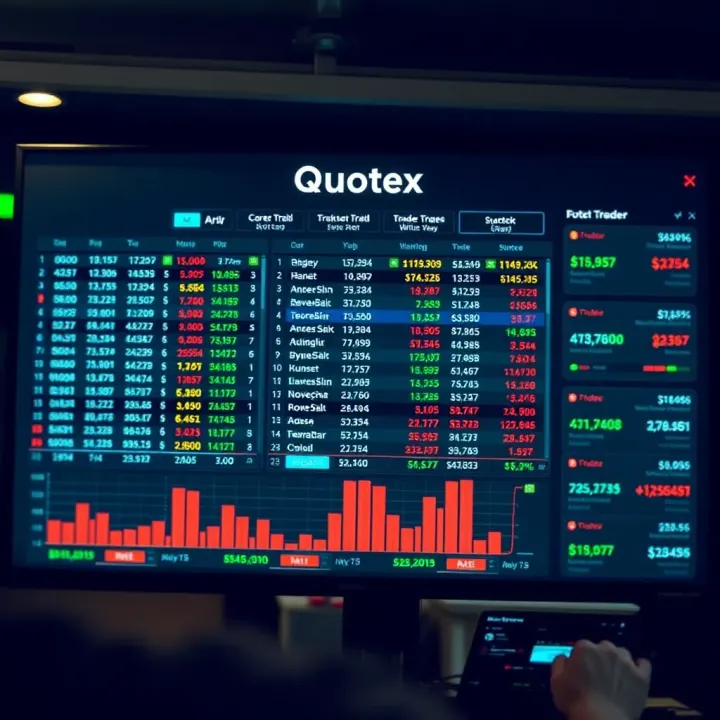
📈 Explore how the Quotex leaderboard ranks traders, what affects scores, and practical tips to boost your position for smarter trading decisions.

Explore Qutoex📚: Understand its origins, uses, challenges, and impact today. Get a detailed, practical guide to Qutoex for every context.
Based on 12 reviews