

Understanding Qutoex: A Clear Guide
Explore Qutoex📚: Understand its origins, uses, challenges, and impact today. Get a detailed, practical guide to Qutoex for every context.
Edited By
Henry Dawson
Crude oil prices impact not just global markets but also India's economy and daily life. For traders, investors, and financial analysts, understanding what moves these prices and being able to predict short-term shifts can provide a valuable edge.
Price fluctuations arise from a mix of supply-demand dynamics, geopolitical events, and market sentiment. For example, OPEC's decisions on output cuts or increases directly affect the oil supply. Meanwhile, rising demand in countries like China and India pushes prices up. Unexpected disruptions, such as conflicts in the Middle East or harsh weather slowing production, also cause spikes.

Predicting crude oil prices for tomorrow involves analysing both hard data and softer signals—from inventory reports to futures market trends.
Key factors to watch include:
Global Supply Changes: Production cuts by major producers like Saudi Arabia or Russia.
Demand Indicators: Industrial activity data, vehicle sales, and fuel consumption trends, especially from key consumers.
Inventory Levels: Weekly crude stock reports, notably from the US Energy Information Administration (EIA), often set immediate market tone.
Geopolitical Developments: Sanctions, conflicts, or agreements affecting oil-producing regions.
Currency Movements: Strength of the US dollar, as oil trades globally in dollars, influences price levels.
In India, crude price changes translate to fuel cost adjustments that impact inflation and consumer spending. Traders must also consider government policies such as taxes, subsidies, and strategic reserves.
Modern tools like technical analysis, algorithmic models, and real-time data services help decode these complexities. Using a blend of fundamental and market-based signals enhances the accuracy of short-term price forecasts.
Understanding these elements aids not just trading decisions but also strategic planning for industries dependent on oil costs. This article will explore these drivers and prediction techniques in detail, customised for an Indian context and readership.
Understanding what drives crude oil prices helps traders and analysts anticipate market movements and make informed decisions. The price of oil does not move randomly; it responds to supply shifts, demand changes, geopolitical events, and technological progress. Each factor interacts with others, influencing short-term fluctuations and long-term trends.
OPEC policies and production cuts play a significant role in crude pricing. The Organisation of Petroleum Exporting Countries (OPEC) can adjust output levels to influence global supply. For example, when OPEC decides to reduce production, the scarcity often pushes prices higher. This was seen in early 2020 when OPEC's production cuts countered a demand slump caused by the pandemic, helping stabilise prices.
US shale output and inventory levels also impact prices, especially in recent years. Shale oil producers in the US can quickly ramp up or scale down production, making supply more flexible. When inventories build up, prices tend to slide due to oversupply. Conversely, rapid draws on inventory often signal tightening markets, nudging prices upward. Traders watch US Energy Information Administration (EIA) weekly reports closely to track these changes.
Impact of technological advances on oil extraction cannot be overlooked. New drilling techniques like hydraulic fracturing and horizontal drilling have unlocked previously inaccessible reserves, increasing supply. This technology has made US shale one of the world’s largest suppliers. Over time, such advances keep upward pressure on supply, capping prices despite geopolitical risks.
Global economic growth and industrial demand are primary engines pushing oil consumption. When economies are expanding, industries consume more energy, raising demand for crude. For instance, India’s rapid industrialisation over the last decade directly increased oil imports, influencing global demand patterns. Conversely, economic slowdowns or recessions reduce consumption and pull prices down.
Seasonal variations and transport fuel consumption also create predictable demand shifts. Winters in colder countries increase heating oil needs, while summer travel seasons boost petrol and diesel consumption in many parts of the world. Planning for these cycles helps traders anticipate dips and spikes in crude prices.
Effect of emerging markets including India is increasingly shaping crude demand. Countries like India and China are adding millions of vehicles yearly, expanding their infrastructure and manufacturing sectors. This sustained growth creates upward pressure on oil demand, often outweighing declines in developed economies. Understanding these markets is key to predicting global oil trends.
Political tensions in oil-rich regions cause uncertainty in supply security, often leading to price volatility. For example, conflicts in the Middle East or sanctions on Iran and Venezuela sometimes disrupt shipments, spooking markets. Even rumours of instability can prompt speculative buying, driving prices higher.
International sanctions and trade policies affect crude availability and trade flows. Restrictions imposed by countries or groups can limit exports from certain nations, tightening global supply. The US sanctions on Iran’s oil exports since 2018 drastically cut available barrels on the market, influencing prices globally.
Natural disasters impacting supply chains have a direct effect on crude availability. Hurricanes in the Gulf of Mexico often shut down offshore platforms, reducing output temporarily. Similarly, floods or earthquakes near key refining hubs or pipelines can slow processing and distribution, causing short-term price hikes.
Keeping track of these supply, demand, and geopolitical factors forms the cornerstone of effective crude oil price forecasting. For traders and analysts, paying attention to these details can reveal shifts before they show in price charts.
In summary: crude oil prices are shaped by a complex mix of production decisions, technological capabilities, economic growth, seasonal demand changes, and geopolitical events. Understanding these forces provides a solid foundation to anticipate tomorrow's price moves with better confidence.
Crude oil prices are shaped by various market forces and actors, making their determination a complex yet essential process for traders and investors. Understanding this helps in evaluating price movements, managing risk, and forecasting future trends accurately. Prices reflect not just immediate supply and demand but also expectations about future conditions, geopolitical risks, and market sentiment.
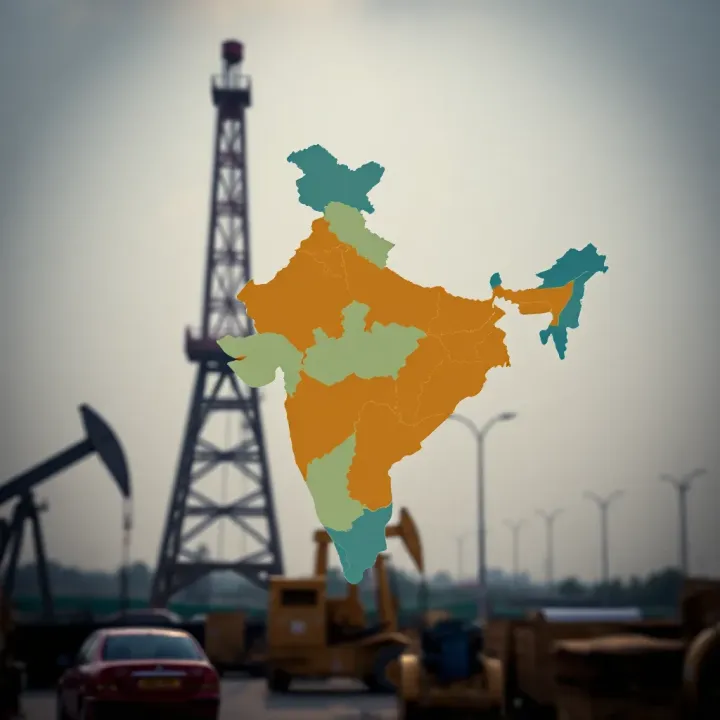
Brent and West Texas Intermediate (WTI) are the two main crude oil benchmarks used worldwide. Brent crude, sourced from the North Sea, often sets the price for oil traded in Europe, Asia, and Africa, while WTI represents US oil and is a key gauge for the Americas. These benchmarks serve as reference prices for traders globally. For example, India’s crude oil import pricing typically aligns more with Brent, influencing domestic pricing of petrol and diesel.
Commodity exchanges such as the Multi Commodity Exchange of India (MCX) play a critical role in oil price discovery by providing a platform where buyers and sellers trade contracts publicly. The real-time bidding process allows supply and demand forces to interact transparently, setting prices effectively for Indian market participants. This market-driven approach helps stakeholders avoid opaque pricing and better anticipate daily price movements.
Futures contracts represent agreements to buy or sell crude oil at a predetermined price on a future date. These contracts help producers and consumers hedge against price volatility. However, futures prices also influence spot prices since traders adjust spot buying based on expected future price trends. For example, if WTI futures indicate a price rise, spot market participants often follow suit, pushing immediate prices higher.
Speculators and institutional investors, such as hedge funds, frequently participate in crude oil trading. Their goal is to profit from price changes rather than taking physical delivery of oil. By increasing liquidity and reflecting broad market expectations, their participation often amplifies price volatility. However, this can also provide useful signals on market sentiment about supply tightness or demand growth.
Crude oil prices react swiftly to breaking news or rumours about geopolitical tensions, production cuts, or economic data releases. For instance, reports of unrest in oil-producing countries or talks of new sanctions can cause immediate price spikes. Traders monitor these developments closely, with rumours sometimes causing temporary price swings even before facts confirm them.
Derivatives like options and swaps offer traders additional tools to manage risk or speculate on price direction. While they provide flexibility, they also add layers of complexity to market behaviour. Heavy trading in derivatives can lead to exaggerated price moves disconnected from physical supply-demand realities, requiring careful analysis by traders to avoid misleading signals.
Grasping how exchanges, benchmarks, and market participants interact is essential for anyone involved in crude oil trading. It builds the foundation for more accurate price predictions and better risk management.
Forecasting crude oil prices for the next day is essential for traders and analysts who aim to capitalise on market movements or hedge risks effectively. Various methods help decode price behaviour by examining historical data, market news, and expert insights. Each approach offers distinct advantages and, when combined, they improve prediction accuracy.
Identifying trends with moving averages involves calculating the average price over a specific period, smoothing out short-term fluctuations. For example, a 10-day moving average helps spot recent price trends, while a 50-day average reflects longer-term directions. Traders watch for crossover points — when the short-term average crosses the long-term one — to judge if prices might rise or fall tomorrow.
Using support and resistance levels means recognising price points where crude oil typically stops falling (support) or rising (resistance). For instance, if crude prices have bounced back multiple times near ₹5,000 per barrel, this level acts as support. Knowing these levels helps traders anticipate price reversals or breakouts, sharpening their timing for buying or selling.
Recognising patterns and indicators includes spotting formations like head-and-shoulders or double tops on price charts, which hint at upcoming reversals or continuation. Technical indicators such as Relative Strength Index (RSI) and Moving Average Convergence Divergence (MACD) give additional signals on market momentum. These tools guide traders in making short-term decisions by highlighting overbought or oversold conditions.
Tracking inventory reports and production updates is crucial since changes in crude stockpiles directly affect prices. Weekly reports from agencies like the US Energy Information Administration (EIA) reveal surpluses or deficits. For Indian traders following global cues, a surprising inventory rise may signal price dips tomorrow, impacting domestic fuel costs.
Monitoring geopolitical developments is vital given that political unrest or sanctions in oil-producing regions can disrupt supply unexpectedly. For example, tension in the Middle East often sends price spikes as markets anticipate tighter supply. Staying updated helps traders adjust their forecasts rapidly in response to such shifts.
Evaluating economic data releases involves watching key numbers like industrial output or vehicle sales, which indicate crude demand. If India’s monsoon season boosts agricultural output, increased fuel use for transport might raise oil demand, suggesting higher prices. Analysts combine these indicators to foresee tomorrow’s price direction.
Price forecasting software and platforms equip traders with algorithms that analyse vast datasets, from past prices to news sentiment. Tools like MCX’s trading platforms or Bloomberg terminals provide real-time modelling that shortens decision time and improves accuracy.
Role of expert analyst reports is significant because seasoned analysts bring qualitative insights unavailable from raw data. Their forecasts often adjust for nuances like policy changes or technological disruptions, which automated models might miss.
Combining multiple data sources for better accuracy means integrating technical charts, fundamental news, and expert views to form a balanced outlook. By comparing signals across these sources, traders reduce noise and increase confidence in their predictions. This combined method works well especially in volatile markets where relying on a single tool might mislead.
Accurate forecasting of crude oil prices combines data, technique, and intuition. Using a mix of methods helps traders and businesses to prepare for price swings effectively and make informed decisions.
By weaving together technical analysis, fundamental factors, and market tools, one gains a more rounded view of tomorrow’s crude oil price movements. This holistic approach suits the unpredictable nature of oil markets, especially from an Indian perspective where global and local aspects intertwine tightly.
Crude oil price fluctuations strongly influence the Indian economy due to the country’s heavy reliance on oil imports. Changes in global crude rates ripple through fuel prices, inflation, trade balance, and government policy decisions. Understanding these effects helps traders, investors, and analysts anticipate market movements and plan accordingly.
Crude oil prices directly affect petrol and diesel rates in India. As crude prices rise, the cost of importing oil goes up, often leading to higher retail fuel prices. For example, when Brent crude touched above $80 a barrel earlier this year, petrol prices in metropolitan cities like Mumbai and Delhi saw steep increases. Conversely, when crude falls, consumers may notice easing fuel rates, although government levies and taxes can cushion this impact.
The transmission of international crude prices to domestic fuel costs is not immediate or uniform. The Oil Marketing Companies (OMCs) adjust prices based on weekly or fortnightly assessments rather than daily market changes. This lag can cause discrepancies between global trends and local prices. Additionally, state-level taxes and VAT affect the final pump price, making regional variations quite common.
Fuel price hikes have a wider economic impact, feeding into inflation and the cost of living. Higher petrol and diesel prices raise transportation and logistics costs, which then push up prices of essentials like food and goods. Inflation, measured by the Consumer Price Index (CPI), tends to rise when crude prices stay elevated. In March 2024, inflation saw a small spike linked partly to crude price volatility, affecting household budgets and consumer spending.
India imports nearly 80% of its crude oil, making import expenditure a significant part of the country’s trade dynamics. When crude prices increase, the bill for these imports swells, widening the trade deficit. This impact highlights India’s vulnerability to global oil cycles and the need to monitor crude trends closely for fiscal planning.
The Indian rupee’s exchange rate also reacts to crude price movements. A sustained rise in crude prices often leads to rupee depreciation against the US dollar, as India needs more dollars to pay for oil imports. During periods of high crude prices in 2023, the rupee dipped beyond ₹82 per dollar, hurting import costs further.
This interplay between crude, the rupee, and import bills contributes to the current account deficit (CAD). A higher CAD can pressure the Reserve Bank of India (RBI) to intervene through monetary measures or forex reserves. Traders and analysts watch crude prices as an early indicator of potential CAD shifts impacting macroeconomic stability.
The Indian government regulates fuel pricing partly to shield consumers from volatile crude costs. While petrol and diesel prices have been liberalised to reflect market realities, periodic interventions occur in the form of price caps or taxes adjustments to manage affordability.
Subsidies remain an important tool, especially for LPG and kerosene. The government often tweaks subsidy schemes based on crude price changes and budget priorities. For instance, sudden crude price surges might lead to increased subsidy allocations or targeted support for vulnerable sections, influencing fiscal outlays.
Strategic petroleum reserves (SPR) also play a critical role in managing supply shocks. India has built reserves equivalent to nearly 14 days of consumption across multiple underground facilities. When crude prices spike or supply disruptions arise, these stockpiles help maintain stability and reduce dependency on immediate imports, offering the government some breathing space.
Crude oil price changes directly affect India's economic health through fuel pricing, trade balance, and policy responses. Traders and investors benefit greatly by tracking these dynamics closely.
Understanding such influences enables stakeholders to interpret market signals more effectively, align investment strategies, and anticipate government actions in response to price movements.
Practical tips serve as a bridge between theoretical understanding and effective decision-making, especially when dealing with volatile assets like crude oil. For traders, navigating the sharp swings in oil prices needs more than just knowledge—it demands smart strategies to protect investments and seize opportunities. Consumers, meanwhile, can better manage their expenses and adjust consumption habits by staying aware of price trends and alternatives.
Using stop-loss and limit orders helps traders control losses and lock in profits in an unpredictable market. For example, setting a stop-loss order at a certain price point auto-sells the crude oil futures when prices slide, preventing deeper losses. Limit orders, on the other hand, allow buying or selling at a specified price or better, helping traders enter or exit positions strategically amid sudden price movements.
Diversifying portfolios reduces dependence on crude oil alone, lowering overall risk. Traders often include energy sector stocks, government bonds, or commodities like gold alongside oil positions. This way, if crude prices fluctuate wildly, other assets may balance the portfolio's performance. Consider a trader holding shares in Reliance Industries alongside oil futures; when crude prices dip, dividends or gains in other holdings can cushion the impact.
Staying updated with market reports is vital for timely decisions. Indian traders benefit from daily updates from the Multi Commodity Exchange (MCX), international news on OPEC meetings, or US Energy Information Administration (EIA) reports. These help anticipate supply disruptions, policy changes, or economic data that affect prices. Ignoring this information risks entering trades blindly and incurring unexpected losses.
Understanding price trends for budgeting fuel expenses helps households manage monthly costs better. For instance, tracking crude price movements during festive seasons when demand spikes can warn consumers to fill fuel tanks earlier or reduce non-essential travel. Retailers and fleet operators can accordingly adjust their procurement to smooth out cost pressures.
Alternative energy options and savings offer relief from erratic fuel costs. Using electric scooters for city commutes or installing solar water heaters reduces dependence on petrol and diesel. Consumers might start with small steps—a solar-powered streetlight or switching to CNG vehicles where available—leading to tangible monthly savings.
Using price alerts and mobile apps lets consumers monitor fuel price changes conveniently. Apps like "Fuel@IOC" or "MyPetrolPrice" provide real-time petrol and diesel rates across cities, enabling users to plan refuelling or spot cheaper stations nearby. For traders, specialised platforms track crude oil prices and send notifications for key thresholds, supporting quick, informed action.
Staying proactive with risk management and market information can significantly improve outcomes for both traders and consumers dealing with crude oil price volatility.
By combining these practical steps, Indian traders and consumers can better anticipate market changes, minimise risks, and optimise costs related to crude oil.
Explore Qutoex📚: Understand its origins, uses, challenges, and impact today. Get a detailed, practical guide to Qutoex for every context.

Explore Qutex's key features, uses, and future potential in India’s tech scene. Gain insights into its benefits, limits, and role in modern innovation 💡📱.
Explore Qutex Trading platform features, fees, and security 🔒 to help Indian traders make informed choices 🇮🇳. Compare brokers and get tips for success.
📈 Explore range markets where prices stay between limits. Learn strategies, key indicators, and risks for smarter trading decisions in India.
Based on 7 reviews