
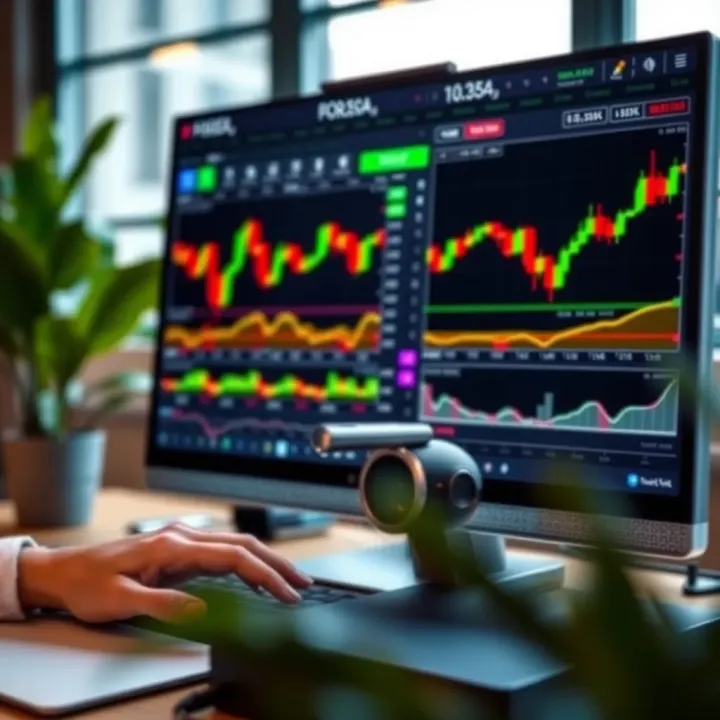
Forex Trading Kaise Kare: Beginners Guide
📈 Interested in forex trading? Learn how to start with trusted brokers, master trading platforms, manage risks, and build winning strategies tailored for Indian traders
Edited By
Charlotte Davies
Forex trading, or foreign exchange trading, involves buying and selling currencies to profit from changes in exchange rates. For Indian traders, this market offers unique opportunities due to its global scale and high liquidity. However, successful trading demands a clear understanding of how currency pairs operate, plus discipline in managing risks.
Getting started with forex trading in India requires more than just opening an account on a trading platform. You must grasp basic concepts such as currency pairs (like USD/INR or EUR/USD), pips (the smallest price movement), and leverage, which can amplify gains but also losses. For example, trading with leverage of 1:50 means that with ₹1 lakh, you control ₹50 lakh worth of currency, but one wrong move can wipe out your capital quickly.

Before you enter the forex market, ensure you have a solid grasp on both fundamental and technical analysis. Fundamentals include economic indicators such as interest rates, inflation, and geopolitical events, while technical analysis studies price charts to identify trends.
It’s crucial to choose a trusted broker regulated by authorities recognised by SEBI or international regulators to avoid fraud. A good platform provides real-time data, easy order execution, and transparent fees. Platforms like Zerodha and Upstox have expanded into currency trading but often through partnerships, so check their latest offerings.
Risk management should never be overlooked. Start with small amounts, set stop-loss orders to limit downside, and never risk more than 1-2% of your trading capital on a single trade. Practising on a demo account first can help you understand market behaviour without risking real money.
In short, learning forex trading in India involves:
Understanding currency pairs and market mechanics
Selecting a regulated broker with suitable trading tools
Studying fundamental and technical analysis
Applying strict risk management rules
Practising before committing real funds
This guide will walk you through each of these steps, helping you build a trading approach that suits your goals and risk appetite.
Grasping the basics of forex trading lays a strong foundation for making informed decisions and reducing risks. Without a clear understanding of core concepts, even experienced traders can find themselves lost in the fast-moving currency markets. For Indian traders especially, knowing how forex works helps navigate the regulatory environment and choose suitable brokers and strategies.
Forex trading is the buying and selling of currencies to profit from changes in their exchange rates. Unlike stock markets, forex is a decentralised market where currencies from different countries are exchanged around the clock. For example, an Indian trader might buy the US dollar against the Indian rupee (USD/INR), betting that the dollar will strengthen against the rupee.
Currencies are traded in pairs because when you buy one currency, you simultaneously sell another. This means profits or losses depend on the relative movement between those two currencies.
Currency trading happens over-the-counter (OTC), meaning transactions occur directly between participants via electronic platforms rather than a central exchange. Major financial hubs like London, New York, Tokyo, and Mumbai handle trading during their business hours. This 24-hour accessibility allows Indian traders the flexibility to trade at convenient times.
Trades happen in lots or units, and prices fluctuate constantly due to economic data releases, geopolitical events, and market sentiment. A simple example: if you expect the euro to gain versus the rupee, you would buy EUR/INR. If the rate moves from ₹87.50 to ₹88, a profit is realised.
Currencies are quoted in pairs like USD/INR or EUR/USD. The first is the base currency, the second the quote currency. The price shows how much of the quote currency is needed to buy one unit of the base currency.
“Pip” means "percentage in point" and measures the smallest price move, usually 0.0001 for most pairs. Understanding pips helps you calculate gains or losses precisely. For example, if USD/INR moves from 74.1500 to 74.1600, that’s a 1-pip move.
Leverage allows you to control a large trade with a smaller capital amount, called margin. For instance, a 1:50 leverage means ₹2,000 margin controls ₹1,00,000 in currency value. While this magnifies profits, it also increases losses.
Indian traders should be cautious since high leverage can lead to rapid losses, especially during volatile times like RBI policy announcements.
The bid price is what buyers are willing to pay, while the ask price is at what sellers want to sell. The difference between these prices is called the spread, representing broker costs or liquidity premium.
A tighter spread means less trading cost. For example, if USD/INR bid is 74.150 and ask is 74.152, the spread is 2 pips.
Forex markets operate 24 hours on weekdays, divided into sessions based on global financial centres: Asia (Tokyo, Mumbai), Europe (London), and America (New York). Each session has its own volatility patterns.
Indian traders should track when the Mumbai session overlaps with London or New York for higher liquidity and better trading opportunities.
Central banks like the Reserve Bank of India (RBI) influence forex markets through monetary policy, interventions, and interest rates. For example, RBI’s decisions on repo rate often cause INR volatility.
Besides banks and financial institutions, retail traders also participate, making forex a highly liquid and diverse market. Watching central bank moves can guide your trade timing and strategy.
Understanding these basics lets you approach forex trading with clarity, helping avoid common traps and prepare for real market conditions.
Starting your forex trading journey requires a solid setup, which lays the foundation for smooth and confident trading. Without proper preparation—like picking a reliable broker, opening a verified account, and choosing the right platform—you might face difficulties such as funds getting stuck or technical glitches that could cost you. Let's explore these essentials closely.
When looking for a forex broker in India, reliability is key. Traders should check if the broker offers INR accounts and supports local payment methods like UPI, net banking, or IMPS. These features reduce transfer hassles and extra currency conversion charges. For example, brokers like Zerodha and ICICI Direct offer trading services that link well with Indian bank accounts, enhancing ease.
Choosing a broker that provides good customer support in Indian working hours is a practical tip. Ultimately, your broker must offer competitive spreads and low transaction costs, since forex trading involves several small trades where fees can eat into profits quickly.
India does not allow retail forex trading on international currency pairs through local brokers, but authorised entities regulated by the Securities and Exchange Board of India (SEBI) or Reserve Bank of India (RBI) provide trading in permitted instruments like currency futures and options. Make sure the broker you choose complies with SEBI regulations.

Beware of unregulated global brokers targeting Indian beginners with promises of high leverage or guaranteed profits. Such platforms often skip KYC or taxation rules. Confirm broker credentials on SEBI’s list to ensure your investments and personal data stay protected.
To open a forex trading account, Indian brokers require KYC (Know Your Customer) verification. You'll need documents like PAN card, Aadhaar card, PAN verification, and bank proof. This step prevents fraud and aligns with government financial regulations.
Completing KYC online through secure portals has made the process faster, often within a day. For instance, uploading scanned documents via platforms like Digilocker speeds up verification, enabling quicker access to markets.
Funding your trading account is next, and Indian brokers typically allow seamless transfers via UPI, net banking, or NEFT/RTGS. Using INR directly avoids forex conversion charges.
Keep an eye on minimum deposit requirements; some brokers ask for ₹10,000 to ₹50,000 upfront, which is manageable for most beginners. Also, confirm withdrawal policies and timelines before funding to avoid surprises during profit booking.
For Indian traders, platforms like MetaTrader 4 (MT4), MetaTrader 5 (MT5), and proprietary apps from Zerodha (Kite) or ICICI Direct are popular choices. These platforms offer user-friendly interfaces, mobile apps, and integration with Indian payment systems.
MT4 and MT5 stand out for technical analysis tools, algorithmic trading options, and wide broker support globally, making them suitable if you want to explore international markets through regulated avenues.
When picking a platform, prioritise real-time market data, easy order execution, and advanced charting tools. Alerts and notifications help you track price movements and opportunities without constantly monitoring the screen.
Security is another big factor. Choose platforms with two-factor authentication and encryption to protect your login details and funds. Finally, look for platforms offering demo accounts to practise without risking real money before stepping into live trading.
Setting up carefully at the start saves time, frustration, and money later. A reliable broker, verified account, and suitable platform form the backbone of your forex trading journey.
Understanding how to analyse the forex market is a game-changer for anyone wanting to trade successfully. Market analysis helps you predict price movements by studying various factors, enabling smarter entry and exit decisions. Without it, trading would be like sailing without a compass; you might get somewhere, but chances are, it won't be where you intended. For Indian traders especially, tying analysis with local and global economic cues is essential to navigate volatile forex pairs such as USD/INR or EUR/INR.
Understanding economic indicators is the foundation of fundamental analysis. These indicators include inflation rates, gross domestic product (GDP), unemployment numbers, and trade balances. For instance, if India reports a stronger GDP growth than expected, the rupee often gains strength due to increased investor confidence. Conversely, high inflation can weaken the currency as it erodes purchasing power. Paying close attention to data releases scheduled by the Ministry of Statistics or RBI’s monthly bulletin can give you a heads-up on potential market moves.
Impact of RBI policies and global events plays a huge role in shaping forex trends. RBI’s interest rate decisions, monetary policy committees’ announcements, and foreign exchange reserves reports influence the rupee’s value. For example, if RBI hikes the repo rate, one may expect a stronger rupee as higher rates attract foreign capital. At the same time, global happenings—like geopolitical tensions or the US Federal Reserve’s decisions—cause ripple effects across all forex pairs. Traders monitoring events such as US employment reports or China’s trade figures can spot opportunities or risks well in advance.
Reading charts and candlestick patterns helps you spot trends and reversal points directly from price movements. Candlestick patterns like Doji, Hammer, or Engulfing indicate market sentiment shifts. For example, a hammer after a downtrend might suggest a potential bullish reversal. Indian traders often use MetaTrader 4 or TradingView platforms to study charts with time frames ranging from minutes (for day trading) to days (for swing trades), helping decide when to enter or exit positions.
Common indicators and tools such as moving averages (MA), Relative Strength Index (RSI), and Bollinger Bands simplify decision making by providing measurable signals. MAs smooth out price data to identify trend direction, while RSI shows overbought or oversold conditions, signalling possible pullbacks. Bollinger Bands help detect volatility extremes. These tools, especially when combined, are like your technical toolkit – practical and actionable in real-time market conditions.
Using both approaches effectively gives you a clearer picture of the market. While fundamental analysis tells you why a currency might move, technical analysis shows when it’s likely to happen. Suppose the RBI hints at a rate cut (fundamental trigger). You might then look at charts to find a good buying point as the trend starts forming upwards. Using both reduces guesswork, increasing your chances of profitable trades.
Relying solely on fundamentals or technicals can leave you exposed; blending both provides balance and context.
Avoiding over-reliance on any single method is critical to handle the market’s unpredictability. Markets often react unpredictably to news or technical signals alone. For example, good economic data may not always lead to sustained price moves if technical resistance levels block the advance. Keeping flexible, monitoring both technical setups and economic calendars, lets you adapt when trades don’t go as planned.
Balancing these two approaches builds your trading skills steadily, making decisions smarter and well-informed. This practical mix works especially well in the Indian forex context, where both domestic policies and international factors remain active market movers.
Managing risk and having clear trading strategies are fundamental in forex trading. Without proper risk control, a few wrong moves can wipe out your capital quickly. Trading strategies help you stay on track, avoid impulsive decisions, and consistently make informed trades that align with your goals and risk tolerance.
Setting stop loss and take profit levels is essential to protect your investment. Stop loss limits the amount you lose if the market moves against you, while take profit locks in gains once the price hits a target. This practice prevents emotions from forcing you to hold losing positions too long or exit profitable trades too early.
Good risk control is like wearing a seatbelt. Even if the market suddenly shifts, you limit damage and keep your trading account intact for future opportunities. For Indian traders, especially beginners, practising stop loss discipline shields you from sudden currency volatility.
Suppose you buy USD/INR at ₹83.50 expecting it to rise, but you set a stop loss at ₹83.20. If the price falls to that level, your trade automatically closes, capping your loss to 30 paise per unit. Without this, losses could quickly spiral.
Similarly, a take profit order at ₹83.90 would automatically close once the price reaches that level, ensuring you don't miss profit by waiting too long. This mechanical approach removes guesswork and keeps your trades in line with your plan.
Each trading style suits different temperaments and time commitments. Scalping involves quick trades lasting seconds or minutes, aiming for small profits repeatedly. Day trading keeps positions open within the trading day, avoiding overnight risk. Swing trading holds trades for days or weeks to capture bigger price moves.
Scalping demands constant attention and quick decisions, so it fits traders with fast reflexes and high focus. Swing trading suits those who prefer less screen time and can tolerate overnight risk. Knowing these styles helps you pick a method that matches your lifestyle and risk appetite.
Choosing a style consistent with your personality improves your chances of sticking to your plan. Impatient traders might find scalping too stressful, while too cautious traders may miss out on swing trading opportunities. Test different styles on a demo account and notice which you can follow without emotional strain.
Also, your financial situation influences your choice. If you can't afford to risk daily losses, swing trading might be safer. The key is finding a style you can maintain steadily, avoiding erratic behaviour.
Greed and fear are the biggest enemies of traders. Greed tempts you to overtrade or increase position sizes hoping for more profits, risking your capital. Fear might make you exit winning trades early or avoid entering good setups.
Recognising these emotions early helps you control them. For example, if you feel tempted to double your lot size after a loss, pause and review if the move fits your trading plan. Emotional control keeps your decisions objective and data-driven.
A well-defined trading plan outlines your entry and exit rules, risk limits, and strategies. Sticking to it builds discipline, reduces impulsive decisions, and improves consistency over time.
If the market behaves unexpectedly, the plan acts as your anchor, helping you adjust calmly rather than panic. Review and update your plan periodically, but never let emotions push you into rash actions outside that framework.
Risk management combined with a disciplined strategy turns forex trading from a gamble into a systematic activity, increasing your chances to succeed in India’s dynamic currency market.
Stepping into forex trading without knowing the common pitfalls can quickly drain your capital and enthusiasm. Being aware of typical mistakes helps you protect your investment and develop a disciplined mindset necessary for success. This section highlights frequent errors made by beginners and practical ways to avoid them.
Trading too often, or overtrading, is a trap many novices fall into. They get swayed by every market move or tip and start placing trades without proper analysis. This behaviour usually leads to burnout and losses because not every opportunity is worth taking. A smarter approach involves selective trading—waiting patiently for setups that match your strategy instead of jumping on every price fluctuation.
Leverage lets you control a large position with a small deposit, which sounds attractive but can be dangerous. Using excessive leverage magnifies your losses just as much as your gains. For example, trading with 100:1 leverage means a 1% adverse move wipes out your entire capital. Indian regulators limit leverage on some forex instruments to protect traders, but it’s still easy to get carried away. Keeping leverage low helps manage risk and keeps emotions in check.
Neglecting risk management is like driving blindfolded—you won't see the dangers ahead. Many traders dive into the market without setting stop losses or considering their risk-reward ratio. This often results in losses piling up quickly. Without planning, you might hold losing positions too long or risk too much on a single trade, wiping out months of profits in minutes.
Protect your capital by deciding beforehand how much money you’re willing to risk per trade—usually 1-2% of your trading capital. Use stop loss orders to limit losses and set take profit levels to lock in gains. Keeping a trading journal helps maintain discipline by reviewing trades and learning from mistakes. The goal is to survive the market with consistent, small gains rather than chasing big wins.
Forex trading attracts many scams promising easy riches with little effort. Be wary of schemes guaranteeing huge returns or pushing you to deposit large sums urgently. Avoid services that lack transparency, have unclear fees, or require secretive meetings. Genuine brokers follow regulations and provide clear contracts and support. If it sounds too good to be true, it probably is.
Rely on trusted sources like SEBI-regulated brokers and reputed educational platforms for learning. Joining forex trading communities and forums can offer practical insights and keep you updated with real market experiences. However, always verify information before acting on it. Being part of a community helps you avoid isolation and make well-informed decisions.
Staying alert to these common mistakes saves you from unnecessary losses and builds a strong foundation in forex trading. Discipline, risk control, and cautious learning remain your best tools for progress.
Starting forex trading is just the beginning. To grow and succeed, you need the right resources and clear next steps. This section guides you on gathering knowledge, practising safely, and connecting with others to sharpen your skills.
Trusted titles for beginners: Reading proven books helps you build a strong foundation. Titles like "Currency Trading for Dummies" or "Forex Trading: The Basics Explained in Simple Terms" break down forex concepts in plain language. These books cover crucial topics such as market mechanics, trading strategies, and risk control. They provide examples that make complex ideas easy to grasp, especially useful if you're new to finance.
Indian platforms and providers: Many Indian education platforms offer forex courses tailored to local traders. Websites like Varsity by Zerodha or Upstox provide free modules on trading principles, charts, and strategies relevant to the Indian market and regulations. These courses often include video lessons, quizzes, and community support, making learning more interactive than books alone. Choosing Indian providers ensures the content aligns with RBI guidelines and Indian brokerage practices.
Benefits of demo trading: Demo accounts let you trade virtual money in live market conditions. This practice area helps you get familiar with market movements, test strategies, and understand trading platform features without risking real funds. For example, you can try scalping or swing trading tactics to see what suits you. This hands-on experience builds confidence and reduces mistakes when you move to live trading.
When to switch to a live account: Transition only when you consistently demonstrate profitable trades on the demo account and understand risk management. Moving too early can erode your capital quickly, especially if emotions take over. Start small with a live account, using limited funds and low leverage, then increase position size gradually as you grow comfortable.
Learning from experienced traders: Communities offer insights beyond textbooks. Forums like Quora, trading subreddits, or Indian online trading groups bring traders together to discuss strategies, news, and challenges. Engaging with seasoned traders helps you avoid common pitfalls and refine your approach based on real experiences.
Staying updated with market trends: Forex markets change constantly due to global and local events. Active communities share news, RBI policy updates, geopolitical developments, and technical analyses quickly. Following these discussions keeps you informed so you can adjust your trades accordingly, staying a step ahead rather than reacting late.
Consistent learning, practice, and connection with others improve your chances of success in forex trading. Start with trusted resources, use demo accounts to build skills, and tap into communities for continuous growth.
📈 Interested in forex trading? Learn how to start with trusted brokers, master trading platforms, manage risks, and build winning strategies tailored for Indian traders
Learn forex online trading in India 🇮🇳—understand the market, factors affecting prices, risk management, legal rules, and picking the best platform for investors.
Explore Quotex Forex trading with detailed insights on platform features, account types, safety, and strategies 🇮🇳. Learn tips to trade smarter and secure deposits 💰!

Find the best trading app for Indian investors 📱. Learn key features, top apps, safety tips, SEBI guidelines, and smart strategies to boost your returns ₹.
Based on 5 reviews