

Understanding BFX Funding: Key Insights for Indian Traders
🔍 Explore all about BFX Funding—its process, eligibility, risks, and benefits tailored for Indian traders. Stay informed on regulations and smart tips for safe investing.
Edited By
Thomas Gray
Elite trader funding has become a game changer for skilled traders looking to operate without risking their own capital. Essentially, it allows you to trade on funds provided by a third party — usually a proprietary trading firm or platform — while sharing a portion of your profits with them.
In India, where capital constraints often limit trading potential, this model can open doors to much larger positions and increased earnings. But it's not just about free money; the funding comes with specific requirements and risk controls.
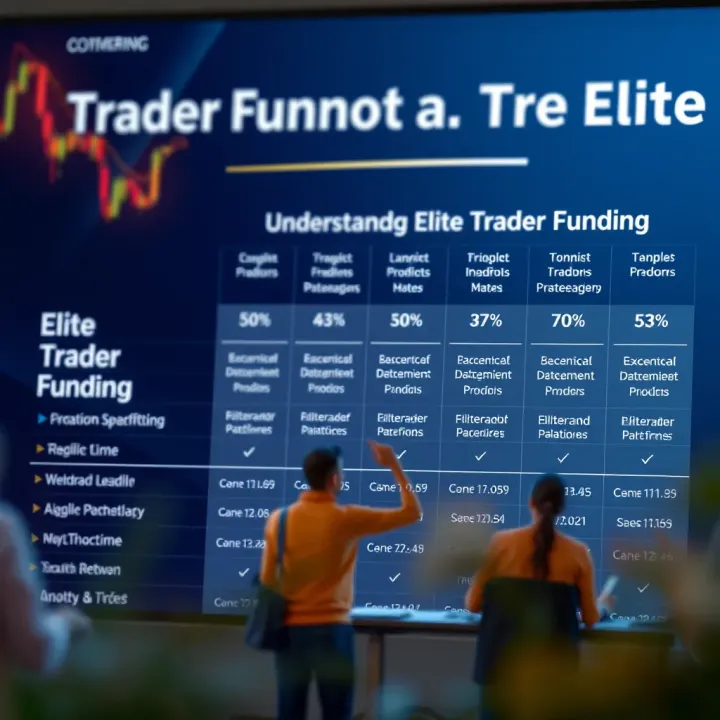
"Elite trader funding offers capital without personal risk, but traders must prove skill, discipline, and follow strict guidelines."
Traders apply to a funding platform and go through an evaluation process, typically a challenge or evaluation phase, where profit targets and risk limits are set. For example, you might have to generate a 10% profit within 30 days while keeping drawdowns below 5%. Passing this test proves your trading strategy and risk management.
Once approved, you receive access to a funded account, often between ₹10 lakh to ₹50 lakh or more, depending on the platform. You trade live markets with this capital, abiding by rules such as maximum daily losses or instrument restrictions. Profits are split — a common model is a 70:30 or 80:20 split favouring the trader.
Elite trader funding platforms usually look for:
Consistent profitability over the evaluation period
Adherence to defined stop-loss and drawdown limits
Proper documentation and verification (KYC/AML)
Trading experience and strategy clarity
Many platforms in India and abroad require an application fee or a refundable deposit during evaluation. This acts as a commitment from the trader and covers administrative costs.
While you don’t risk your own capital, failing the evaluation means losing the application fee or deposit. Adhering to strict risk controls can be challenging—it demands discipline, even when the market moves against you.
Also, payout terms vary. Some platforms clear profits weekly, others monthly, and tax implications in India depend on your individual status and income source.
Understanding platform credibility, fee structure, and support services is important before signing up.
In summary, elite trader funding can amplify your trading capacity without upfront capital risks but requires steadfast discipline, proven skills, and careful platform selection. India’s growing fintech ecosystem is making these opportunities more accessible than ever.
Elite trader funding provides skilled traders access to substantial capital from external sources, allowing them to trade large positions without risking their own money. This model opens up opportunities for traders who might not have the financial backing but possess the talent to generate consistent profits. For instance, a trader in Mumbai with a strong track record but limited personal capital can participate in such programmes to manage ₹50 lakh or more, instead of being confined to just their savings.
Trader funding, in simple terms, means a financial institution or proprietary firm offers capital to traders to operate on behalf of the funder. The primary goal is to identify and support traders who demonstrate skill and discipline, benefiting both parties: traders get access to larger funds, while funders earn a share of the profits. It is essentially a partnership where risk and reward are shared, but the trader does not need to supply the full trading capital themselves.
Traders typically access capital through structured evaluation processes. They submit their performance records or undergo simulated trading assessments to prove their ability to meet pre-set targets and follow risk management rules. Passing these tests grants them funded accounts. For example, Elite Trader and other similar platforms conduct two-phase evaluation stages – traders first meet profit targets in a demo environment under strict drawdown limits, and once cleared, receive live capital to trade.
There are mainly three models in elite trader funding:
Profit Sharing Programmes: Traders manage capital and split profits with the funder, often on a 70:30 or 80:20 basis.
Evaluation or Challenge Accounts: Traders pass assessments under specific rules before receiving funded accounts.
Pay-to-Trade Models: Traders pay a fee upfront to access capital but retain most of the profits.

Each model has its pros and cons. For instance, evaluation accounts reduce risk for funders but may pressure traders to perform within tight constraints. In contrast, pay-to-trade models offer more freedom but can be costly if the trader doesn’t perform well enough to recover fees.
Understanding these fundamentals allows traders to decide which path suits their style and resources best, especially in an Indian context where access to large capital often limits market participation.
In summary, elite trader funding helps bridge the capital gap for talented traders, offering a practical route to scale their operations without financial strain. Knowing how these systems work empowers traders to make informed decisions on pursuing such opportunities.
To secure elite trader funding, applicants must meet specific requirements ensuring they have the skill and discipline to manage significant capital. These standards exist to protect both the funding providers and traders from unnecessary risk. Indian traders eyeing such funding should pay special attention to these criteria, as they directly affect success chances and long-term partnership viability.
Experience plays a big role in qualifying for elite trader funding. Providers usually expect a proven history of profitable trading over months or even years. For example, a trader with a six-month winning streak in Indian equity derivatives or currency futures markets demonstrates consistent skill and risk control. Mere paper trading or sporadic success often doesn't count. Besides profitability, trading style is assessed—whether the trader can adapt to changing market conditions and manage various asset classes like Nifty options or commodity futures is important.
Funding programmes set clear performance benchmarks to gauge traders’ competence. For instance, hitting a 5% profit target within 30 trading days without breaching drawdown limits is common. Traders must manage downside risk carefully to protect the funder’s capital. This means adhering to strict daily loss ceilings (say, 2%) and overall max drawdowns (like 10%). Breaking these risk limits may disqualify a trader, regardless of profits earned. Indian traders should note that these rules can feel rigid, but they are crucial to building a long-term funded trading career.
Besides skills, funding firms often assess financial stability and mental resilience. Traders might need to provide proof of funds or income, ensuring they can handle possible losses without personal distress. Psychological assessments or questionnaires evaluate traits like patience, stress tolerance, and decision-making under pressure. These tests help predict if the trader can sustain the fast-paced, high-stakes trading environment. A trader who remains calm during a sudden market plunge in global crude futures, for example, is more likely to succeed under funding terms.
Meeting these requirements is not just about ticking boxes; it reflects readiness to trade responsibly with someone else's money. Indian traders who focus on building a solid track record, strict risk management, and self-awareness improve their odds of securing and maintaining elite trader funding.
By understanding these demands clearly, traders can better prepare and position themselves for success in competitive funding programmes.
Elite trader funding involves a formal evaluation to verify traders' skills and discipline before granting access to significant capital. This stage is vital because it filters genuinely capable traders from those who might take reckless risks. Understanding the assessment procedure helps traders prepare effectively and anticipate common hurdles.
The process usually starts with an application where traders submit details about their experience and trading history. After initial screening, traders enter a simulation or demo trading phase designed to mimic live market conditions. Here, they must meet specific performance targets like minimum profit percentages, maximum drawdown limits, and consistent trading patterns over a predefined period.
For example, a platform might require traders to achieve a 5% profit within 30 days without exceeding a 2% daily loss limit. Passing this phase shows the trader's ability to manage risk and generate profit reliably.
Once the demo phase is cleared, traders may face a verification round involving psychological assessments or interviews. These gauge their temperament and decision-making under pressure, crucial for real-money trading where emotional control matters.
Finally, upon meeting all benchmarks, traders receive capital and start trading live under rules set by the funding firm, including strict monitoring of their risk exposure.
Many traders struggle with the rigid performance benchmarks, especially consistent risk management. For instance, traders often err by over-leveraging or deviating from the plan, which leads to automatic disqualification.
Another frequent challenge is the psychological pressure during the demo phase. Traders accustomed to making impulsive decisions find it hard to follow strict rules and maintain composure when profits fluctuate.
Some also misunderstand the assessment criteria or platform-specific rules. For instance, a trader might believe that occasional large trades can boost returns, while the platform views this as excessive risk.
Additionally, technical issues like latency or platform outages can unfairly impact performance, posing another hurdle.
Clear understanding and discipline throughout the evaluation are as important as trading skills themselves to secure funding.
By anticipating these challenges, traders can adjust strategies accordingly, improve risk management, and enhance emotional resilience. This preparation boosts the odds of success in gaining elite trader funding platforms' backing, allowing them to trade larger sums with confidence.
In elite trader funding, managing risks and negotiating profit sharing form the backbone of a successful partnership between traders and funders. These aspects ensure the safety of capital and align incentives, allowing both parties to benefit fairly. Given the high stakes involved, understanding these components is vital for traders aiming to sustain long-term growth without jeopardising their access to funding.
Risk limits act as guardrails, preventing significant losses that could affect both the funder's capital and the trader’s reputation. Funders usually enforce daily loss limits and maximum drawdowns to contain risk exposure. For example, a funder might set a daily loss limit at ₹50,000 or a maximum drawdown of 10% of the total capital allotted. This setup ensures traders cannot take reckless bets that jeopardise the entire fund.
From a trader’s perspective, these limits impose necessary discipline. They encourage sticking to risk management principles, such as controlling position sizes and using stop-loss orders effectively. Traders who exceed risk limits often face suspension or termination of funding, so these rules keep their trading behaviour in check.
Risk limits aren't just about protecting the funder’s money—they safeguard your trading career.
Profit split agreements govern how the gains are shared between the trader and the funding firm. Most elite trader funding platforms provide a split that ranges from 60:40 to 80:20, favouring the trader. For instance, if a trader earns ₹2 lakh in profits, a 70:30 split will give them ₹1,40,000 while the funder takes ₹60,000.
These agreements often come with conditions. Some platforms require a minimum trading period before traders can withdraw profits. Others deduct fees or reserves that support the platform’s continuous operation. It's essential for traders to carefully review these terms to understand their net earnings accurately.
Besides profit splits, some agreements include scaling plans where the trader’s share increases after reaching certain profit milestones. This arrangement motivates traders to perform consistently while enjoying better rewards over time.
Understanding the nuances of profit sharing ensures traders set realistic expectations and stay motivated.
In summary, effective risk limits and clear profit split agreements provide a balanced framework. They protect the funder’s capital, promote responsible trading, and help traders benefit fairly from their skills. Managing these elements carefully is key to thriving in elite trader funding programmes.
Selecting the right funding platform can significantly impact a trader’s journey towards accessing external capital and scaling their trading activities. Given the variety of options available, understanding each platform's strengths, conditions, and support structures helps traders avoid pitfalls and maximise their chances of success.
Popular trader funding providers differ in many ways, such as evaluation criteria, fee structures, profit splits, and risk parameters. For example, FTMO is known for its transparent scaling plans and reasonable evaluation fees but demands disciplined adherence to daily loss limits. Meanwhile, TopstepTrader offers a community-driven approach with coaching, which can be helpful for freshers looking to improve gradually.
The5ers focus on lower-risk strategies and longer funding durations, appealing to more cautious traders. On the other hand, My Forex Funds provides flexible account sizes and multiple evaluation paths, making it suitable for traders experimenting with various styles. Indian traders should also consider platforms that support rupee-based accounts or facilitate easy currency conversions to minimise transactional costs.
Key aspects to compare include:
Evaluation stages and difficulty level
Profit-sharing percentages and payment frequency
Maximum drawdown and daily loss rules
Customer support and educational resources
Withdrawal conditions and processing time
Sample scenario: If you prefer swing trading with moderate drawdowns, platforms like The5ers might suit you better; for scalpers who trade frequently, FTMO's tighter rules could be a challenge but offer quicker funding.
Indian traders face unique challenges like currency fluctuations, payment gateways, and platform access restrictions. To boost your chances:
Understand platform policies on currency conversion and fees. Always factor these costs into your profitability models.
Prepare well for the evaluation phase by practising risk management diligently with demo accounts or small live accounts before applying.
Use local payment options supported by platforms (UPI, net banking, Paytm) to avoid delays and additional charges.
Stay updated on tax implications related to profits from funded trading, especially for sudden payouts.
Join Indian trader communities and forums for peer learning and updates on platform experiences.
Keep records of trade performance and psychological readiness as funding firms often assess discipline and consistency alongside raw profits.
In short, choosing wisely among funding providers and tailoring your approach to India's financial ecosystem can dramatically improve your funding success. Rigorous preparation and thoughtful platform selection are your best tools in navigating this competitive space.
🔍 Explore all about BFX Funding—its process, eligibility, risks, and benefits tailored for Indian traders. Stay informed on regulations and smart tips for safe investing.

Explore Qutoex📚: Understand its origins, uses, challenges, and impact today. Get a detailed, practical guide to Qutoex for every context.

Explore Qutex's key features, uses, and future potential in India’s tech scene. Gain insights into its benefits, limits, and role in modern innovation 💡📱.

Explore Binary.com, a trusted platform for binary options trading across markets. Learn about features, account types, security, strategies, and its fit for Indian traders 📈💼🔐
Based on 14 reviews