

Bitcoin Future Prediction: Market and Tech Outlook
📈 Explore Bitcoin's future with insights on market trends, tech advances, regulatory changes, and investment risks to help you make informed decisions.
Edited By
Isabella Brooks
Ethereum remains a top contender in the cryptocurrency space, attracting traders, investors, and analysts alike. Its smart contract capabilities and decentralised applications have expanded far beyond a simple digital currency, making it a key player in blockchain innovation.
The platform’s recent switch to Ethereum 2.0 through the proof-of-stake (PoS) upgrade has significant implications for its scalability, energy efficiency, and transaction costs. This development influences market sentiment and the potential for wider adoption, especially in sectors like DeFi (Decentralised Finance) and NFTs (Non-Fungible Tokens).
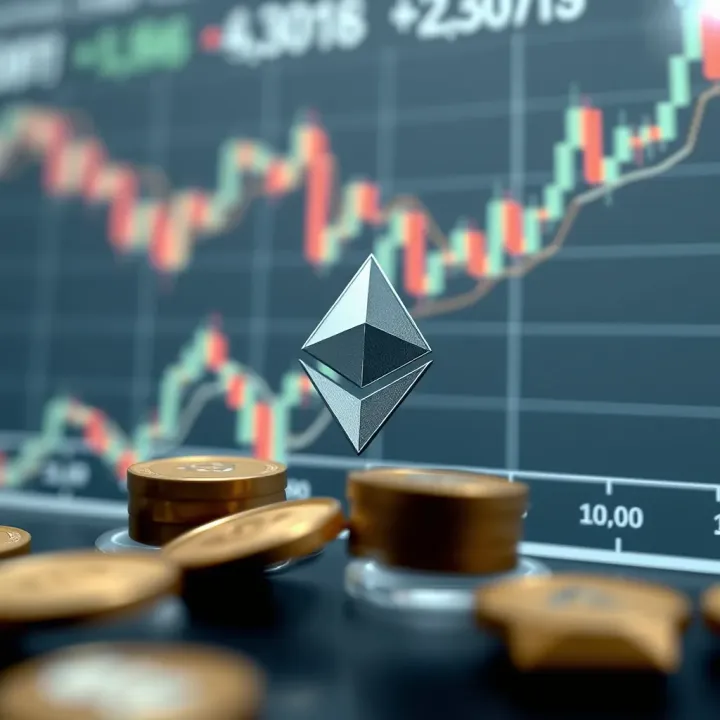
Understanding Ethereum's trajectory means tracking not just price movements, but also technological upgrades and regulatory shifts that could affect its ecosystem.
Key market indicators suggest that Ethereum's price is sensitive to broader crypto trends, global economic conditions, and policy decisions from regulators worldwide—India’s own evolving crypto regulations may shape investor interest domestically.
To navigate Ethereum's future outlook, it’s essential to consider:
Recent performance trends and volatility patterns
Impact of Ethereum 2.0 and Layer 2 scaling solutions
Competition from alternative smart contract blockchains
Regulatory developments and institutional adoption
Macroeconomic forces such as inflation and currency shifts
For those investing or advising on Ethereum assets, monitoring ongoing technological advances alongside market data offers a clearer picture. This balanced approach helps in making informed decisions on entry, exit, and risk management strategies in a rapidly changing environment.
Understanding recent performance and market trends is vital for anyone dealing with Ethereum, whether you are a trader, investor, or analyst. These trends provide a snapshot of how the cryptocurrency has behaved under different market conditions and give clues about future movement. By analysing price patterns and trading activity, you can better time your decisions and manage risks effectively.
Ethereum’s price over the last year has seen a rollercoaster ride, marked by phases of rapid gains followed by sharp corrections. For example, the coin surged from around ₹1.2 lakh in April 2023 to nearly ₹3.5 lakh by October 2023 before retreating. This volatility often ties to larger movements in global crypto markets but also to specific Ethereum events, such as upgrades or network issues. Notably, the spike in demand for decentralized finance (DeFi) applications running on Ethereum smart contracts nudged prices upward during periods of positive news.
Such swings illustrate the importance of monitoring technical indicators like support and resistance levels, which can signal potential price floors or ceilings. Also, significant deviations from these levels often coincide with wider economic changes or announcements about regulatory policies.
Market sentiment serves as a powerful force behind Ethereum’s price behaviour. Positive sentiment, often driven by news about technological upgrades or adoption by major players, can spark buying momentum. Conversely, regulatory crackdowns or security concerns tend to dampen enthusiasm and increase sell-offs.
Trading volumes add another dimension. In the past year, higher volumes coincided with major price breakouts, indicating strong participation from retail and institutional investors alike. For instance, volumes on platforms like WazirX and CoinDCX saw spikes during the launch phases of Ethereum’s upgrade milestones. These volume surges validate price moves since they reflect genuine investor engagement rather than sporadic trading.
Keeping a close eye on sentiment shifts and volume trends helps anticipate possible reversals or breakout points, offering actionable insights for market timing.
In short, recent price movement and market behaviour offer concrete data for forecasting Ethereum’s next steps. For practicioners and observers, Staying updated on these elements helps navigate the ups and downs and spot emerging opportunities before others do.
Technological upgrades and ecosystem growth play a vital role in Ethereum's long-term outlook. For traders, investors, and analysts, understanding these developments helps assess Ethereum's potential beyond mere price analysis. Two key areas stand out: the Ethereum 2.0 upgrade, which addresses scalability and sustainability, and the rising prominence of decentralised finance (DeFi) and non-fungible tokens (NFTs), which broaden Ethereum's real-world use cases.
Ethereum 2.0, also called Et or Serenity, aims to shift the network from a proof-of-work (PoW) consensus to proof-of-stake (PoS). This transition promises significant improvements, such as reduced energy consumption, faster transaction finality, and increased transaction throughput. For investors, this means a greener, more efficient network that can handle more users and decentralised applications (dApps).
The upgrade introduces sharding, breaking the blockchain into smaller pieces called shards. This spreads the transaction load, easing congestion that has often led to high gas fees. Lower fees make Ethereum-based services more affordable, encouraging adoption, especially in markets like India, where cost sensitivity is high.
However, the upgrade also introduces new technical challenges and risks. Validators must lock up Ether (ETH) as collateral, tying up liquidity temporarily, and the transition period itself can create uncertainty in network behaviour.
DeFi and NFTs showcase Ethereum's versatility, significantly influencing its value proposition. DeFi platforms like Aave, Compound, and MakerDAO enable lending, borrowing, and yield farming without traditional banks. This opens finance to millions who remain outside formal banking, including rural or underbanked Indian populations.
NFTs turn digital art, music, and collectibles into tradeable assets, creating new marketplaces and revenue streams. Popular platforms such as OpenSea or Rarible run predominantly on Ethereum, sustaining considerable transaction volumes. In India, growing interest in digital collectibles and regional content is expanding NFT adoption.
These innovations drive demand for Ethereum's native token and network capacity, linking directly to price action. Yet, they also raise concerns about speculative bubbles and regulatory scrutiny. Investors should watch how regulatory bodies like SEBI approach DeFi and NFTs, as policies will impact long-term sustainability.
Ethereum's technological upgrades and expanding ecosystem deepen its market relevance. Staying updated on these trends is essential for making informed investment or advisory decisions.
By keeping an eye on Ethereum 2.0 progress and the DeFi/NFT sectors, you better understand the forces shaping Ethereum's future, helping you navigate its risks and opportunities with confidence.
Expert predictions and price forecasts help investors and traders make informed choices amid Ethereum's market fluctuations. These insights aggregate knowledge from seasoned analysts, blockchain technologists, and market data algorithms. They guide decision-making by highlighting probable price ranges, risks, and growth patterns in both short and long terms.
Short-term price expectations often reflect immediate market sentiments and news impacts. For Ethereum, factors like network upgrades, gas fee fluctuations, and shifts in DeFi or NFT activity influence these forecasts. For example, after an announcement of a successful testnet launch for Ethereum 2.0 upgrades, analysts might predict a price surge of 5-10% within weeks, considering heightened investor enthusiasm. Besides technical reasons, global economic events such as RBI’s monetary policy or geopolitical tensions can also sway short-term predictions. Traders can use these forecasts to time entry or exit points, balancing profit opportunities with risk exposures.
Long-term growth prospects depend on broader, structural trends such as blockchain adoption, scalability improvements, and regulatory clarity. Ethereum’s transition to proof-of-stake under Ethereum 2.0 aims to reduce energy consumption and transaction costs, bolstering its ecosystem sustainability. Analysts expect that as DeFi and NFT markets mature and Ethereum maintains its developer base, the platform’s valuation could potentially multiply over the next five years. For instance, some experts foresee the price reaching ₹3 lakh–₹5 lakh per ETH in the next 3-5 years, assuming sustained demand and technological progress. This horizon also considers risks, including competition from other blockchains and regulatory pressures globally and in India.
Understanding expert forecasts equips investors with a reasoned perspective beyond price charts and hype. It helps to manage expectations, assess investment timing, and prepare for volatility.
Scrutinise the forecast sources, favouring experts with proven track records.
Consider broader economic indicators affecting cryptocurrency markets.
Use a mix of technical and fundamental analysis insights.
Avoid relying solely on bull or bear forecasts; diversify your risk.
By combining short-term expectations with long-term outlooks, Ethereum participants can develop balanced strategies aligned to their risk tolerance and financial goals. This blend is particularly useful in India's evolving crypto market, where policy changes can quickly shift possibilities.
Ethereum’s price does not move in isolation; various internal and external factors shape its value. Understanding these forces helps traders and investors make informed decisions. This section examines key elements impacting Ethereum, focusing on regulation, competition, and macro-economic trends that hold particular relevance for the current market.
Regulation remains a significant influence on Ethereum’s value, especially in India where the government and Reserve Bank of India (RBI) take a cautious approach to cryptocurrencies. Regulatory clarity or uncertainty can cause sharp price swings. For example, Indian announcements around possible crypto taxation policies or trading guidelines have led to short-term volatility. Globally, policies in major economies like the US and EU also matter. The US Securities and Exchange Commission’s (SEBI’s counterpart in India) stance on classifying cryptocurrencies impacts investor confidence. Restrictions, bans, or tax regimes can tighten liquidity, while favourable frameworks tend to boost adoption and prices.
Investors need to keep an eye on regulatory notifications both locally and internationally as these can quickly affect market sentiment and trading activities.
Ethereum faces competition from several blockchain projects aiming to solve issues like scalability, transaction speed, and cost. Platforms such as Solana, Avalanche, Binance Smart Chain, and Polygon offer faster and cheaper alternatives for decentralised applications (dApps) and smart contracts. This competition pressures Ethereum to keep upgrading — as seen with Ethereum 2.0 — to maintain its dominant position. Investors should evaluate how competing platforms affect Ethereum’s market share, developer activity, and ecosystem growth. For example, a surge in DeFi projects on Binance Smart Chain can divert users away from Ethereum, influencing demand and price.
Broader economic conditions hugely impact Ethereum and other crypto assets. Inflation rates, interest hikes by central banks, foreign exchange fluctuations, and geopolitical tensions all play a part. An inflation rise in India or abroad may push investors toward cryptocurrencies as a hedge, lifting Ethereum’s price. Conversely, tightening monetary policy or a strong rupee might reduce demand. Additionally, global events like supply chain disruptions or banking crises tend to increase market volatility, prompting risk-averse behaviour. These macro trends do not affect Ethereum alone but the entire crypto ecosystem, often amplifying price swings.
In summary, Ethereum’s value is shaped by a mix of regulatory developments, competition from rival blockchains, and wider economic conditions. Each factor can either speed up growth or introduce risks. Staying updated on these elements will benefit traders and investors aiming to navigate Ethereum’s volatile market effectively.
Understanding the risks and challenges associated with Ethereum is vital for traders, investors, and analysts aiming to navigate this fast-moving market. While Ethereum shows strong potential due to its technological innovations and widespread adoption, it faces distinct hurdles that can impact its price and viability.
Security remains a top concern for Ethereum users and developers. Over the years, various vulnerabilities have been exposed in smart contracts and the underlying network. For instance, the 2016 DAO hack saw around $50 million stolen due to a flaw in the contract code. Although Ethereum itself has improved security protocols, decentralised finance (DeFi) applications built on Ethereum can still be prone to bugs and exploits. Recent incidents like the Poly Network hack in 2021, which resulted in losses worth hundreds of millions but was later mostly recovered, illustrate how complex and risky smart contract ecosystems can be.
The ongoing transition to Ethereum 2.0 aims to bolster security through a proof-of-stake consensus mechanism. However, even new technologies can introduce fresh vulnerabilities that require continuous auditing and upgrades. Investors should therefore keep an eye on network updates and carefully evaluate the security records of DeFi platforms they engage with.
Ethereum’s price history is marked by sharp swings that reflect broader crypto market sentiment as well as project-specific news. This high volatility may offer trading opportunities but also carries risks. Unexpected regulatory announcements, such as crackdowns on crypto exchanges in India or China, can cause sudden price drops. Similarly, competition from rival blockchains like Solana or Cardano could divert attention and capital away from Ethereum, impacting its market value.
For example, Ethereum’s price fell notably during the 2022 crypto winter, dropping from over ₹3,00,000 to ₹1,00,000 within months. Such swings can throw off leveraged positions and increase liquidation risks for traders using margin. Long-term investors should also brace for volatility while considering the broader adoption trends and network upgrades.
Investing in Ethereum requires balancing the promise of innovative technology with the realities of strong price swings and potential security issues.
To manage these risks, diversification across assets and cautious exposure to volatile positions is advisable. Staying informed about Ethereum’s technological progress and regulatory environment will help in making more calculated investment decisions.
In summary, acknowledging and preparing for security challenges and market volatility is key to successfully engaging with Ethereum’s evolving ecosystem. This awareness allows investors and traders to better anticipate potential pitfalls and approach Ethereum with a grounded perspective.
📈 Explore Bitcoin's future with insights on market trends, tech advances, regulatory changes, and investment risks to help you make informed decisions.

📈 Explore Amazon's stock trends with insights on financials, market factors, analyst views, and risks. Get a clear outlook to guide your investment decisions in 2024.

📊 Explore key factors shaping AUD/USD rates, including economic signals, commodity trends, geopolitical shifts, and monetary policies for smarter trading decisions.

Explore future trends of Reliance Industries across tech, retail, energy & telecom 📈. Insights based on current strategies & market outlooks in India 🇮🇳.
Based on 7 reviews