
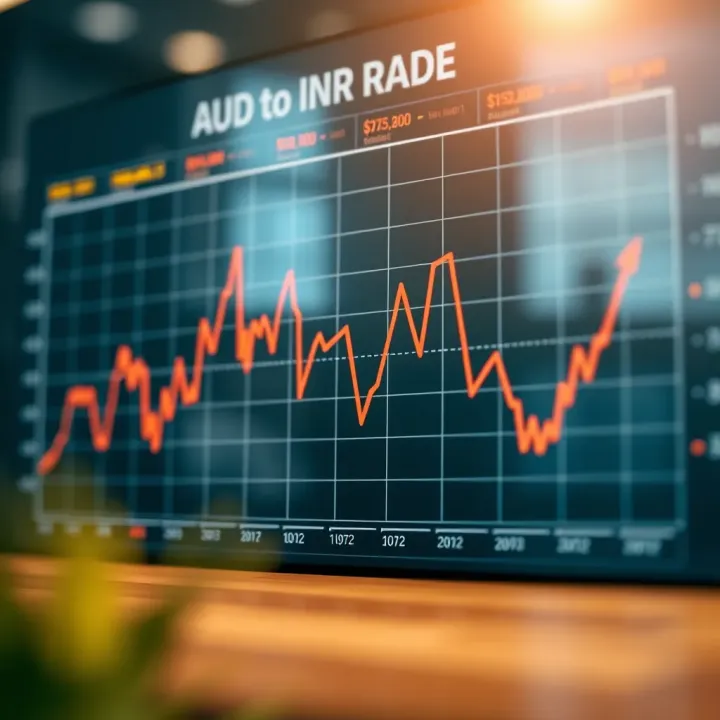
AUD to INR Exchange Rate Forecast: Trends & Influences
📈 Explore key factors influencing AUD to INR exchange rate, recent market trends, and forecasting methods for better decisions in trading and investments.
Edited By
James Elliott
The EUR-INR exchange rate is a vital indicator for traders, investors, businesses, and fintech players operating between Europe and India. Understanding the factors that influence this currency pairing helps in making informed decisions, especially given the growing economic ties between the Eurozone and India.
Exchange rate fluctuations impact import-export pricing, foreign investments, travel costs, and corporate earnings from overseas operations. For instance, a sudden dip in the Euro against the Rupee may reduce the cost of European goods for Indian importers but also squeeze the earnings of Indian exporters to Europe.
Several economic indicators directly influence EUR-INR movements. India's GDP growth, inflation rates, monetary policies by the Reserve Bank of India (RBI), and fiscal deficits shape domestic currency strength. On the Eurozone side, European Central Bank (ECB) policies, inflation, and economic performance are equally important.
Geopolitical events and global market trends add layers of complexity to the forecast. For example, EU trade agreements or tensions and India's foreign relations can shift investor sentiment overnight. Similarly, global commodity price shifts, like crude oil, affect India's current account balance, indirectly influencing the Rupee.
Traders and investors should closely watch updates from both RBI and ECB, alongside macroeconomic data releases, to anticipate potential EUR-INR volatility.
This article breaks down the key drivers shaping EUR-INR trends, recent performance review, and outlook projections. It aims to equip readers with practical insights that reflect current global conditions and Indian economic policies, helping financial professionals and business strategists better manage currency risks.
Key points covered in the upcoming sections:
Economic indicators affecting EUR and INR
Role of geopolitical factors in currency fluctuations
Recent EUR-INR market movements
Forecast strategies and risk management techniques
With these insights, you can navigate the EUR-INR currency landscape more confidently, whether handling international investments, trade settlements, or portfolio diversification.
Understanding the EUR-INR exchange rate is essential for traders, investors, and businesses dealing with Euro-Indian transactions. This rate indicates how much one Euro costs in Indian Rupees, reflecting the economic and market dynamics between the Eurozone and India. Changes in this rate can impact import-export costs, investment returns, and travel expenses, so staying informed helps in accurate financial planning and risk management.
The EUR-INR rate is set largely by trading activities in the foreign exchange (forex) market. Currency markets operate continuously, with volumes fluctuating based on market hours, news, and global events. Higher trading volumes often lead to better liquidity, allowing traders to enter and exit positions without much price impact. For example, during European or Indian business hours, the EUR-INR pair tends to see more activity, which can tighten spreads and reflect current economic sentiment more accurately.
Supply and demand govern the EUR-INR rate as much as any macroeconomic factors. When Indian importers need Euros to pay for goods from Europe, demand for Euros rises, pushing the EUR-INR rate up. Conversely, if European investors sell Euros to invest in India, the supply of Euros increases, potentially lowering the rate. Even political stability, economic growth expectations, and central bank interventions affect how much of each currency market participants want.
Over the last five years, the EUR-INR rate has generally ranged between ₹78 and ₹90 per Euro, showing moderate upward pressure. This reflects India’s steady economic growth amid eurozone challenges like Brexit and pandemic disruptions. For instance, between 2018 and 2020, the rate climbed from around ₹80 to ₹88, influenced by India’s import demand and the weakening Euro due to European uncertainties.
Significant fluctuations occurred during the COVID-19 crisis when the EUR-INR rate jumped sharply in early 2020. Flight cancellations, trade disruptions, and monetary stimulus led to volatile currency movements. Another notable cause was the Eurozone debt crises years before, which had a delayed but visible impact on the pair. Understanding these shifts helps stakeholders prepare for sudden changes that can affect hedging and currency exposure strategies.
A clear grasp of how trading volumes, demand-supply dynamics, and historical trends influence the EUR-INR rate aids in making informed decisions and managing currency risk effectively.
Key points to remember when considering the EUR-INR rate include:

Currency markets’ liquidity varies through the day, affecting price stability.
Trade flows between Europe and India significantly sway demand and supply of Euros.
Historical patterns provide context but expect volatility from geopolitical and global economic shocks.
By focusing on these factors, investors and businesses can better navigate EUR-INR fluctuations with clarity and confidence.
Economic indicators are vital in understanding EUR-INR exchange rate movements. These indicators reflect the economic health of the Eurozone and India and significantly influence currency valuation. Traders and investors keep a close eye on factors like interest rate differences, inflation, and trade balances, as these can cause shifts in demand for euros and Indian rupees.
European Central Bank policies: The European Central Bank (ECB) sets key interest rates that guide borrowing costs within the Eurozone. When the ECB raises interest rates, it often attracts investment flows into Europe seeking higher returns, pushing the euro stronger against other currencies including the rupee. For example, in 2022, ECB's rate hikes to counter inflation boosted the euro's appeal, impacting the EUR-INR exchange rate. Conversely, a dovish stance with low or negative rates tends to weaken the euro.
Reserve Bank of India’s monetary stance: Similarly, the Reserve Bank of India (RBI) influences the rupee by adjusting its policy rates. If RBI raises rates to control inflation or support the currency, it can attract foreign capital inflows, strengthening the rupee. For instance, the RBI's rate hikes in the past year to tame inflation made the rupee more resilient, moderating EUR-INR depreciation. On the other hand, rate cuts to stimulate growth may weaken the rupee comparatively.
Eurozone inflation trends: Rising inflation in the Eurozone often prompts the ECB to tighten monetary policy, increasing interest rates. High inflation above ECB’s target erodes purchasing power, which can initially weaken the euro. However, the anticipation of higher rates to tackle inflation can strengthen the euro in forex markets. Traders watching inflation data, such as the Consumer Price Index, get cues on ECB’s next moves and react accordingly.
Inflation pressures in India: Inflation in India affects the rupee differently. Persistent inflation above RBI’s comfort zone can prompt rate hikes, supporting the rupee’s value but possibly slowing growth. For example, food and fuel price rises tend to cause inflation spikes, leading to a tighter monetary stance. However, if inflation is low or stable, RBI may keep rates steady or reduce them, potentially weakening the rupee against the euro.
Eurozone and Indian trade relations: The trade balance between the Eurozone and India involves exports, imports, and services exchanged between these economies. A trade surplus for India against the Eurozone means more euros flowing into India, which can increase demand for rupees and strengthen INR versus EUR. Alternatively, if India runs a deficit, it might increase demand for euros, putting pressure on the rupee.
Impact on currency demand: Sustained trade imbalances affect current account positions and influence forex demand. For instance, a widening current account deficit in India raises the need for foreign currency, leading to rupee weakening unless offset by capital inflows like FDI or remittances. Similarly, European companies importing more from India may boost demand for rupees, impacting EUR-INR rates. Monitoring these flows helps predict short to medium-term currency trends.
Keeping track of these economic indicators can give you a sharper edge in anticipating EUR-INR movements, enabling better trading decisions and risk management strategies.
Political events and global market sentiment strongly impact the EUR-INR exchange rate. Traders, investors, and analysts closely monitor these developments because they often usher in sudden shifts in currency values. Understanding how political changes and global dynamics shape the EUR-INR helps market participants anticipate volatility and make informed decisions.
Elections and policy changes have immediate consequences on currency exchange rates. For example, general elections in India or key Eurozone countries like Germany or France can cause fluctuations due to uncertainties about future economic policies. Take the 2019 Indian general elections: the announcement of a stable government led to Rupee strengthening against the Euro as investors gained confidence in economic reforms. Similarly, changes in fiscal or monetary policies, such as adjustments to taxes or government spending, can alter trade balances and capital flows, impacting demand for each currency.
Impact of diplomatic relations also plays a practical role. Any tensions—or conversely, improved ties—between the Eurozone and India can influence investor sentiment. For instance, trade agreements or disputes affect the flow of goods and investments, which directly changes currency demand. A recent example is India’s deepening partnership with European Union countries on technology and green energy; such collaboration tends to support INR appreciation through stronger economic ties and inflows of capital.
Influence of global financial markets is pivotal for EUR-INR movements. When global markets are uncertain or risk-averse, investors seek safe havens like the US dollar or gold, often pulling funds away from emerging market currencies like the Indian Rupee. Conversely, a positive mood boosts investment in riskier assets, strengthening currencies like the INR. For instance, during the global equity rally in 2021, the Rupee gained versus the Euro due to increased foreign portfolio investments in India.
Effects of commodity price fluctuations are particularly relevant since India is a major importer of crude oil and other commodities priced globally in US dollars. Sharp rises in oil prices strain India's trade deficit, putting pressure on the INR and indirectly affecting EUR-INR rates. On the flip side, stable or falling commodity prices ease inflationary pressures and can improve currency outlook. Traders closely watch these trends since commodity shifts can trigger quick adjustments in exchange rate forecasts.
Understanding these geopolitical and global factors helps market participants manage currency risks better and time transactions to mitigate losses or seize favourable moves in the EUR-INR exchange rate.
Understanding the current trends and short-term forecast for the EUR-INR exchange rate is crucial for traders and investors aiming to make well-informed decisions. Short-term fluctuations can significantly impact profit margins in forex trading, import-export pricing, and investment returns. Keeping a close watch on recent movements provides clarity on how factors like policy changes and economic data alter the currency dynamic practically.
Policy announcements from the European Central Bank (ECB) and the Reserve Bank of India (RBI) can sway the EUR-INR rate within hours. For instance, when the ECB hinted at a pause in rate hikes in early 2024, the euro weakened against the rupee. Similarly, RBI's decision to modify the repo rate influences rupee strength. These moves affect capital flows and borrowing costs, so businesses involved in cross-border trade should monitor such announcements closely. This helps them anticipate shifts and plan currency procurement or hedging strategies effectively.
Economic figures like GDP growth, inflation, and industrial output from both the Eurozone and India prompt quick market reactions. For example, if India's inflation rises above expectations, it can pressure the rupee lower, causing EUR-INR to rise. Conversely, robust Eurozone economic indicators boost the euro, pushing the exchange rate up. Traders often respond swiftly to these figures, leading to intraday volatility. Understanding these reactions helps risk managers in forex and treasury teams time their market entries and exits more precisely.
Leading financial institutions regularly publish EUR-INR forecasts based on macroeconomic models and geopolitical analysis. Generally, they factor in scenarios like RBI's inflation targeting and ECB’s stimulus measures. For 2024, consensus points to moderate rupee appreciation supported by India’s steady current account and stronger growth prospects. Such forecasts help corporate treasurers and investors set realistic expectations about currency exposure and adjust portfolios accordingly without relying solely on spot market prices.
Despite forecasts, short-term risks cloud the EUR-INR outlook. Unexpected geopolitical tension in Europe or a sudden change in India's import bill due to oil price shocks can trigger sharp swings. Additionally, global market sentiment influenced by events like US Federal Reserve decisions indirectly affects the pair. Investors need to factor in these uncertainties by using risk mitigation tools like forwards and options or maintaining diversified currency exposure. Recognising these risks improves preparedness rather than reacting hurriedly to market surprises.
Staying informed about recent trends and forecasts allows one to react swiftly to market signals, reducing exposure to adverse swings and capturing timely opportunities in EUR-INR trading.
Managing risks tied to EUR-INR exchange rate movements is vital for businesses and investors dealing with Europe or India. Currency shifts can quickly affect profit margins, valuation, and overall financial health. Preparation helps reduce surprises and ensures smoother operations amidst market swings.
India offers several hedging instruments that allow firms and investors to shield against adverse currency changes. Currency futures and options, alongside forward contracts, are popular tools in the financial markets, enabling locking in exchange rates ahead of time. For example, an importer expecting to pay €10,000 in six months can use a forward contract to fix the rate today, preventing losses if the rupee weakens.
The widespread availability of currency swaps and forex options on platforms like NSE India and BSE India adds flexibility. Such instruments help in tailoring risk management strategies, balancing cost against protection. Currency options, in particular, provide the right but not obligation to buy or sell the euro at a set price, useful for uncertain cash flows.
Using forward contracts and options is crucial for planned exposure management. Firms can reduce currency volatility impacts on their working capital and cash flow. For example, exporters paid in euros can sell currency forwards to lock rupee receivables, guarding against depreciation.
These derivatives allow businesses to budget costs effectively and avoid sudden expense spikes. Seasoned investors use currency options to hedge portfolio risks from overseas holdings tied to the euro. Though effective, such instruments require understanding the market dynamics and costs involved.
Cost planning and pricing decisions heavily depend on exchange rate outlooks. For importers, a falling rupee can make euro-denominated goods costlier, squeezing margins unless prices are adjusted or hedged. Exporters might gain if rupee weakens, but surprise swings can disrupt contract pricing if not managed well.
Businesses must factor expected currency trends into budgeting. For example, during the festive season, Indian retailers importing European items should anticipate EUR-INR volatility, factoring it in pricing strategies to avoid losses.
Tourists travelling from India to Europe face open currency risk. Currency exchange rates at airports or street vendors often incur higher charges. Planning currency swaps through banks or authorised dealers ahead of travel at competitive rates helps secure better value.
Carrying multi-currency forex cards loaded with euros can minimise exchange fees and provide convenience. Also, travellers should monitor the INR movement against the euro before prepaid currency purchases, since rates can shift rapidly on political or economic news.
Preparing for EUR-INR fluctuations means more than reacting — it’s about having the right tools and plans in place to navigate unpredictable currency markets confidently.
Effective risk management in currency exposure is indispensable for Indian businesses and investors interacting with euro markets, ensuring financial stability in a shifting economic landscape.
📈 Explore key factors influencing AUD to INR exchange rate, recent market trends, and forecasting methods for better decisions in trading and investments.

Get detailed Euro to INR forecast for the next five years 📈. Understand currency trends, expert views, and impact on Indian businesses and travellers.

📊 Explore key factors shaping AUD/USD rates, including economic signals, commodity trends, geopolitical shifts, and monetary policies for smarter trading decisions.

Explore BSW coin price prediction 📈 covering past trends, market factors, technology features, and expert views to guide your cryptocurrency investment decisions.
Based on 6 reviews