

Dogecoin Price Predictions: Trends and Insights
Explore Dogecoin price predictions 📈, market trends, key factors, and expert insights to help Indian and global investors make well-informed decisions.
Edited By
George Edwards
Natural gas prices play a significant role in shaping energy costs, industrial output, and household expenses in India and beyond. Predicting these prices accurately requires understanding the complex mix of factors influencing supply and demand, both globally and regionally. For traders, investors, and analysts, knowing these drivers helps in making informed decisions amid volatile markets.
Price forecasts today depend on several key influences. At the global level, shifts in production volumes from major exporters like the US, Russia, and Qatar affect availability. For example, a cold spell in North America can boost demand rapidly, tightening global supply and pushing prices up. At the same time, geopolitical tensions—for instance, sanctions on Russian gas exports—can disrupt supply chains unexpectedly.
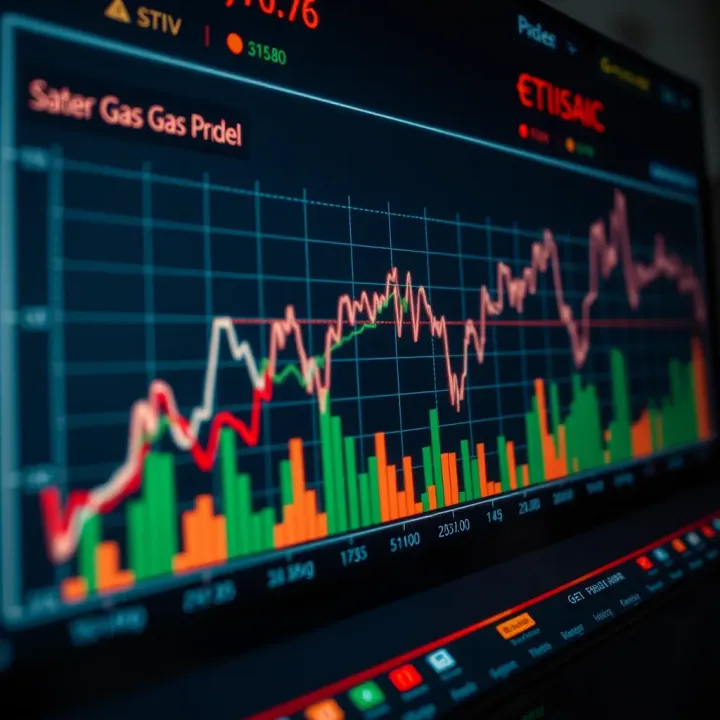
Closer to home, India’s natural gas market is shaped by government policies such as pricing reforms, import tariffs, and infrastructure development. The government’s push towards cleaner fuels has increased natural gas demand in sectors like power generation and transportation. Plus, spot prices at hubs like the Dahej LNG terminal react quickly to fluctuations in international rates, affecting local costs.
Another important factor is technological progress in extraction methods like shale gas drilling, which changes production economics and global supply balance. Additionally, the expanding LNG import capacity in India influences domestic price dynamics by providing alternative sources.
Traders and investors should watch not only international events but also domestic policy announcements that can alter market sentiment instantly.
The interplay between seasonal demand patterns, inventory levels, and currency fluctuations further complicate price predictions. India's monsoon, for example, impacts natural gas consumption in power plants due to hydropower availability, affecting demand cycles.
To sum up, understanding today’s natural gas price predictions involves tracking a broad array of elements:
Global supply disruptions and production trends
Regional demand changes influenced by weather and policy
Domestic regulatory moves and infrastructure upgrades
Market sentiment and currency fluctuations
This overview offers a framework for grasping the main forces at work, helping stakeholders navigate the evolving natural gas landscape in India and the world.
Understanding the current state of natural gas prices offers essential context for anyone tracking market trends or planning investments. It gives you a snapshot of where prices stand globally and regionally, highlighting fluctuations that can impact business decisions and policy-making. This overview acts as a baseline for analysing the factors shaping future price predictions, helping traders and analysts stay on top of market movements.
In recent months, global natural gas prices have seen marked volatility. For instance, prices surged during the winter season due to increased heating demand in the Northern Hemisphere, particularly across Europe and North America. At the same time, supply chain disruptions, such as maintenance shutdowns in major production zones and geopolitical tensions in Eastern Europe, have tightened supply. This combination pushed Henry Hub prices in the US and the European benchmark, the TTF (Title Transfer Facility), higher than earlier forecasts anticipated.
Asian markets, including LNG-importing countries like Japan and South Korea, responded to the global shortage by bidding aggressively, further fuelling price gains. The interplay of weather-driven consumption spikes and supply constraints illustrates how natural gas prices can swing widely over short periods, affecting consumer bills and industrial costs worldwide.
India’s natural gas prices have generally been moderated by increased domestic production coupled with strategic imports of liquefied natural gas (LNG). However, recent regional developments have added layers of complexity. The government’s push towards gas-based power to reduce coal dependence is increasing domestic demand, especially in states like Gujarat and Maharashtra, where infrastructure is better developed.
On top of that, India’s LNG import prices are influenced by global trends but also face added costs from transportation and regasification. Seasonal shifts and delayed monsoons can vary demand patterns, impacting prices locally. For example, during peak summer months, demand for natural gas rises due to power generation for cooling, pushing prices upward.
Tracking these regional nuances is particularly useful for market participants focusing on the Indian subcontinent, ensuring investment strategies align with both local and international price trajectories.
By keeping an eye on how prices change globally and within India, analysts can better forecast trends and risks in natural gas markets, enabling more informed decisions across trading, advisory, and investment functions.
Natural gas price predictions hinge on several essential factors that traders and investors must consider closely. Understanding these key influences allows market participants to make more informed decisions, balancing risks and opportunities effectively. The major elements shaping price forecasts include supply and demand dynamics, weather and seasonal effects, and geopolitical developments. Each factor interacts with the others, often complicating price trends.

At the core of natural gas pricing lies the simple principle of supply and demand. When production exceeds consumption, prices tend to drop; conversely, tight supply amid rising demand pushes prices up. For example, India’s increasing use of natural gas in power generation and industry is steadily raising demand, putting upward pressure on prices. Meanwhile, domestic production constraints or interruptions can limit supply. Recently, India's gas imports via LNG terminals have supplemented local supply, but global LNG prices also influence domestic natural gas cost. Traders watch indicators like inventory levels, rig counts, and import volumes closely to anticipate price movements.
Weather plays a clear role in natural gas markets, particularly due to heating and cooling needs. Winters typically raise demand for heating, increasing prices, while summer heat can boost electricity use for air conditioning, also impacting demand. In India, the monsoon season can affect power generation patterns and influence gas demand indirectly. Consider the winters of 2022, when unusually cold spells in northern India soared gas consumption, tightening supply and nudging prices higher. Forecasters often use weather models to predict short-term gas demand shifts, essential for traders and power companies planning procurement.
Geopolitical uncertainties remain a wildcard for natural gas prices globally and in India. Conflicts, sanctions, or diplomatic tensions involving major gas producers or transit routes may disrupt supply, spiking prices rapidly. Take, for instance, global concerns around supply disruptions from regions like the Middle East or Russia, which affect LNG prices worldwide and, by extension, Indian markets. India’s strategic partnerships and diversification of LNG purchase agreements partly mitigate such risks, but market jitters still cause price fluctuations. Analysts monitor geopolitical developments closely for their immediate and ripple effects on gas availability and cost.
Grasping these factors—supply-demand patterns, seasonal shifts, and geopolitical risks—gives you a sharper edge in natural gas markets, helping anticipate price swings with greater confidence.
Understanding each of these influences helps market players and analysts provide better forecasts, manage natural gas portfolios prudently, and navigate volatile price environments.
Government policies and regulations play a significant role in shaping natural gas prices, both by influencing supply-demand balances and affecting market confidence. For investors and traders, understanding these policy frameworks helps anticipate price shifts that arise from regulatory changes rather than just market fundamentals. Policies can alter production incentives, import-export dynamics, and infrastructure development, thereby directly impacting price predictions.
India's energy policies have increasingly focused on balancing domestic production with imports to reduce reliance on expensive LNG (liquefied natural gas) imports. The Hydrocarbon Exploration and Licensing Policy (HELP), introduced in 2016, incentivises exploration by offering revenue sharing models rather than cost recovery, encouraging private investment. This often leads to expectations of increased domestic output, which can soften natural gas prices in the medium term.
The government also actively promotes city gas distribution networks, as seen in the expansion of CGD (City Gas Distribution) infrastructure under the government's CGD Policy. This boosts natural gas demand in residential and transportation sectors but also provides a stable off-take that influences price stability. Regulatory moves like fixed ceiling prices for piped cooking gas further impact demand and price behaviour at the consumer level.
Additionally, reforms in gas pricing, such as linking domestic gas prices to a weighted average of global benchmark prices, create a more transparent and market-responsive price setting mechanism. However, fluctuations in international prices still reflect quickly, impacting domestic price forecasts. Analysts must factor in these policy-driven price linkages while projecting price trends.
Global energy agreements and international collaborations significantly influence natural gas markets, shaping trade flows and price volatility. For instance, major agreements between gas exporting countries and importers—such as Russian Gazprom’s contracts with European unions or Qatar’s LNG supply deals—set global price benchmarks that ripple into Indian markets.
Furthermore, commitments under climate change accords, like the Paris Agreement, drive governments to adjust energy policies in favour of renewables and cleaner fuels, impacting long-term natural gas demand. While natural gas is often viewed as a transition fuel, stricter environmental regulations could reduce its use, affecting price forecasts.
Sanctions and geopolitical tensions also form part of this global regulatory mix. Restrictions on countries like Iran or Russia alter supply routes and volumes, causing price spikes or drops in other markets. Traders and analysts keep a close watch on these developments, given that India imports a sizeable portion of its LNG needs and is vulnerable to such supply chain disruptions.
Understanding the regulatory landscape—both domestic and global—is essential for accurately predicting natural gas prices, as policy decisions often create price currents that markets alone cannot foresee.
In summary, government policies and global agreements are not just background factors; they directly mold supply, demand, and price mechanisms in natural gas markets. For investors and analysts, integrating these considerations sharpens the foresight needed for better price predictions and risk management.
Natural gas price fluctuations directly influence various sectors, especially consumers and industries relying heavily on this fuel. Understanding these effects helps traders and analysts anticipate market behaviour and advise investments accordingly. Let's look into how these shifts affect household energy bills and industrial operations in India.
Natural gas forms a part of India's energy mix for cooking, heating, and electricity generation. When prices rise, it often translates to higher cooking gas costs since India imports a significant portion of its liquefied natural gas (LNG). For example, households using piped natural gas or LPG cylinders notice price hikes during global supply disruptions or increasing international demand.
These price changes impact lower and middle-income families more, as energy spending constitutes a significant portion of their monthly budget. During winter months, higher natural gas prices can also push up electricity tariffs, as power plants switch to costlier fuels or pass on increased fuel costs to consumers. Seasonal variations can therefore create noticeable fluctuations in household energy expenses.
Government subsidies and pricing regulations play a key role in moderating this impact, but any major natural gas price surge still trickles down eventually. Traders and investors must factor in these domestic demand sensitivities when evaluating price forecasts tied to India's energy market.
The power generation sector in India depends on natural gas for about 7-8% of its capacity, especially in gas-based thermal plants. A rise in natural gas prices increases operational costs, compelling power producers to pass the burden onto distribution companies and, in turn, consumers. When natural gas becomes expensive, many plants switch to cheaper coal, creating complications for cleaner energy targets.
Industries such as fertiliser manufacturing, refineries, and ceramics rely heavily on natural gas as feedstock and fuel. A spike in prices can increase production costs, which industries usually pass on to customers or absorb, affecting profitability.
For example, the urea fertiliser industry faces direct cost pressure from natural gas price changes. Higher input costs can reduce manufacturing volumes or push up fertiliser prices, impacting farmers and the agricultural supply chain.
Power and industrial demand changes importantly reflect in natural gas price trends. Market analysts watch these factors closely to predict price shifts and advise investment moves. As India boosts renewable energy capacity, the role of natural gas as a transition fuel remains crucial but sensitive to price volatility.
Natural gas price volatility influences not just markets but everyday consumption patterns and industrial health, making it essential for stakeholders to track these changes closely.
Understanding these effects helps traders, investors, and advisors make smarter decisions about risks and opportunities linked to natural gas price trends in India and globally.
Forecasting natural gas prices is vital for market participants like traders, investors, and policymakers. Accurate predictions help in managing risks, planning investments, and making informed decisions in a volatile energy market. However, this task is fraught with complexities due to the interplay of numerous factors that influence prices day-to-day.
Analysts rely on a mix of quantitative and qualitative tools to estimate future natural gas prices. Statistical models like time-series analysis and regression help identify historical price patterns and correlations with variables such as temperature or inventory levels. For example, ARIMA (Auto-Regressive Integrated Moving Average) models are popular for short-term forecasting, capturing seasonal fluctuations common in natural gas demand.
Besides statistical approaches, analysts incorporate fundamental analysis focusing on supply-demand dynamics, production rates, and geopolitical tensions. Machine learning models, increasingly used, process large datasets to uncover complex, non-linear relationships that traditional models might miss.
Market sentiment analysis also plays a role. Tracking futures contracts, options, and trading volumes from exchanges like the New York Mercantile Exchange or India’s NCDEX provides insight into trader expectations and possible price movements.
Despite sophisticated methods, forecasting natural gas prices carries inherent uncertainties. Weather unpredictability remains a key challenge; unusual cold spells or heatwaves can sharply alter consumption, disrupting even the most robust models. For instance, a sudden dry summer can reduce hydropower availability, pushing up gas demand for electricity generation unexpectedly.
Geopolitical events create abrupt shocks too. Consider how conflicts or trade disputes impact supply routes or export policies, causing price volatility beyond forecast horizons. Indian markets feel these effects indirectly through import cost fluctuations, further complicating local price predictions.
Data quality is another concern. Inconsistent reporting or delays in inventory and production figures hamper timely analysis. Additionally, the growing role of renewable energy and evolving government policies introduce new uncertainties that existing models may not fully capture yet.
While tools and models provide valuable insights, stakeholders must understand their limitations and be prepared for surprises in the natural gas market.
To navigate these complexities, experts often use scenario analysis and stress testing — envisioning different possible futures rather than relying on a single forecast. This approach helps investors and decision-makers build strategies resilient to sudden changes.
In short, forecasting natural gas prices requires balancing data-driven techniques with an awareness of unpredictable factors. Staying updated on global and domestic trends, along with careful model selection, improves the chances of reliable forecasts in India’s dynamic energy landscape.
Explore Dogecoin price predictions 📈, market trends, key factors, and expert insights to help Indian and global investors make well-informed decisions.

📈 Explore Ripple XRP price predictions with insights on market trends, expert forecasts, and risks to make informed decisions in India & beyond.

🚀 Explore Doge Coin price trends, market behaviour, tech features & expert forecasts for Indian investors. Understand risks and strategies in today's crypto world.

Explore how India will grow economically, tackle environmental challenges, and embrace technology and social change by 2050 🌏💡🇮🇳. A future full of promise.
Based on 7 reviews