

Understanding Crypto and NFTs for Indian Investors
🔍 Understand crypto and NFTs in India: how they work, risks, uses, and key facts for investors keen to explore digital assets smartly and safely.
Edited By
Sophie Richardson
Goods and Services Tax (GST) has reshaped India's tax system since its rollout on 1 July 2017. It replaced a maze of indirect taxes with a unified tax structure, aiming to simplify compliance and boost ease of doing business across the country.
GST is a destination-based tax, which means tax is collected at the point of consumption rather than production. This shift standardised tax rates and reduced cascading effects, benefiting traders, investors, and service providers alike.
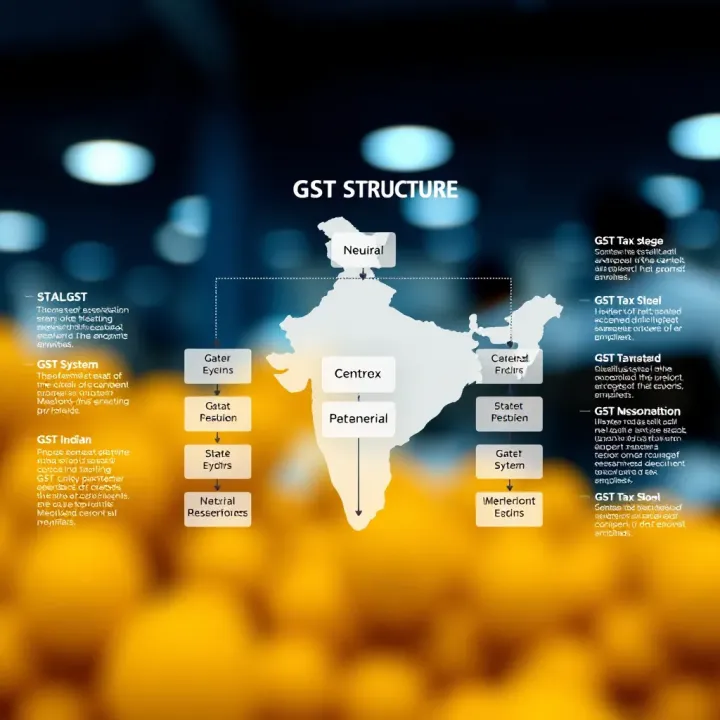
At its core, GST divides into three categories:
CGST (Central GST): Collected by the Central Government on intra-state sales.
SGST (State GST): Collected by the respective state government on intra-state sales.
IGST (Integrated GST): Collected on inter-state sales, shared between Centre and states.
Registration under GST is mandatory for businesses exceeding a specified turnover threshold (₹40 lakh for goods and ₹20 lakh for services in most states). This registration links your business to the GST Network (GSTN), required for filing returns and claiming input tax credit.
Understanding the registration criteria and filing timelines is vital to avoid penalties and maintain compliance.
Businesses must file monthly or quarterly returns detailing sales, purchases, and tax collected or paid. Taking advantage of input tax credit—where GST paid on purchases can be adjusted against GST collected on sales—can significantly ease cash flow challenges.
GST also impacts pricing strategies and working capital management, so traders and investors should assess its effect on supply chains and cost structures carefully.
This section sets the stage to explore GST's structure, compliance requirements, and practical applications. Clear grasp of these aspects empowers businesses and advisors to navigate GST confidently and optimise tax outflows.
In the next sections, we will discuss detailed step-by-step guidance on registration, return filing, invoice standards, and dispute resolution under GST law.
GST, or Goods and Services Tax, is a single, unified tax system implemented throughout India to replace a complex web of indirect taxes previously levied by Centre and states separately. For traders, investors, and financial analysts, understanding GST is critical because it directly affects supply chains, pricing, and compliance norms for businesses across sectors.
GST is a destination-based tax imposed on the supply of goods and services. It aims to simplify the indirect tax structure by subsuming various levies like excise duty, VAT, and service tax into one. The key objectives include eliminating the cascading effect of taxes, increasing transparency, and improving compliance efficiency. For example, earlier, a manufacturer paying excise and then a retailer paying VAT cumulatively increased the product cost. With GST, such layered tax is avoided, helping businesses price competitively while complying with tax laws more easily.
GST consists of three main components:
Central GST (CGST): Collected by the Central Government on intra-state supplies.
State GST (SGST): Collected by the State Government for the same intra-state transaction.
Integrated GST (IGST): Levied on inter-state transactions and imports, collected by the Centre but shared with states.
For instance, if a textile company in Maharashtra sells cloth to a shop in Mumbai, both CGST and SGST apply. However, if the sale is to a shop in Karnataka, IGST is applicable. This structure ensures clarity in tax jurisdiction and revenue sharing between Centre and states.
The GST Council is the apex body responsible for making decisions on GST rates, rules, and regulations. It comprises the Union Finance Minister and state finance ministers. Decisions must be consensus-driven, reflecting the interests of both Centre and states. This council helps maintain uniformity while addressing regional concerns, such as variations in economic capacities and sectoral needs. This way, the GST framework remains flexible yet coherent.
GST is a shared taxation model, requiring smooth collaboration between Centre and states to ensure correct tax collection, settlement, and compliance enforcement. The council facilitates this by framing laws that balance fiscal federalism with a unified system. Examples of such coordination include the GST Network (GSTN), which handles registrations and return filings centrally, reducing paperwork and making compliance easier for businesses scattered across different states.
An effective understanding of GST’s mechanics is essential for Indian businesses and investors. It influences pricing strategy, tax planning, and regulatory compliance, shaping how companies operate nationwide under a harmonised tax system.
Understanding who should register for the Goods and Services Tax (GST) is critical because compliance starts with registration. Without GST registration, businesses cannot charge GST on sales or claim input tax credit, which may put them at a disadvantage. This section explains the eligibility for registration and guides you through the registration process, helping both traders and advisors to handle GST efficiently.
GST registration isn't mandatory for every business in India; it depends largely on turnover thresholds that differ by state and sector. For example, a supplier in Delhi must register if their annual turnover exceeds ₹40 lakh, while in special category states like Himachal Pradesh or North-East states, the limit is ₹20 lakh. Service providers generally face a threshold of ₹20 lakh, except in some cases like in Assam and Arunachal Pradesh, where it is ₹10 lakh.
It's practical for traders and fintech advisors to keep these limits in mind, as crossing even marginally above the limit triggers compulsory registration and associated compliance requirements. Small businesses in tier-2 or tier-3 cities must be especially careful to monitor yearly sales.
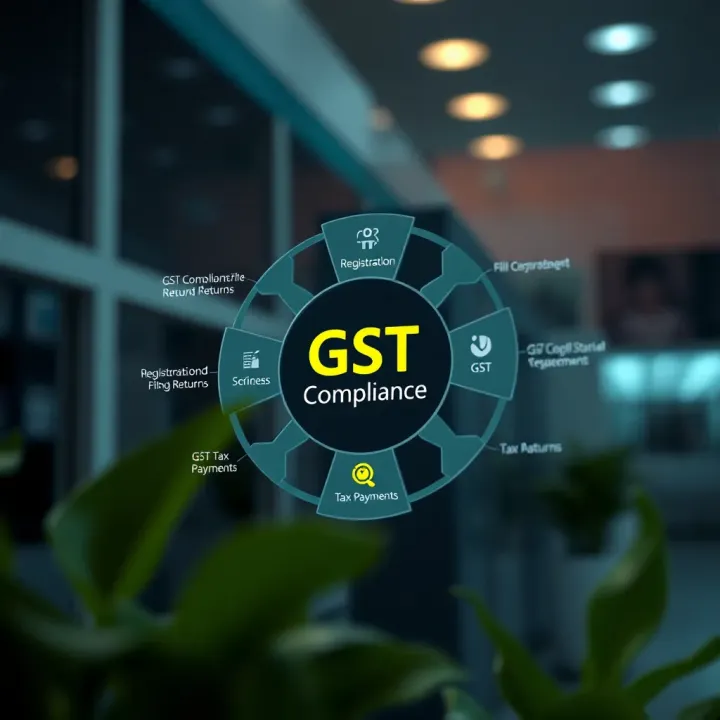
Beyond turnover, some businesses must register no matter how small their turnover is. For instance, if you supply goods through e-commerce platforms or engage in interstate supply, registration is compulsory. Recent examples include online sellers on Flipkart or Amazon India. Also, businesses involved in casual taxable supplies or non-resident taxable persons will require registration to comply with GST norms.
This means investors or advisors working with online marketplaces or startup ventures should flag these cases proactively to avoid penalties and support proper tax handling.
The registration process requires specific documents for identity and business verification. You need a PAN card of the business or proprietor, proof of business registration or incorporation certificate, address proof of the premises (like electricity bill or rent agreement), and photographs of the proprietor or directors. Bank account details with a cancelled cheque also form part of the documents.
For fintech or investors advising business clients, it's crucial to gather complete documents beforehand — incomplete submissions often delay the registration and compliance timeline.
Registration begins by visiting the GST portal and filling Form GST REG-01 online. You'll input basic details like PAN, email, and mobile number for verification. After verification, business and address details follow along with uploading the required documents.
On submission, the officer generally processes the application within seven working days if all documents are correct. An approved GSTIN (GST Identification Number) is then issued.
Knowing this smooth process helps traders and analysts anticipate timelines and plan their tax compliance strategies correctly.
Remember, timely GST registration is not just a legal mandate but also a gateway to legitimate business operation and tax credit benefits.
Overall, registering for GST helps businesses stay compliant with tax laws while enabling them to operate confidently in the market, benefiting both traders and consumers alike.
Understanding GST returns and compliance is vital for businesses and advisors dealing with indirect taxes in India. GST returns are periodic statements submitted to tax authorities detailing sales, purchases, output tax, input tax credit (ITC), and tax liability. Timely and accurate filing helps maintain compliance, avoid penalties, and facilitate smooth credit flow.
Compliance under GST also includes reconciling transactions, verifying invoices, and maintaining records as per GST regulations. For investors and fintech analysts, knowledge of GST returns enables a clearer view of a company’s tax position, impacting valuation and risk assessment.
Monthly and Annual Returns: Every registered business must file monthly returns like GSTR-1 (outward supplies) and GSTR-3B (summary returns), usually by the 11th and 20th of the following month, respectively. Firms report taxable sales and claim ITC within these returns. Annual returns such as GSTR-9 consolidate yearly tax data. For example, a Mumbai-based wholesale trader filing GSTR-3B by the 20th of April covers his March transactions, ensuring compliance and avoiding late fees.
Small businesses opting for the Composition Scheme, which offers lower tax rates to ease the compliance burden, file quarterly returns instead of monthly. The GSTR-4 return consolidates tax liabilities and sales details every quarter, with filing deadlines typically by the 18th of the month following the quarter. This simpler process benefits small traders and restaurants who want less frequent compliance efforts without losing tax benefits.
ITC allows businesses to offset GST paid on purchases against GST collected on sales. However, matching invoices between suppliers and recipients can be tricky. Mismatched or delayed invoice uploading often leads to blocked credits. For instance, a Delhi manufacturer may face ITC denial if suppliers do not timely file their GSTR-1. Businesses should regularly reconcile purchase records with suppliers and use GST portal tools to track unmatched invoices.
Delays or errors in GST return filing lead to penalties and interest that can add up quickly. Small firms might overlook due dates, while larger companies struggle with data reconciliation. Using automated accounting software integrated with the GST portal helps track deadlines and prepare returns promptly. For example, setting reminders for GSTR-3B and early validation of entries reduces the risk of interest charges and penalties under Sections 47 and 50 of the CGST Act.
Staying on top of GST returns and resolving common compliance issues not only avoids fines but also safeguards input credits, improving cash flow and business efficiency.
In summary, familiarising with different types of GST returns, their submission timelines, and common compliance hurdles equips business owners, investors, and advisors to navigate GST smoothly and align with India’s tax regime effectively.
GST has reshaped how taxes affect both businesses and consumers in India. Its impact is considerable, as it altered taxation across all sectors, changing both operational costs and consumer prices. Understanding these effects is vital for traders, investors, and advisors, who must factor GST’s influence in their financial planning and market analysis.
GST replaced multiple indirect taxes like excise duty, VAT, and service tax, simplifying the tax system with a unified structure. For businesses, this meant fewer tax administrations to deal with. A retailer in Mumbai, for example, no longer pays separate state VAT and central excise but deals with a single GST return. This saves time and reduces compliance complexities, especially for small and medium enterprises.
Unified rates under GST also reduce confusion about tax rates on goods and services, allowing companies to plan pricing and operations more efficiently. This streamlining encourages better compliance and smoothens cross-state trade.
Before GST, taxes often piled on top of each other — tax on tax — leading to a cascading tax effect. GST’s input tax credit (ITC) mechanism allows businesses to claim credit for taxes paid on inputs, preventing this double taxation.
For example, a manufacturer in Karnataka pays GST on raw materials and claims ITC while selling finished goods. This reduces the effective tax burden, lowering production costs. It helps manufacturers across sectors, such as textiles in Tirupur or pharmaceuticals in Hyderabad, improve their competitiveness.
GST brings clarity to product pricing by consolidating various taxes into a single figure. Consumers can now see exactly how much tax they pay, improving trust and accountability. For instance, on a ₹500 smartphone, GST at 12% means ₹53.57 tax included (CGST + SGST), simplifying calculations for buyers.
This transparency helps consumers compare prices more effectively across brands and sellers, influencing buying decisions and encouraging competitive pricing.
GST introduced a shift in how products are priced across categories. Some goods became cheaper due to removal of multiple taxes, while others saw a price rise because of the new uniform rates.
Take luxury cars: GST pushed their tax rates higher, increasing prices and affecting sales distribution. Conversely, electronic products like LED TVs became marginally cheaper with lower tax slabs, boosting demand.
These shifts influence market patterns, prompting businesses to rethink pricing strategies and consumers to adjust buying behaviour accordingly.
Understanding GST’s impact on pricing and business costs is essential for stakeholders to navigate India’s evolving market landscape confidently.
Overall, GST has streamlined taxation and shaped market dynamics, benefitting businesses by cutting down tax hurdles and promoting price transparency for consumers.
GST regulations in India keep evolving to match the dynamic nature of trade and compliance needs. Keeping up with the latest changes helps traders, investors, and financial advisors adapt their strategies and avoid costly penalties. For instance, recent amendments have tightened the documentation and reporting requirements, affecting how businesses track input tax credits and file returns.
The government has introduced stricter compliance protocols around e-invoicing and GST return filing formats. For example, businesses with turnover above ₹20 crore must now generate e-invoices, which automatically feed into the GST system, reducing errors but increasing the dependency on automated systems. This shift places greater emphasis on IT readiness for firms and necessitates audit-ready bookkeeping.
Besides, penalty provisions have become more stringent for delayed filings and mismatched invoices. Traders must thus ensure timely submissions to avoid cascading penalties. These compliance adjustments clarify reporting obligations, helping smoothen input tax credit claims and reduce disputes with tax authorities.
GST changes have also targeted certain sectors differently. The real estate sector now faces updated valuation norms for project sales, meaning builders must revise their tax calculations accordingly. Similarly, the ecommerce sector sees refined rules on GST collection at source, imposing more responsibility on platforms to correctly deduct and deposit tax on vendor sales.
These targeted updates mean businesses in such sectors must stay alert to avoid compliance gaps. For example, a real estate firm failing to adjust for valuation changes risks overpaying tax, reducing profitability.
The GST Council is considering rationalising rates further to simplify the tax structure. Traders should watch for proposals that may merge or reduce the number of rate slabs, which could impact pricing and margins across industries. There is also talk of tightening anti-profiteering rules to ensure tax benefits reach consumers, affecting how companies price goods.
Understanding these potential changes early helps businesses prepare for smoother transitions and adjust pricing or supply chain strategies accordingly.
The government continues to invest in upgrading GST technology infrastructure. Enhanced analytics and machine learning tools aim to detect tax evasion more effectively. Moreover, the GST portal is set for user experience improvements to ease return filing and query resolution.
These tech upgrades help businesses by simplifying compliance and reducing manual errors. For instance, automated mismatch detection tools will alert traders when invoice details do not tally, allowing quick corrections. Adopting these systems early can reduce compliance costs and prevent penalties.
Staying updated on GST changes is key for any business to maintain compliance and optimise tax benefits. Traders and investors must integrate these insights into their planning and operations to avoid surprises and leverage opportunities.
🔍 Understand crypto and NFTs in India: how they work, risks, uses, and key facts for investors keen to explore digital assets smartly and safely.

Explore Qutex Trading platform features, fees, and security 🔒 to help Indian traders make informed choices 🇮🇳. Compare brokers and get tips for success.

📈 Understand demo share trading in India—practice stock buying and selling risk-free. Get tips, benefits, and start confidently before entering real markets. 💹

Discover how QX Affiliate works and its benefits 📈. Learn effective strategies for success and maximize earnings with this guide for Indian marketers 🇮🇳.
Based on 8 reviews